


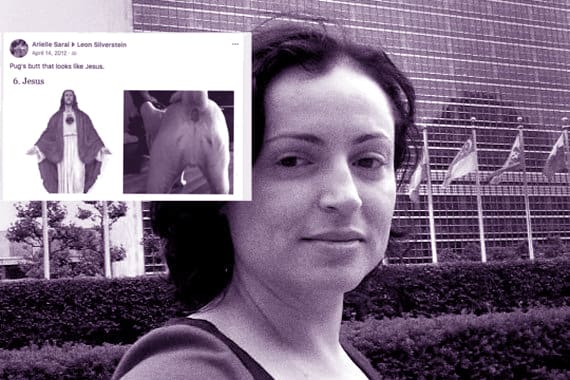
A senior lawyer within the UN system, Arielle Silverstein, is under scrutiny after archived online posts surfaced in which she mocked various religious communities and advocated political pressure against a minority faith. Silverstein, who has held roles in legal and administrative capacities within the UN, is expected to adhere to the organization’s Staff Regulations, which include upholding the principles of the UN Charter and exhibiting respect for all cultures without discrimination.
However, a compilation of posts attributed to Silverstein, often under aliases like “Bozuri,” is criticized for containing language that challenges these obligations. The posts target Muslims, Jews, Christians, and Scientologists and propose actions against religious groups that raise human-rights concerns.
The posts from the early 2010s express hostility toward religious belief, ridiculing practices and figures of major faiths. Silverstein reportedly called Christians “suckers” and described religious preaching dismissively, labeling “Hispanic preachers” as “wackos.” She mocked Islam and its central figures, referring to the Prophet Muhammad as an “illiterate desert dweller” and commented on Muslims being “particularly thin-skinned.” She also publicly supported “Draw Mohammed Day.”
Despite identifying as a Jewish atheist, Silverstein expressed hostility toward Jews and stated she wanted the Simon Wiesenthal Center, a Jewish human-rights organization, to cease existing. She boasts familiarity with the Old Testament and enjoys explaining her dislike for God to religious people, showing contempt for believers and disrespect toward Jews who hold the Hebrew Bible sacred.
The posts reflect sweeping hostility toward organized religion across various traditions.
Regarding Scientology, Silverstein encouraged political and governmental pressure against the group, suggesting contacting Dutch far-right politician Geert Wilders. She proposed linking Scientology to “radical Muslims” to gain his political interest. Silverstein wrote about using Pakistan’s religious intolerance against Scientology, raising concerns given Pakistan’s criticized blasphemy laws.
The UN has positioned itself as a defender of religious freedom and cultural respect, reflected in its Staff Regulations. Critics find Silverstein’s posts difficult to reconcile with these obligations, given her role within the organization.
The issue raises questions about the balance between employees’ private speech rights and the ethical standards for public officials tasked with defending human rights. The UN has not clarified if it has reviewed the matter, as internal investigations are confidential.
The resurfacing posts have sparked debate about accountability within international institutions and whether global organizations consistently apply the values they promote, such as respect for religious diversity and opposition to discrimination. This case may test how seriously these principles are enforced within the UN.







Leave a Reply