Iran: Fragmented Power Structure and Rising Tensions in State Leadership

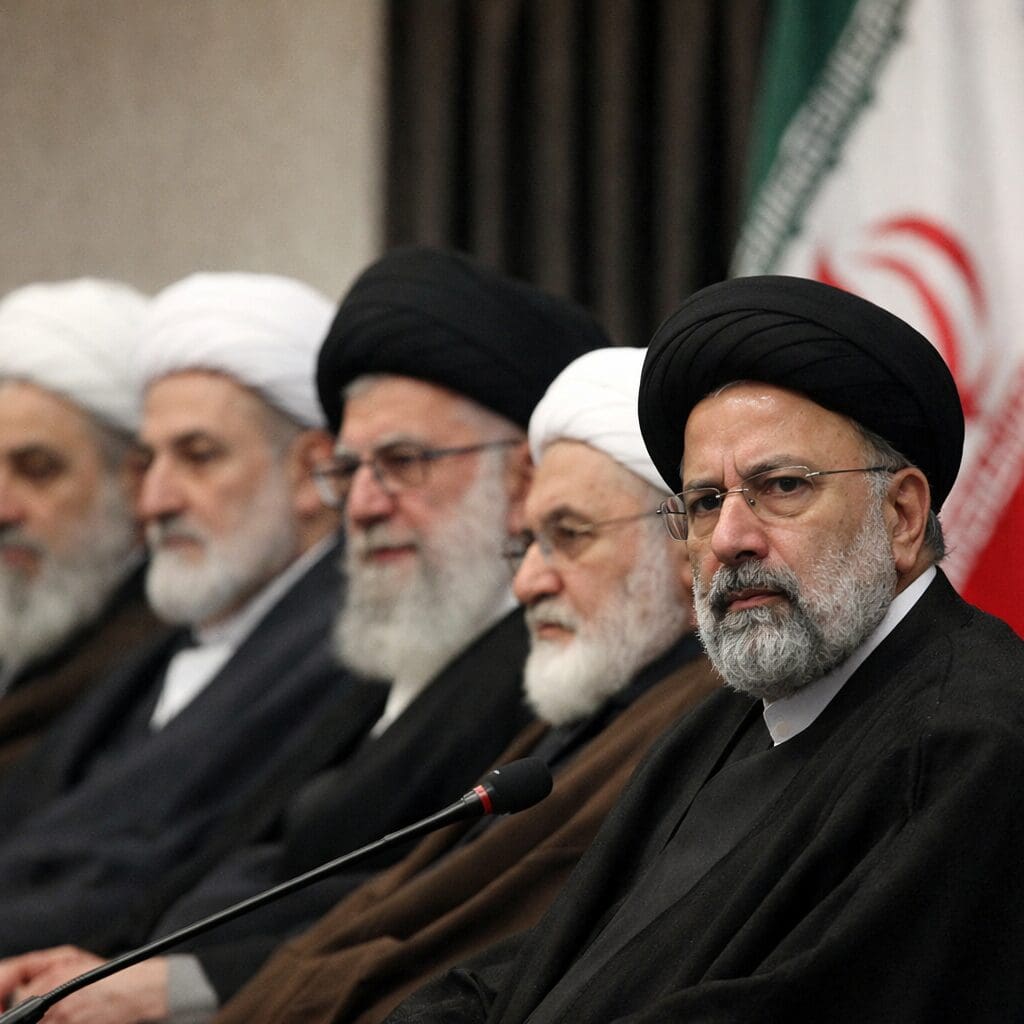
Au centre du système iranien, il y a une fracture identifiée depuis longtemps par les observateurs, mais que les autorités s’efforcent de maîtriser : la tension croissante entre les institutions politiques civiles et le puissant Corps des gardiens de la révolution islamique.

Cette tension n’est ni nouvelle ni accidentelle. Elle est ancrée dans la structure même du régime. Cependant, elle prend aujourd’hui une nouvelle dimension dans un contexte d’instabilité régionale, de pression internationale accrue et d’exacerbation des faiblesses internes.

Officiellement, l’État iranien fonctionne selon un équilibre structuré entre institutions élues et centres de pouvoir non élus. En réalité, cet équilibre est profondément inégal. Les Gardiens de la révolution ne sont pas seulement une force militaire. Ils jouent un rôle politique et économique central, influençant largement des secteurs clés du pays. Leur poids dépasse souvent celui de la présidence, dont la marge de manœuvre reste limitée.

Sur le terrain, cette dualité se traduit par des approches divergentes. Le pouvoir exécutif civil cherche parfois à apaiser les tensions internationales pour réduire l’impact des sanctions et préserver la stabilité économique. En revanche, les Gardiens de la révolution privilégient généralement une posture plus affirmée, basée sur l’influence régionale et la confrontation.

Cette divergence est loin d’être anodine. Elle reflète deux visions concurrentes de la survie du régime : l’une basée sur l’adaptation et le pragmatisme, l’autre sur la force et la résistance. Un arbitrage constant se fait entre ces deux approches, souvent à huis clos, révélant une lutte d’influence sous-jacente.

Ces tensions sont visibles dans plusieurs domaines, notamment la politique régionale, les décisions économiques, les réponses aux sanctions internationales et le contrôle des secteurs stratégiques. Elles ne se transforment pas nécessairement en conflit ouvert, mais elles fragilisent la cohérence globale du système.

Un système politique peut fonctionner avec plusieurs centres de pouvoir s’il existe une autorité claire et efficace pour arbitrer. Cependant, lorsque les divergences se multiplient et surviennent dans un contexte de plus en plus instable, elles cessent d’être une source d’équilibre et deviennent une source de fragilité.

C’est précisément ce qui se produit aujourd’hui. Sur le plan intérieur, l’Iran fait face à des pressions socio-économiques croissantes. L’inflation, la baisse du pouvoir d’achat, le chômage et les restrictions des libertés nourrissent un mécontentement généralisé. Sur le plan extérieur, les tensions régionales et les confrontations indirectes continuent de mettre le pays à rude épreuve.

Dans ce contexte, les tensions entre la présidence et les Gardiens de la révolution ne sont plus de simples caractéristiques structurelles du système ; elles révèlent ses limites. Le problème fondamental n’est pas l’existence de ces tensions, mais leur gestion. Leur intensification complique la prise de décision, réduit la clarté stratégique et expose le régime à ses propres contradictions internes.

L’Iran n’est pas au bord de l’effondrement. Cependant, il subit clairement des pressions persistantes et multidimensionnelles qui mettent à l’épreuve sa capacité à maintenir son équilibre interne.

C’est là que réside le véritable défi. Les systèmes politiques s’effondrent rarement sous l’effet de chocs externes. Le plus souvent, ils s’affaiblissent de l’intérieur, par l’accumulation de tensions, la perte de cohérence et l’incapacité à arbitrer efficacement entre les centres de pouvoir concurrents. L’Iran semble aujourd’hui de plus en plus confronté à cette réalité.

Ce qui était autrefois considéré comme une force – la coexistence de multiples centres de pouvoir – devient progressivement une faiblesse structurelle. Et si ces tensions continuent de croître sans être résolues, elles pourraient transformer un système conçu pour le contrôle en un système paralysé.

La question n’est plus de savoir si des tensions existent, mais si le système peut continuer à les absorber sans perdre sa stabilité.


Comments

15 responses to “Iran: Fragmented Power Structure and Rising Tensions in State Leadership”

  1. bug blitz Avatar
    bug blitz

    Typical Iran, eh? Just when you think they’ve got their act together, they decide to play a game of political tug-of-war! 🤷‍♂️

  2. Keystone Avatar

    Seems like Iran’s got a real juggling act going on—who knew mixed messages could be a national pastime? 🤹‍♂️ With the Gardiens flexing their muscles while the prez tries to play nice, one has to wonder if they’re all reading from the same script or just winging it!

  3. Moon Radar Avatar
    Moon Radar

    Looks like Iran’s power struggle is just a classic case of “too many cooks spoil the broth,” but in this kitchen, they’re all armed with rocket launchers. 🤷‍♂️🔥

  4. Lord Nikon Avatar
    Lord Nikon

    Oh, la belle mécanique iranienne ! Qui aurait cru que la cohabitation de pouvoirs rivaux pourrait mener à des tensions ? C’est presque comme regarder un match de football où l’équipe essaie de marquer des buts… dans son propre filet ! ⚽️

  5. reed lady Avatar
    reed lady

    Just when you thought managing multiple power centers was a genius move, Iran’s leadership shows us it’s more like juggling flaming swords while riding a unicycle. Bravo! 🎪🔥

  6. tabasco dracula Avatar
    tabasco dracula

    Imaginez un bon vieux bal de masques, mais avec des gardiens de la révolution qui ne savent pas danser – c’est l’Iran aujourd’hui. Entre l’exécutif qui essaie de jouer la diplomatie et les Gardiens qui préfèrent le tango des tensions, on se demande si quelqu’un a pensé à apprendre les règles de la danse. 💃🕺

  7. Mrs. Voltage Avatar
    Mrs. Voltage

    Oh, la magie de l’équilibre du pouvoir en Iran ! C’est comme jongler avec des mitraillettes tout en essayant de garder un service à thé en équilibre, n’est-ce pas ? 🍵🔫

  8. Instant Star Avatar
    Instant Star

    Aye, it’s like watching a bunch of chefs in a kitchen where none can agree on the recipe, but hey, at least the food’s still edible… for now. 🍽️

  9. The Belgian Avatar
    The Belgian

    Seems like Iran’s political game is like a badly organized football match—lots of players on the field, but no one knows who’s actually in charge. ⚽️🇮🇷

  10. gingersnap woman Avatar
    gingersnap woman

    Seems like Iran’s political scene is a bit like a dysfunctional family reunion—everyone’s got a say, but no one’s willing to listen. 🤷‍♂️ Who knew that juggling power could be this messy?

  11. Ember Master Avatar
    Ember Master

    Who knew that a country could turn power struggles into an art form? 🤷‍♂️ It’s like watching a dysfunctional family argue over dinner while the house is on fire.

  12. abyss tamer Avatar
    abyss tamer

    Seems like Iran’s power structure is now a game of “who can outlast who,” with Gardiens playing the kingmaker while the presidency is left holding the bag. 🍿 Just another day in the Middle East, eh?

  13. Shadow Gal Avatar
    Shadow Gal

    Looks like Iran’s political scene is just a game of “who can out-stubborn the other,” eh? 😏 With tensions rising like a good soufflé, you’ve got to wonder if anyone’s keeping an eye on the oven! 🍽️

  14. Killer Grenade Avatar
    Killer Grenade

    Just another day in paradise, where the power struggle makes a soap opera look like a Sunday picnic. Who needs a cohesive government when you can have a dramatic showdown between the elected and the unelected? 😂

  15. Oh, quelle surprise, un pays où tout le monde veut tirer la couverture à soi ! 😂 L’Iran, un vrai modèle de coopération… entre deux camps qui s’ignoreront probablement jusqu’à ce que le prochain banquet de la paix ait lieu. 🍷

Leave a Reply

Your email address will not be published. Required fields are marked *

Last News

Trump Threatens Sánchez and Meloni with US Troops Withdrawal

Trump Threatens Sánchez and Meloni with US Troops Withdrawal

Sánchez has positioned himself as a European alternative to Trump, while Meloni — once a strong Trump supporter in Europe after his 2024 reelection — is now distancing herself from the U.S. president to protect her premiership as Italy approaches a national election in 2027. Merz remarked that the U.S. is being “humiliated” by Iran in the Middle East conflict.
Italian Defense Minister

Read More

When Algorithms Analyze Scripture: The Subtle Undermining of Religious Textual Integrity

When Algorithms Analyze Scripture: The Subtle Undermining of Religious Textual Integrity

In January 2026, Egypt’s Dar al-Ifta al-Misriyyah, a leading Islamic advisory body, declared using AI for interpreting the Qur’an as impermissible (haram). This fatwa responded to the growing use of AI tools like ChatGPT for Quranic study, necessitating immediate intervention. Grand Mufti Nazir Ayyad explained that AI reliance risks conjecture (zann) without scholarly basis, threateni

Read More

The EU-Mercosur deal takes effect — but the fight over it continues

The EU-Mercosur deal takes effect — but the fight over it continues

What’s changing?
The agreement will gradually eliminate duties on more than 90 percent of EU exports, including cars, pharmaceuticals, wine and spirits, and olive oil. Some non-tariff barriers, such as on labeling, will be removed. Public procurement markets will open up, allowing EU companies to bid for government contracts.
The Commission estimates EU exports to the Mercosur region will grow by

Read More

Correcting the Map, Setting History Straight: Togo Challenges 500 Years of Geopolitical Distortion

Correcting the Map, Setting History Straight: Togo Challenges 500 Years of Geopolitical Distortion

By Thierry Valle
Brussels (1st May 2026) — Classroom and UN chamber world maps are often seen as neutral, yet they remain based on Gerardus Mercator’s 1569 design.
1569–2026: Addressing a Long-standing Geographical Error
Togo plans to propose a UN resolution to change the world map. Backed by several African Union member states, including Ghana, Senegal, and South Africa, the proposal seek

Read More

Magyar Justifies Appointment of Brother-in-Law as Justice Minister

Magyar Justifies Appointment of Brother-in-Law as Justice Minister

The incoming prime minister revealed his initial seven ministerial selections in April, shortly after defeating Viktor Orbán’s Fidesz party, ending Orbán’s 16-year tenure. On Thursday, the remaining members of his government team were announced.
Magyar recently met with Commission President Ursula von der Leyen, aiming to unblock billions in EU funds frozen due to rule-of-law issues. Officia

Read More

Youth Empower and Fortify Communities in the Americas

Youth Empower and Fortify Communities in the Americas

In April 2026, youth and friends of The Church of Jesus Christ of Latter-day Saints utilized the JustServe platform to engage in community service throughout North and South America. Here are highlights from some of the projects completed during the month:
Rancagua, Chile
On April 25, young volunteers painted 20 homes for senior citizens in Rancagua, Chile, bringing joy and support to the neighbo

Read More

Ukraine Urges Venice Biennale to Ban Russia

Ukraine Urges Venice Biennale to Ban Russia

Earlier this week, officials were sent by the Italian government to investigate the return of Russian artists to the Venice event. Italian Prime Minister Giorgia Meloni stated Thursday that she did not know if the jury’s resignation was related to the inspection, but reaffirmed her initial stance: “The government does not share the choice made on the Russian pavilion.”
The Biennale opens to the pu

Read More

Attempted Murder Charge Following Stabbing of Jewish Men in London

Attempted Murder Charge Following Stabbing of Jewish Men in London

Suleiman has been charged with attempted murder related to a separate incident in central London on the same date. He remains in police custody and is set to appear at Westminster Magistrates’ Court on Friday.
Helen Flanagan, the Met’s counter-terror lead, stated, “Our thoughts remain with the victims involved and specialist officers continue to provide support as they recover.”
“We are committed

Read More

Ice Age hunters’ secrets uncovered through mammoth bones

Ice Age hunters’ secrets uncovered through mammoth bones

Before the peak of the last Ice Age, woolly mammoth herds moved across Central Europe, navigating the cold grasslands and tundra. Archaeologists have found large collections of mammoth bones in the region, raising questions since the 19th century about their origin—whether from hunting, natural deaths, or both—and what they reveal about human interaction with these animals.
A European research te

Read More