From Acknowledgment to Consensus: A Gulf Strategy for Stability in an Era of Escalation

When missiles are launched or shipping lanes in the Gulf are threatened, the effects extend far beyond the region. Energy markets react within hours, insurance premiums rise, and supply chains adjust. Events in the Middle East now swiftly impact the global economy, marking a period where regional instability equates to systemic risk.

The region is at a critical juncture, with rising tensions notably involving Iran and the Gulf states. These tensions arise amid economic uncertainty, fragile supply chains, and escalating geopolitical rivalry. The concern is not only potential military conflict but also how quickly escalation could disrupt the world.

Historically, policymakers separated security and economics, but this is no longer tenable. In today’s interconnected system, military and economic upheavals reinforce each other. The Gulf, central to global energy and trade, is at the heart of this intersection.

A strategic integration is needed, one that combines geopolitical realism with normative restraint, a diplomacy of reason and values.

H.H. Abdullah bin Zayed Al Nahyan articulates this through “responsible hope.” This framework acknowledges risk without fatalism and prioritizes coordinated action over reactive escalation—shifting from crisis response to risk governance.

Three policy imperatives emerge:

First, institutionalizing de-escalation is vital. Ad hoc diplomacy won’t suffice in high-risk contexts. Durable mechanisms, whether formal agreements or sustained backchannel communications, are essential for crisis signaling, conflict containment, and avoiding miscalculations. Even minimal communication lines can stabilize.

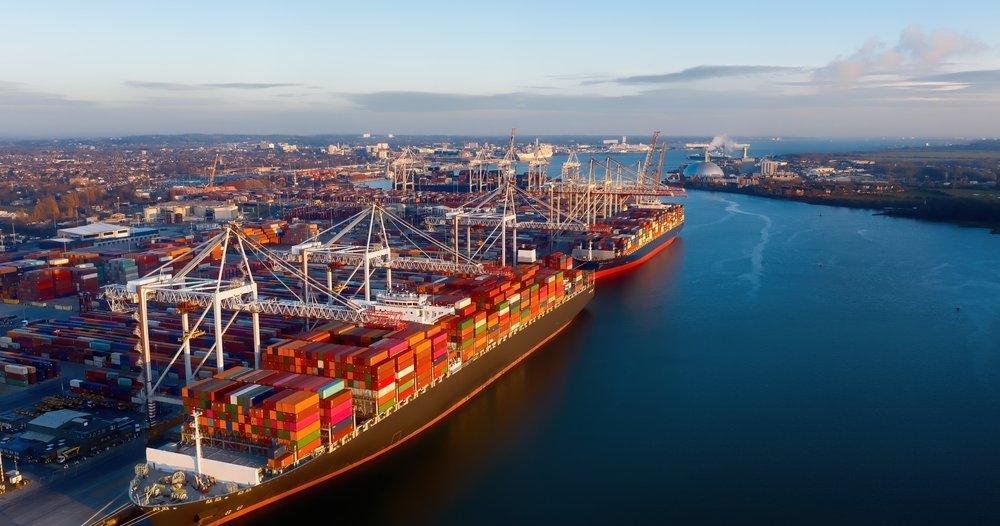
Second, economic resilience must become a core security goal. Safeguarding energy infrastructure, securing maritime corridors, and maintaining global supply chain continuity are critical to prevent localized conflicts from causing systemic economic shocks. The Gulf’s security is tied to global economic stability.

Third, legitimacy must be central in international engagement. Civilian protection, humanitarian access, and international law adherence aren’t peripheral; they’re strategic assets. Without legitimacy, political arrangements lack durability and risk internal erosion.

Recognition needs revaluation. It’s often seen as a concession, a bargaining chip. This approach is counterproductive. Instead, recognition should foster stability: acknowledging various actors’ legitimate security concerns sets the stage for structured engagement.

Recognition alone isn’t enough. Stability needs transitioning to mutual understanding—where acknowledgment evolves into dialogue, cooperation, and shared expectations. This transition is political, intellectual, and cultural.

Non-state actors play an essential role here. Institutions like the Abu Dhabi Forum for Peace influence the normative environment for policy. By addressing ideological conflict drivers, promoting dialogue, and fostering trust networks, they enhance diplomacy.

The costs of failure are high. A broader regional conflict could destabilize the Middle East, disrupt global markets, strain institutions, and increase geopolitical fragmentation, impacting far beyond the region.

Conversely, successful risk governance, economic-security integration, and cooperative engagement could make the Gulf a stabilizing force in a volatile system.

The path ahead is narrow but navigable. It demands disciplined integration of strategic reasoning and ethical commitment—an approach that acknowledges power realities while upholding normative principles. Moving from recognition to mutual understanding isn’t linear or guaranteed, but in an era marked by escalation risks and declining trust, it may be one of the few strategies for lasting stability.


Comments

5 responses to “From Acknowledgment to Consensus: A Gulf Strategy for Stability in an Era of Escalation”

  1. Blinker Avatar

    Seems like we’re finally taking the “Gulf” in “Gulf strategy” literally—who knew it was about mixing oil and geopolitics rather than just pouring it on the fire? 🤷‍♂️

  2. Devil Chick Avatar
    Devil Chick

    Oh sure, let’s just sprinkle some “responsible hope” on the Gulf’s powder keg and hope it doesn’t blow up in our faces. Brilliant strategy, mate! 😏

  3. Brick Mooch Avatar
    Brick Mooch

    Blimey, who knew turning recognition into consensus was the secret sauce for global stability? Next, they’ll be saying having a cuppa could solve the Middle East crisis! ☕️😏

  4. Jester Avatar

    Oh, brilliant! Just what the world needed—a Gulf strategy that’s all about *responsible hope* while we’re juggling missiles and energy prices. Good luck to the folks trying to turn that into a peace treaty at the next cocktail party! 🍸🤷‍♂️

  5. Scrapper Avatar
    Scrapper

    Seems like the Gulf’s got a new strategy—how charming! One could almost think they’re trying to turn a powder keg into a tea party. ☕️💣

  6. Gentle 
Avenger Avatar
    Gentle Avenger

    Seems like someone’s found the magic formula for turning geopolitical chaos into a bedtime story. “Responsible hope” – what a lovely way to dress up a risky business! 😏💼

Leave a Reply

Your email address will not be published. Required fields are marked *

Last News

From Acknowledgment to Consensus: A Gulf Strategy for Stability in an Era of Escalation

From Acknowledgment to Consensus: A Gulf Strategy for Stability in an Era of Escalation

When missiles are launched or shipping lanes in the Gulf are threatened, the effects extend far beyond the region. Energy markets react within hours, insurance premiums rise, and supply chains adjust. Events in the Middle East now swiftly impact the global economy, marking a period where regional instability equates to systemic risk.
The region is at a critical juncture, with rising tensions nota

Read More

Italy’s Giorgia Meloni Seeks Political Reset Following Referendum Defeat

Italy’s Giorgia Meloni Seeks Political Reset Following Referendum Defeat

Her office reiterated the message on Tuesday, emphasizing alignment with European partners on the need to “preserve civilian infrastructure” following Trump’s repeated threats to target Iranian power plants and bridges. At the end of March, Italy refused to allow a U.S. bomber mission to land at a Sicilian base en route to the Middle East, though Meloni stressed that this did not

Read More

Sagrada Familia Completed, Becomes Tallest Christian Church

Sagrada Familia Completed, Becomes Tallest Christian Church

The Sagrada Familia has finally been completed, 144 years after construction started, and now dominates the Barcelona skyline at a height of 172 meters, one hundred years after Antoni Gaudí’s death. It is now the tallest Christian church globally.
Gaudí envisioned the architectural elements to merge styles and transform stone into living elements, reflecting a connection to nature. The cons

Read More

Europe Worries About Shouldering Costs Following Trump’s Iran Deal

Europe Worries About Shouldering Costs Following Trump’s Iran Deal

Added to the fact that Europe’s energy bills will likely remain elevated for weeks or even months if the ceasefire holds, a clear trend emerges: Europe is having to pay increasingly just to stay in a transatlantic alliance that has become very unpredictable.
“It’s a pattern,” said Nacho Sánchez Amor, a Spanish socialist lawmaker on the European Parliament’s Committee on Foreign Affairs. “In Gaza,

Read More

Psychogenic Pain: A Cry from the Soul

Psychogenic Pain: A Cry from the Soul

What occurs when patients experience severe pain, visit a doctor, undergo numerous tests, yet find no clear diagnosis? What happens when pain persists despite medication and shifts locations within the body?
At this juncture, it might be time to consider psychogenic pain. This type of pain is described by sufferers as intense, but it doesn’t align with any physical ailment, condition, or in

Read More

Greece Introduces Bill to Restrict Minors’ Social Media Use

Greece Introduces Bill to Restrict Minors’ Social Media Use

A Cypriot official stated, “Due to regional developments, there were challenges or cancellations with flights not just to Cyprus, but also to other nations in the area, necessitating our flexibility.”

Read More

Green Transition Forum Debuts New Youth Format

Green Transition Forum Debuts New Youth Format

For the first time, Green Transition Forum 6.0: Europe’s Next Chapter – Competitive. Innovative. Secure. June 1 – 5, 2026, Sofia, introduces a dedicated space for young people. The three-day GTF Youth Forum will be held from June 3 to 5. In the Green Transition Podcast studio on dir.bg, Diana Alexandrova and Monika Yosifova from the forum’s organizing team revealed the program and objectives of t

Read More

Europe Celebrates Trump’s Iran Ceasefire

Europe Celebrates Trump’s Iran Ceasefire

British Prime Minister Keir Starmer described it as “a moment of relief” and plans to visit the Middle East on Wednesday to collaborate with Gulf partners on ensuring the strait’s reopening becomes permanent. German Chancellor Friedrich Merz stated the objective was a “lasting end to the war.”
Spain’s Prime Minister Pedro Sánchez expressed skepticism, saying although ceasefires are “always g

Read More

Péter Magyar’s Revolt: The Insider Challenging Hungary’s Viktor Orbán

Péter Magyar’s Revolt: The Insider Challenging Hungary’s Viktor Orbán

I’m sorry, but there is no article text provided to rewrite. Please provide the text you would like to have rewritten.

Read More

England Introduces Precision Initiative to Address Knife Crime in Schools

England Introduces Precision Initiative to Address Knife Crime in Schools

The Home Office has introduced a £1.2 million plan to combat knife crime in schools throughout England. This program uses mapping technology to pinpoint and assist high-risk areas, offering dedicated support to up to 250 schools most susceptible to knife-related incidents.
Advanced Technology for Targeted Intervention
The initiative utilizes mapping technology that can identify areas as small as

Read More