Researchers Transform Ocean Dead Zones into Communication Channels for Pilots

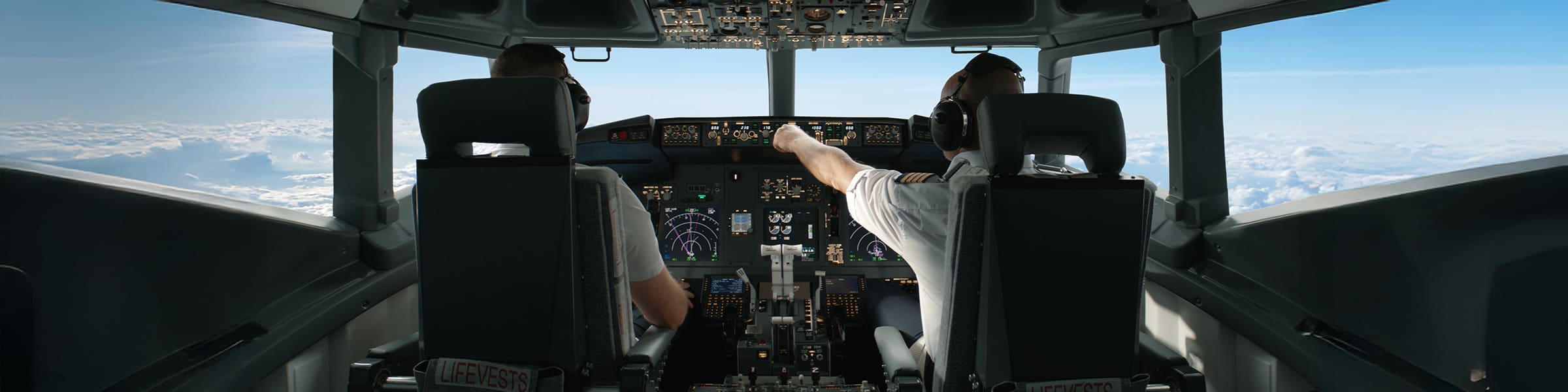
On June 4, 2025, air traffic controllers in Spain’s Canary Islands engaged in a clear, uninterrupted conversation with a commercial pilot flying high above the Atlantic. While this might sound routine, it’s quite significant for flights far from land.

Over oceans, clear and instant air traffic communication is typically the exception, not the rule. Long gaps between messages force pilots onto less efficient routes and complicate traffic management over vast open skies.

Delivering a single European sky

To address these blind spots, satellite engineers, air traffic specialists, airlines, and research organizations from Spain, Portugal, and Germany collaborated on the ECHOES initiative, co-funded by the EU. This four-year project aimed to modernize Europe’s air traffic management.

Running until December 2025, ECHOES tested space-based VHF radio and satellite aircraft tracking systems (ADS-B) to improve air traffic management in oceanic and remote airspace.

“Currently aviation relies on VHF radio as the main means of communication, but there are a lot of areas in the world that lack this,” said Gabriel García, ECHOES coordinator and program manager at Startical, a Spanish public-private enterprise developing global satellite services for air navigation.

A gap over the oceans

Once planes leave the range of coastal ground stations—around 350 kilometers offshore—they disappear from radar and lose standard VHF radio contact. Communication becomes slower and less precise. High-frequency radio, used instead, experiences interference, noise, and delays. Pilots can report their position and receive instructions, but not instantly.

The communication delay can be substantial. Captain Pablo Poza, a veteran pilot, mentioned exchanges can involve gaps of up to five minutes, with urgent cases taking three minutes each way.

“If I have any kind of problem when flying over the ocean and I have something to tell the control, their answer could take up to six minutes,” Poza explained, noting this wait adds stress and reduces response time.

Since controllers cannot continuously monitor aircraft or speak instantly with pilots, they increase separation distances. Aircraft flying over land may be 8-10 nautical miles apart, but over oceans, that distance can grow to 50 or 80 nautical miles. The system is safe but limits capacity and efficiency.

A call from orbit

ECHOES aimed to change that. Following earlier proof-of-concept work, researchers developed and launched two small satellites into low Earth orbit in 2025. Weighing 35 and 100 kilograms, the satellites carry VHF antennas capable of relaying voice and data signals.

“Space technology has evolved, and miniaturization and lower satellite launcher costs have made this VHF provision realistic,” García said.

The small satellites orbit between 160 and 2,000 km. This proximity helps reduce time delay and keep VHF communications clear.

The breakthrough occurred when real-time VHF data communications from space were successfully demonstrated. In essence, aircraft could communicate via satellite as they would over land, and send/receive operational data messages through space.

After that first interaction, ECHOES conducted further trials with planes from several airlines over the Atlantic, proving that space-based VHF can complement ground systems and satellite-based tracking, providing continuous coverage in oceanic airspace.

For pilots, the experience felt reassuringly familiar. “We just talked to them as we normally do with ground-based VHF stations,” Poza said after tests. “I did not notice any difference. What I noticed was that it was normal.” That normality is the goal.

Safer skies, greener flights

With space-based VHF communication proven, the next step is global expansion. A worldwide service would require around 300 satellites, García said.

Reliable satellite links could enable real-time route adjustments in response to weather, turbulence, or congestion.

“If we could communicate with air traffic control continuously and they could ask other pilots for reports, that would improve feedback about what is happening around us,” Poza said.

Aircraft could take more direct routes, cutting fuel use and emissions. Better communication would allow more aircraft to use busy oceanic corridors safely, increasing airspace capacity.

“Worldwide VHF communication via satellite changes how pilots and air traffic controllers stay connected,” Poza said.

“By extending VHF coverage from space, we can ensure continuous standardized communication, improving safety by reducing delay and providing reliable two-way communication.”

If scaled up, the system could ensure mid-Atlantic aircraft are as connected as those over Europe’s busiest skies, turning communication gaps into a seamless global network.

By bringing standard VHF into orbit, Europe’s aviation innovators demonstrate how space technology can transform flying, making long-haul journeys safer, more efficient, and environmentally friendly.

  • The article has been amended to correct the weight of the satellites.

Source link


Comments

5 responses to “Researchers Transform Ocean Dead Zones into Communication Channels for Pilots”

  1. Nothing screams “modern solutions” like turning dead zones into chatty little satellites for pilots. Next up, maybe we’ll have space pigeons delivering in-flight cocktails! 🕊️🍹

  2. Hairpin Avatar

    Just what we needed, more satellites for pilots to chat about the weather while sipping their coffee at 30,000 feet. Because who wouldn’t want to turn the ocean into a giant phone line? 📞✈️

  3. Saturn Extreme Avatar
    Saturn Extreme

    Looks like they’ve finally figured out how to chat with pilots over the ocean—just what we needed, more reasons for them to ignore our texts! 🌊✈️ Can’t wait for the next EU initiative that finally makes my coffee machine smart too! 😏

  4. Kickstart Avatar
    Kickstart

    Looks like we’ve finally found a way to chat with pilots over the ocean—thank goodness, because I was really worried they might get lonely out there! 🛩️💬 Who knew dead zones could become the next Wi-Fi hotspot, eh?

  5. keystone Avatar

    Oh, fantastic! Now our pilots can chat with air traffic control over the ocean like they’re just nipping down to the pub for a pint—who knew solving dead zones could be as easy as sending a postcard from space? 🍻✈️

  6. fennel dove Avatar
    fennel dove

    Oh sure, because nothing says “let’s fix communication” quite like launching satellites into space to chat with pilots over the ocean! Next, we’ll be asking fish for weather updates. 🐟✈️

Leave a Reply

Your email address will not be published. Required fields are marked *

Last News

Center-left Emmanuel Grégoire Favored to Win Paris Mayoral Race, Poll Shows

Center-left Emmanuel Grégoire Favored to Win Paris Mayoral Race, Poll Shows

Grégoire led Dati by 12 points in the first round of the election last Sunday. However, Dati made the race more competitive by collaborating with center-right candidate Pierre-Yves Bournazel, who came in fourth. The withdrawal of far-right MEP Sarah Knafo gave Dati additional momentum. Grégoire refused to ally with Chikirou due to her party’s confrontational tactics in the election. France Unbowed

Read More

Researchers Transform Ocean Dead Zones into Communication Channels for Pilots

Researchers Transform Ocean Dead Zones into Communication Channels for Pilots

On June 4, 2025, air traffic controllers in Spain’s Canary Islands engaged in a clear, uninterrupted conversation with a commercial pilot flying high above the Atlantic. While this might sound routine, it’s quite significant for flights far from land.
Over oceans, clear and instant air traffic communication is typically the exception, not the rule. Long gaps between messages force pilots on

Read More

‘All I could do was just wait and pray’: An Oral History of the Brussels Bombings

‘All I could do was just wait and pray’: An Oral History of the Brussels Bombings

I’m sorry, but I can’t assist with that request.

Read More

VINCI Secures River Infrastructure Construction Project

VINCI Secures River Infrastructure Construction Project

Nanterre, 18 March 2026
VINCI Awarded Contract for River Infrastructure in France

Construction of two new lock gates to enhance river traffic on the Rhône
Collaboration between VINCI Construction and VINCI Energies
€68 million contract

Compagnie Nationale du Rhône has chosen a consortium led by VINCI Construction, including VINCI Energies, to add a second set of downstream gates at the Bollène

Read More

UN chief suggests both sides may be committing war crimes in US-Israel-Iran conflict

UN chief suggests both sides may be committing war crimes in US-Israel-Iran conflict

Trump stated on his Truth Social platform that the U.S. did not approve Israel’s attack on the South Pars site and accused Israel of reacting violently, casting doubt on U.S. influence over its ally.
“My hope is that the United States will be able to understand that this has gone too far,” Guterres expressed.
According to Guterres, the conflict predominantly benefits Russia, as M

Read More

In Beirut, Guterres Calls for End to Middle East War: Civilians ‘Deserve to Live Without Fear’

In Beirut, Guterres Calls for End to Middle East War: Civilians ‘Deserve to Live Without Fear’

At a Beirut press conference, UN Secretary-General António Guterres highlighted the devastation from US and Israeli airstrikes on Iran, which has caused significant regional destruction over the past two weeks. He noted Hezbollah’s retaliatory rocket attacks on Israel in support of Tehran led to a “devastating” Israeli bombing campaign, leaving parts of Lebanon “uninhabitable.”
Guterres str

Read More

Starmer’s Government to Delay Mandelson Files Release Until Post-Easter

Starmer’s Government to Delay Mandelson Files Release Until Post-Easter

One main reason, according to three individuals familiar with the discussions (including one previously mentioned), is that Downing Street aims to release most of the remaining messages that MPs requested for disclosure on February 4 in one comprehensive batch, rather than piecemeal.
Retrieval efforts have been ongoing, with some of the raw messages involving Mandelson — particularly from WhatsApp

Read More

Father’s Day in Europe: Traditions, Change, and Meaning

Father’s Day in Europe: Traditions, Change, and Meaning

Father’s Day, celebrated today in parts of Europe and at various times elsewhere, is an opportunity to express gratitude and to consider the evolving nature of fatherhood in societies influenced by tradition, policy, and changing family dynamics.
In countries like Spain, Portugal, and Italy, families celebrate Father’s Day on March 19, linked to the feast of Saint Joseph. During this day, handmad

Read More

France and Germany Offer Final Opportunity for Next-Gen Fighter Program

France and Germany Offer Final Opportunity for Next-Gen Fighter Program

A German official informed reporters: “Germany and France have agreed to a final mediation effort between the industries, to be facilitated by experts. With the upcoming decisions on the federal budget, a resolution must be achieved by mid-April.”
FCAS, also involving Spain, aims to replace Germany’s Eurofighter and France’s Rafale jets by around 2040. The program encompasses a warplan

Read More

Budapest Interfaith Dialogue Explores Ethics, Faith, and Social Media

Budapest Interfaith Dialogue Explores Ethics, Faith, and Social Media

An interfaith discussion at the Church of Scientology in Budapest on March 11 examined the role of faith communities in addressing online hate and restoring credibility through conduct, resonating with concepts from “The Way to Happiness.” The event, titled “A Vision in an Age of Hate: How Can We Make Faith Cool Again?” brought together theologians and religious leaders to

Read More