


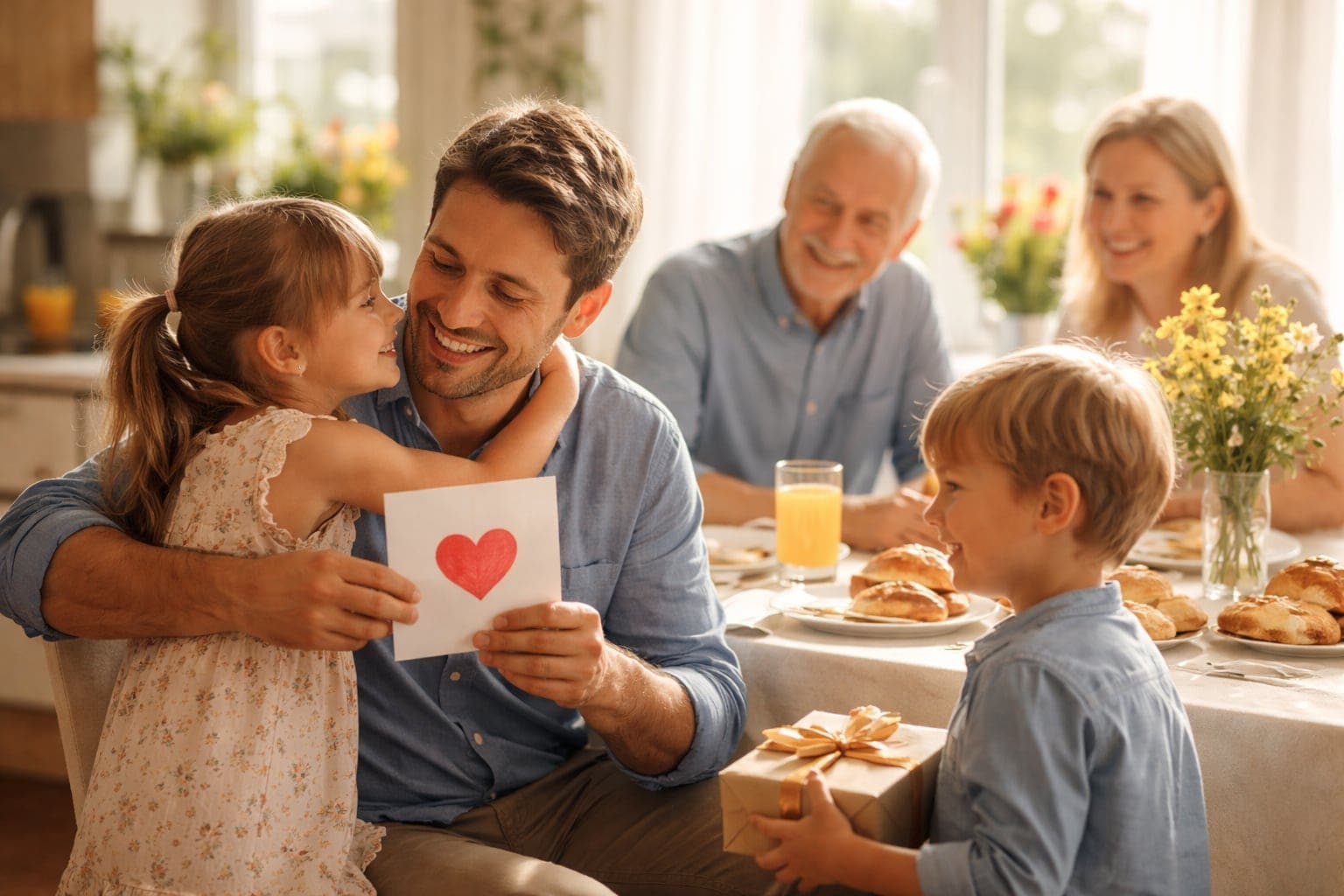
Father’s Day, celebrated today in parts of Europe and at various times elsewhere, is an opportunity to express gratitude and to consider the evolving nature of fatherhood in societies influenced by tradition, policy, and changing family dynamics.
In countries like Spain, Portugal, and Italy, families celebrate Father’s Day on March 19, linked to the feast of Saint Joseph. During this day, handmade gifts are exchanged, families come together for meals, and social media fills with tributes to fathers. Though quieter than other celebrations, it holds significant cultural importance.
In other parts of Europe, such as France, Ireland, Germany, the Netherlands, and Nordic countries, Father’s Day is observed later, often on the third Sunday of June, with variations based on local customs. This reflects Europe’s layered history, where religious, national, and modern traditions coexist.
The choice of March 19 in Southern Europe connects to Saint Joseph, seen as a model of fatherhood. In Spain and Italy, the day blends religious and social significance. “Día del Padre” in Spain became popular in the 20th century, complementing Mother’s Day, while Italy’s “Festa del Papà” includes traditional sweets like zeppole. Portugal shares similar customs, bringing generations together. Saint Joseph’s influence also extends to parts of Belgium and France with Catholic traditions.
Father’s Day traditions in Europe vary widely. Germany’s “Vatertag” coincides with Ascension Day and includes outdoor activities. Austria and parts of Switzerland celebrate similarly. In France and Belgium, Father’s Day is in June and features family meals and small gifts. In the UK and Ireland, it aligns with the third Sunday of June, marked by cards and gatherings. Nordic countries celebrate in November, often more understated, aligning with cultural norms favoring simplicity. Eastern Europe’s approaches vary too, with Poland celebrating on June 23 and Hungary and Romania adopting the June tradition more recently.
Father’s Day increasingly reflects a broader societal shift in understanding fatherhood. The role of fathers has expanded beyond providers to include emotional presence and shared caregiving. Across the EU, policies support this transformation, with the Work-Life Balance Directive introducing minimum standards for paternity leave. Countries like Sweden and Norway lead with generous parental leave schemes, encouraging fathers’ involvement. Spain has made strides by equalizing maternity and paternity leave. Yet, cultural expectations and workplace practices still limit fathers in some areas.
Modern European societies feature diverse family structures, including biological fathers, stepfathers, adoptive parents, same-sex parents, and other paternal figures. Father’s Day is becoming more inclusive, recognizing varied experiences. Public conversations now explore mental health, work-life balance, and challenges fathers face. Research shows active paternal involvement benefits children’s development, emphasizing support for fathers.
Father’s Day offers a moment for gratitude and reflection. For many, it’s a joyful occasion, but it can also bring mixed emotions, especially for those who have lost a father or have complex relationships. Public discourse increasingly acknowledges this diversity, fostering nuanced understanding of family life. Institutions, schools, and community organizations use the day to highlight positive models of fatherhood and promote dialogue about caregiving equality.
Father’s Day endures as a significant part of Europe’s cultural fabric, personal in nature, honoring relationships and values like care, responsibility, and presence. As Europe evolves, Father’s Day stands as a tribute to tradition and a reflection of change, recognizing the impact of fatherhood across generations.



Leave a Reply