


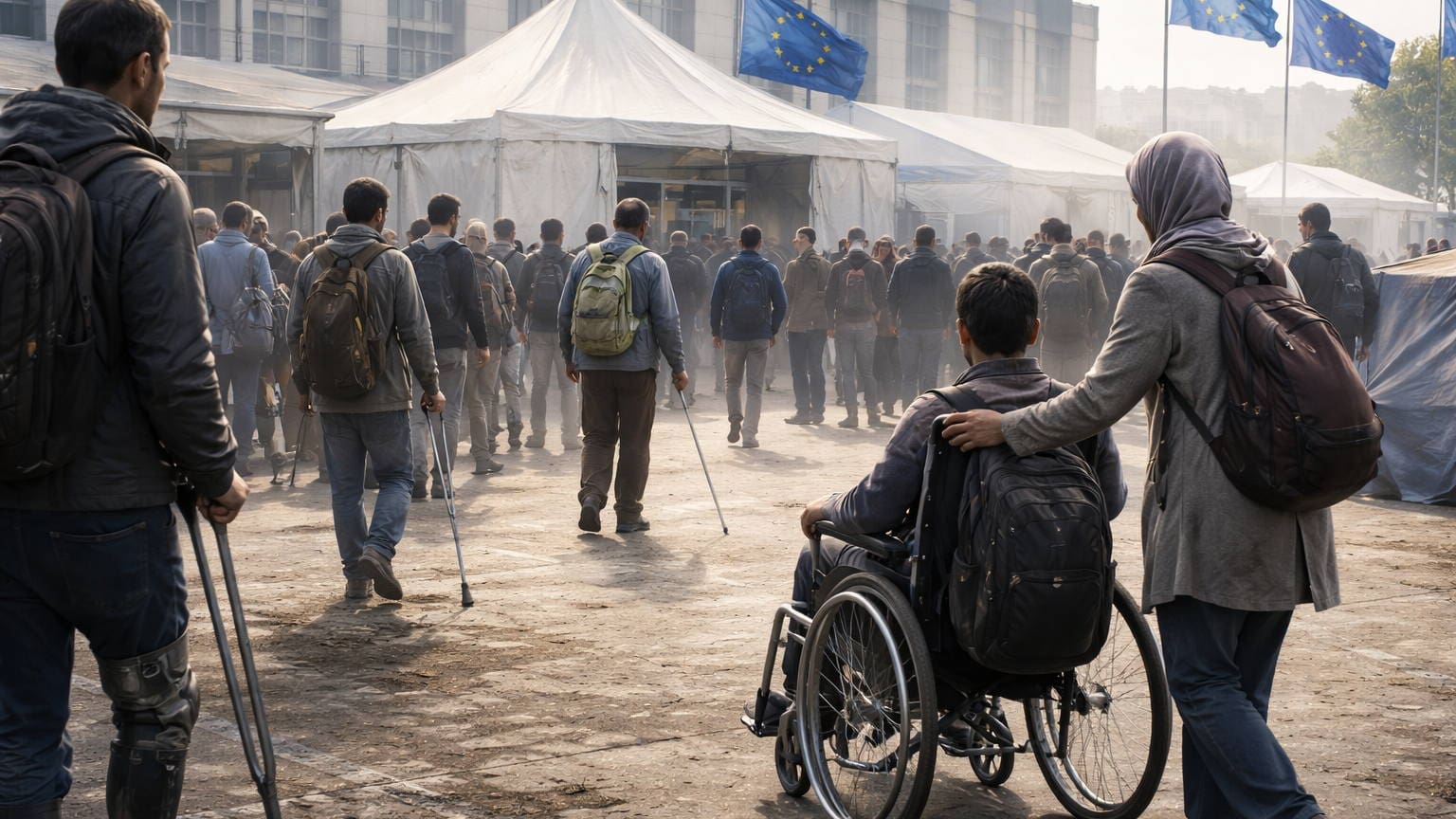
As the European Union prepares for the full implementation of its Pact on Migration and Asylum in June 2026, disability-rights advocates highlight the often-overlooked group: migrants and asylum seekers with disabilities. A policy brief by the European Disability Forum and the International Refugee Assistance Project indicates that despite Europe’s legal obligations, many individuals encounter inaccessible procedures, insufficient safeguards, and barriers to basic support where protection should commence.
The warning is issued in a joint statement by the European Disability Forum (EDF) and an extensive policy brief developed with the International Refugee Assistance Project (IRAP). They assert that Europe’s migration and asylum systems frequently overlook disabled individuals, even though the EU and its member states are obligated by the UN Convention on the Rights of Persons with Disabilities and the EU Charter of Fundamental Rights.
Timing is crucial. The Pact on Migration and Asylum, adopted in 2024, became effective in June of that year and will begin applying after two years. The European Commission has promoted the framework as a firm and fair system, and in January it published its first European Asylum and Migration Management Strategy to guide implementation for the next five years. However, EDF and IRAP argue that without integrating disability into this implementation, the legal commitments will largely remain theoretical for many seeking safety in Europe.
This concern is part of a broader discussion about European migration policy. As noted in The European Times’ analysis of Europe’s migration shift, the EU faces increasing pressure to control its borders while maintaining its commitment to rights and asylum. The EDF-IRAP brief indicates that disabled migrants and asylum seekers are where this tension is most apparent.
Five central gaps in the issue
The policy brief identifies five main problem areas. The first is invisibility. The authors note that disabled individuals are often unrecognized in EU migration frameworks, and disability-disaggregated data are not systematically collected. Without visibility, support often depends on random chance, local practices, or obvious need.
The second area is accessibility. Although reception centers, screening systems, and border procedures exist on paper, they are not always physically accessible or adapted for communication, cognitive needs, or mental-health-related disabilities. The brief suggests that increasing the use of expedited border procedures could exacerbate these issues without proactive identification and accommodation from the beginning.
The third issue is exclusion from social protection. Migrants and asylum seekers with disabilities may encounter significant obstacles in accessing healthcare, disability-related support, income assistance, and community-based services. In reality, the gap between reception systems and mainstream welfare structures often leaves individuals without essential support during critical asylum process stages.
The fourth problem pertains to family reunification and legal migration rules. EDF and IRAP argue that disability-related income and support arrangements are often ignored when assessing whether an individual meets financial or maintenance requirements. This results in indirect discrimination that can exclude disabled individuals from legal pathways available to others.
The fifth and most sensitive area is detention and return. The brief states that disabled individuals face








Leave a Reply