


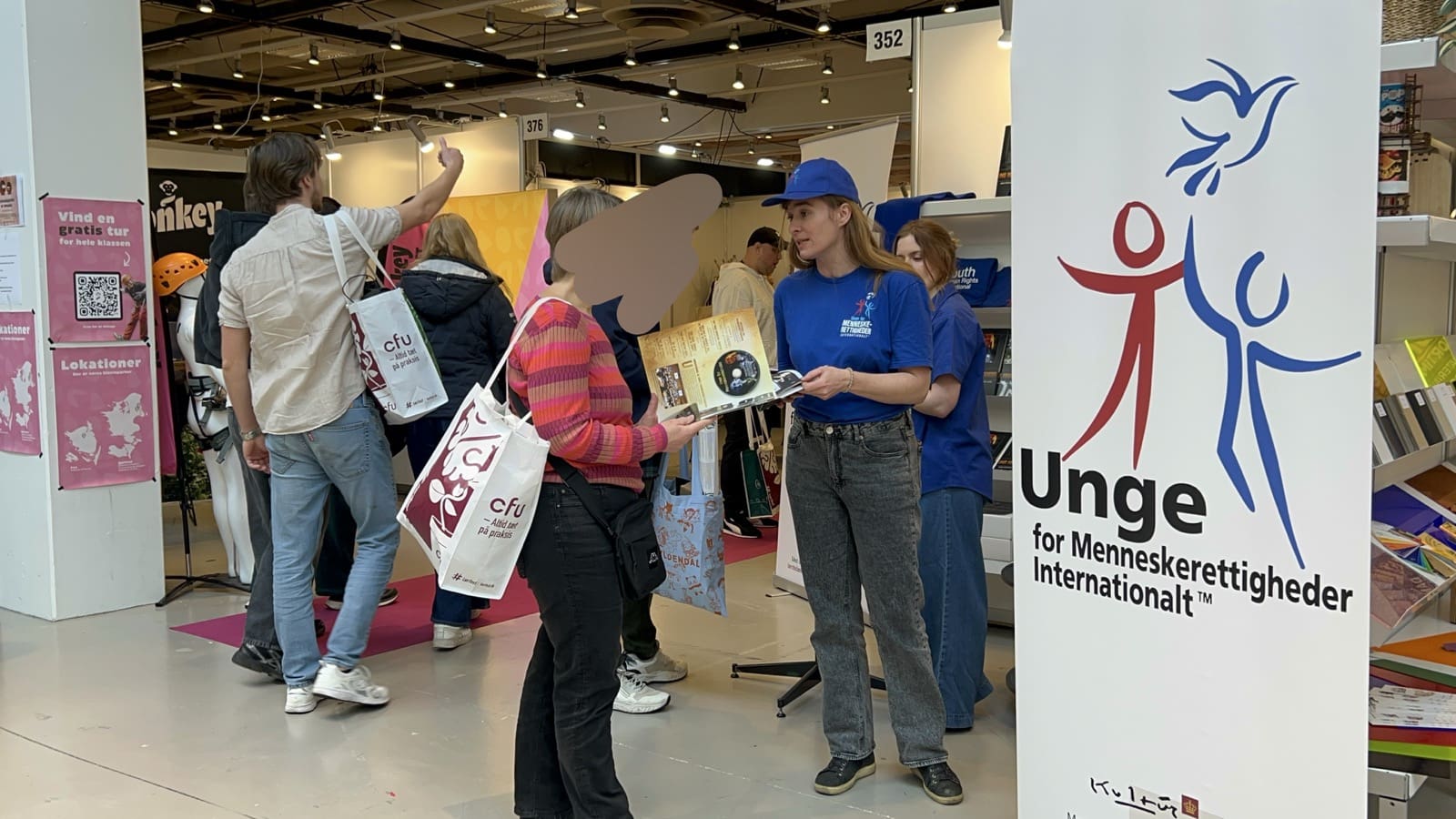
From Danish classrooms and teacher outreach to Geneva forums and projects reaching South Asia and New York, Scientology-supported initiatives persist in framing human-rights literacy as a practical civic tool.
KINGNEWSWIRE / PRESS RELEASE // BRUSSELS, Belgium — March 12, 2026 — Human-rights education stands as a prominent public activity linked to Scientologists across Europe. Recent efforts range from school outreach in Denmark and community projects in Italy to institutional dialogue in Geneva and initiatives extending beyond Europe. This activity is largely conducted through Youth for Human Rights International and United for Human Rights, both supported by Scientologists and the Church of Scientology, and centered on the Universal Declaration of Human Rights.
This framework aligns with the United Nations’ approach to human-rights education. The UN Declaration on Human Rights Education and Training emphasizes the necessity of such education for promoting universal rights and fundamental freedoms.
A notable example is in Denmark, where volunteers from Youth for Human Rights DK attended the national Teacher’s Fair, introducing several hundred visitors to the campaign and distributing 79 Educator Kits to teachers. Currently, over 40 percent of Danish schools possess an Educator Kit. Since 2006, Youth for Human Rights Denmark has engaged in classroom discussions, film screenings, creative workshops, and the annual Walk for Human Rights in Copenhagen, supported by the City of Copenhagen and Denmark’s Ministry of Culture.
Youth for Human Rights International originated from a European youth essay competition in 2001, recognizing winners from Hungary, the Czech Republic, and Austria in Geneva. Founded by educator Dr. Mary Shuttleworth, the organization educates young people on the Universal Declaration to encourage advocacy for tolerance and peace.
In the EU, this educational approach has taken a civic form. In February, the European Office of the Church of Scientology for Public Affairs and Human Rights launched “Europe’s Values, Your Rights,” a youth guide explaining the EU’s core values—human dignity, freedom, democracy, equality, the rule of law, and respect for human rights—in plain language, linking European legal protections to daily life.
Elsewhere in Europe, initiatives combine rights education with community dialogue. In Milan, a December gathering organized by Diritti Umani e Tolleranza involved Latin American and African community representatives in northern Italy. Participants completed United for Human Rights training and explored using materials in youth work, neighborhood outreach, and local associations.
In Geneva, the Palais des Nations hosted “Human Rights and Peace – Better Together” around Human Rights Day, gathering educators, academics, civil-society actors, and institutional representatives to discuss human-rights protection, social inclusion, and peace. Ivan Arjona-Pelado, president of the European Office of the Church of Scientology, chaired a panel on freedom of thought, conscience, and belief.
Scientology-linked human-rights activities have also extended beyond Europe. In August 2025, Scientology Europe highlighted assistance from Dutch volunteers to a foundation in Sri Lanka, where Stichting Mission Lanka and Vision Media Academy conducted journalism and human-rights workshops using United for Human Rights materials.
International summits offer another avenue for European-supported human-rights efforts to reach global audiences. Youth for Human Rights’ International Human Rights Summits held in Geneva, Los Angeles, and New York bring together young representatives, government officials, educators, and advocates to discuss implementing the Universal Declaration.
This work is rooted in the teachings of Scientology founder L. Ron Hubbard and expressed through secular educational and civic channels. The Creed of the Church of Scientology and the Code of a Scientologist describe a commitment to human rights and justice through social reform.
The European Office represents the Church of Scientology and humanitarian programs before various European and international bodies. Participation in the EU Agency for Fundamental Rights’ civil-society platform reflects its dialogue with existing institutions.
Ivan Arjona, a Church of Scientology representative, stated, “Human rights are strongest when understood by teachers, students, families, and communities. What is happening across Europe—and in projects supported by Europeans abroad—demonstrates that civic responsibility begins with knowing and respecting rights, aligning with Europe’s democratic values.”
Scientology is present throughout Europe, with over 140 churches, missions, and groups in at least 27 nations, focusing on education, prevention, and community-level support inspired by L. Ron Hubbard.
In Europe’s diverse religious frameworks, the Church’s recognition expands, with several countries and the European Court of Human Rights acknowledging Scientology communities as protected under national and international freedom of religion or belief.











Leave a Reply