



Europe on Tuesday faced a recurring strategic vulnerability: its reliance on imported energy. As ministers considered emergency measures and EU leaders turned their focus back to competitiveness, the latest external shock reignited a long-standing internal debate — whether Europe had moved too far from nuclear power.
The most significant story for Europe on 10 March isn’t a single summit outcome or market shift, but how multiple developments suddenly converged into a political reality. The G7 decided against the immediate release of strategic oil reserves, instead requesting the International Energy Agency to draft scenarios. Meanwhile, EU institutions and governments intensified their focus on energy prices, inflation risks, and industrial competitiveness. In Paris, European Commission President Ursula von der Leyen used the IAEA Nuclear Energy Summit to argue that Europe had made a “strategic mistake” by reducing nuclear power.
External Shock Highlights European Vulnerability
The immediate trigger is the broader Middle East crisis and growing fears of disruption around the Strait of Hormuz affecting European bills, industrial costs, and political pressure. As per European Council President António Costa’s speech to EU ambassadors, 2026 should be marked as “the year of European competitiveness,” linking economic resilience to sovereignty. However, this ambition becomes challenging to maintain as each external shock raises questions of supply security, affordability, and industrial survival.
The current energy situation goes beyond oil prices. It strikes at the heart of Europe’s economic model. The continent remains more vulnerable than the United States to imported fossil fuels, directly impacting manufacturing costs, transportation, food prices, and household concerns. When energy is scarce or volatile, Europe feels it not as an abstract market issue but through weaker industry, tighter public budgets, and renewed family pressures from ongoing inflation.
Von der Leyen Reopens Nuclear Debate
This context heightened the impact of von der Leyen’s comments in Paris. As reported, she noted Europe’s decision to reduce nuclear energy increased its dependency on imported fossil fuels, highlighting that nuclear’s contribution to European electricity has significantly declined since 1990. She also revealed a new €200 million EU guarantee for private investment in small modular reactor technology, indicating Brussels’ willingness to be more active in the sector despite member state divisions.
This intervention intensifies rather than settles Europe’s nuclear debate. Germany’s environment minister defended wind and solar as cleaner and safer the same day. Austria and Luxembourg have long resisted a stronger EU alignment with nuclear, whereas France deems it crucial for industrial resilience and low-carbon electricity. The political discourse is shifting. The debate now extends beyond climate targets or technological options, increasingly concerning sovereignty, price stability, and costs of relying on factors beyond Europe’s borders.
The emerging European discourse is more complex than a straightforward nuclear-versus-renewables contest. Europe has rapidly expanded renewable energy but still requires stable generation, robust grids, enhanced storage, faster permitting, and lower-cost electricity for industry. Nuclear is returning to the forefront not because the debate is over, but because the stress test has reemerged.
Climate Policy Faces Pressure
Current pressures are reshaping the EU’s carbon-market discourse. According to
Seems like Europe’s energy strategy is a bit like a fine wine—better aged than rushed, yet here we are, with another vintage of “whoops, we might need that nuclear stuff after all” 🍷. Nothing like a crisis to remind us that sometimes, the old school isn’t so bad, eh? 😂 Looks like Europe’s energy strategy is about as stable as a wobbly café table in a Paris bistro. Maybe this nuclear debate will finally get the attention it deserves instead of just being the awkward guest at every sustainability dinner party. 🍷💡 Looks like we’ve come full circle, eh? When in doubt, let’s just revisit the good old nuclear debate like it’s the latest fashion trend—nothing screams “strategic genius” quite like depending on the stuff that could power a small city. ⚡️💼 Looks like Europe is playing a game of “hot potato” with energy—no one wants it, but everyone’s scrambling to grab the last piece! 😂 Time to dust off those old nuclear plans, eh? Looks like the EU’s energy strategy is just like a bad reality TV show—lots of drama and the same old arguments recycled! Can’t wait for the next episode where nuclear power becomes the hero we never wanted but desperately need. 😏⚡️ Seems like the great energy conundrum has us all in a bit of a pickle, eh? 🤔 Nothing like a crisis to bring back the old nuclear debates—who needs stability when you can just ride the renewable rollercoaster? 🎢💸 Nuclear power, eh? A brilliant plan to solve our energy woes by embracing the very thing we tried to avoid. Who knew that relying on imported fossil fuels would be such a fabulous strategy? 😏💡 Looks like Europe’s energy plan is like a bad Euro pop song—everyone’s dancing to the same old tune while trying to figure out if the beat should be nuclear or renewable. 🎶💸 Isn’t it just delightful how Europe, with all its sophistication, keeps dancing around the nuclear issue like it’s a hot potato? One minute we’re all about green energy, the next we’re clutching at straws—uh, I mean, reactors! 😂💼 So, we’ve decided to play musical chairs with our energy policy again, eh? 🎶 Nothing like a little geopolitical drama to remind us that maybe, just maybe, relying on the wind and sun alone isn’t the best game plan! 😂 Oh great, just when we thought we could escape the nuclear chat, here comes another energy crisis to remind us how ‘brilliantly’ we’ve managed our imports. 🍷🔌 Europe’s strategy is like trying to fix a leaky faucet with a band-aid—everyone’s still getting wet! 😂 Looks like we’ve hit the “energy panic button” again, eh? Just when you thought the nuclear debate was about as dead as a cheesy tourist trap in the off-season, here comes another crisis to resurrect it! 😂💡 Seems like Europe is having a midlife crisis—first, it dumped its nuclear power like a bad date, and now it’s scrambling back like a lovesick puppy after realizing it can’t afford the heating bill. 🥴💡 Looks like Europe’s energy strategy is about as clear as mud after a rainstorm. Who would’ve thought that leaning on your neighbor for power could be a tad risky, eh? 😂💡 Can’t wait to see how many meetings it takes for them to realize that turning the lights back on means considering that “nuclear” thing again. Maybe we should just power our factories with all the hot air from these discussions instead! 😂💡 A classic case of “let’s put all our eggs in one basket” – oh wait, which basket again? 😏 Maybe it’s time to bring back the nuclear option before we’re all left shivering in the dark, eh? Nuclear power back in vogue? How avant-garde! 🌍💡 Maybe next, they’ll suggest the return of the horse and cart for “sustainable transport.” 😂
Comments
17 responses to “Europe’s Energy Shock Reopens Nuclear Debate”
Last News
Von der Leyen to Meet Hungarian PM Magyar on Friday
Magyar, whose centrist party recently won Hungary’s election, is working to access billions in EU funds frozen due to violations of EU laws under Orbán’s 16-year governance.
Securing €10.4 billion in EU post-pandemic recovery funds is the top priority for th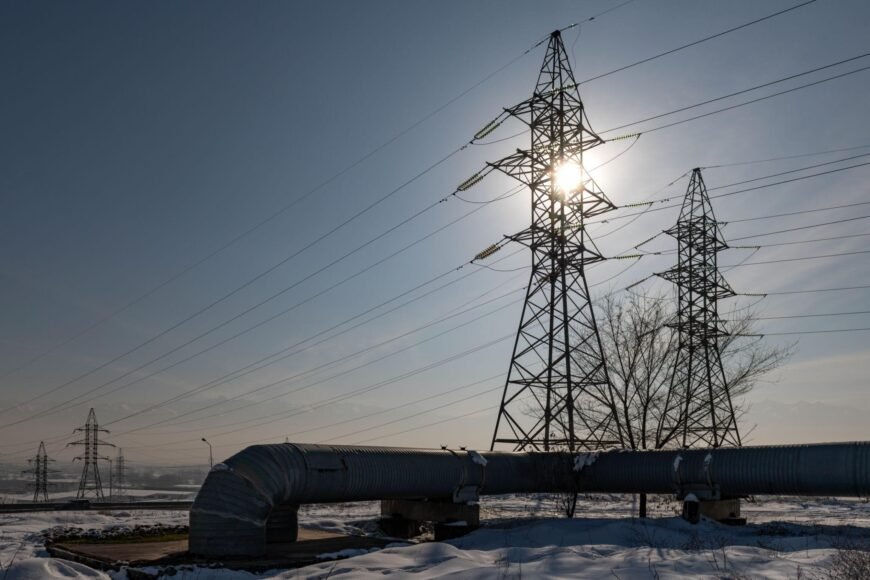
Kazakhstan’s Energy Crisis Worsens as Rosatom Approaches Balkhash Nuclear Agreement for Astana 2026
Kazakhstan’s government has increasingly warned about electricity shortages, rising industrial deman
Power Rivalries and Their Impact on the Middle East and Horn of Africa
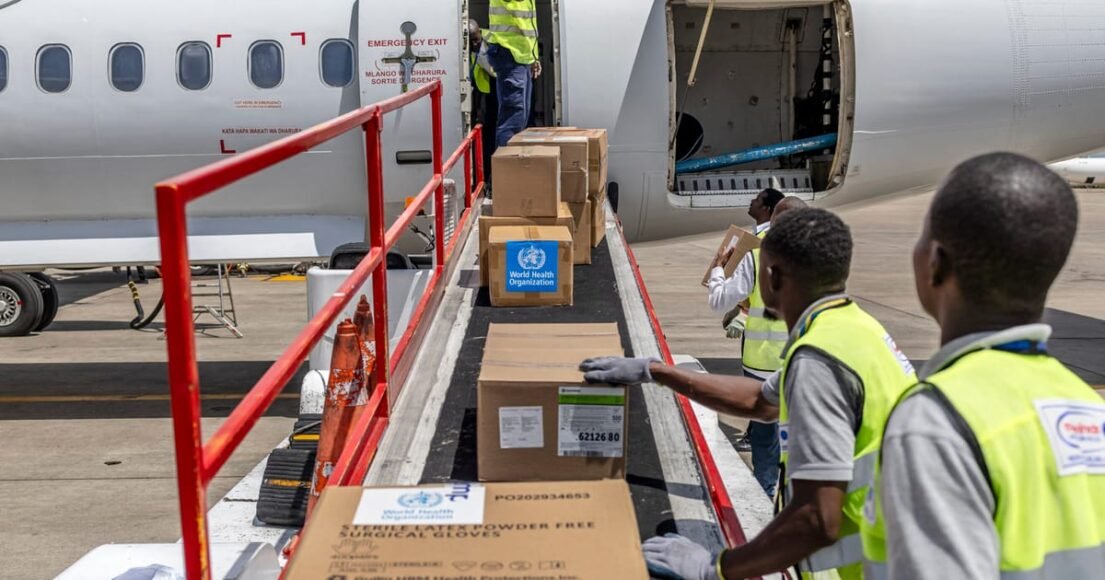
Europe Enhances Ebola Detection Amid Congo Epidemic Surge
Belgium has direct daily flights to and from Congo. Brussels Airlines announced adjustments to its crew schedules since the United States banned entry from the region, but stated that these changes wouldn’t impact the curren
Spanish Police Raid Headquarters of PM Sánchez’s Socialist Party
Spanish judicial authorities did not immediately respond to POLITICO’s request for comment.
Sánchez’s fragile minority government has been under heavy pressure since news of Zapatero’s indictment.
The regio
Kallas, von der Leyen, and the EU Intelligence Rivalry
Europe Is Failing a Key Test in Press Freedom
Fears Over UK Trade Policy Resurface Amid Brexit Divisions in London, 2026
Ex-PM Tsipras Aims to Unite Greece’s Divided Opposition with New Party
“Her stances are reminiscent of [Italy’s] 5Star Movement, but with a more
What Jesus Likely Ate Based on Historical Records
These scriptures also reference some of the foods he ate. For instance, the Gospel of Matthew recounts the miracle where Jesus fed five thousand, as well as wom

Leave a Reply