


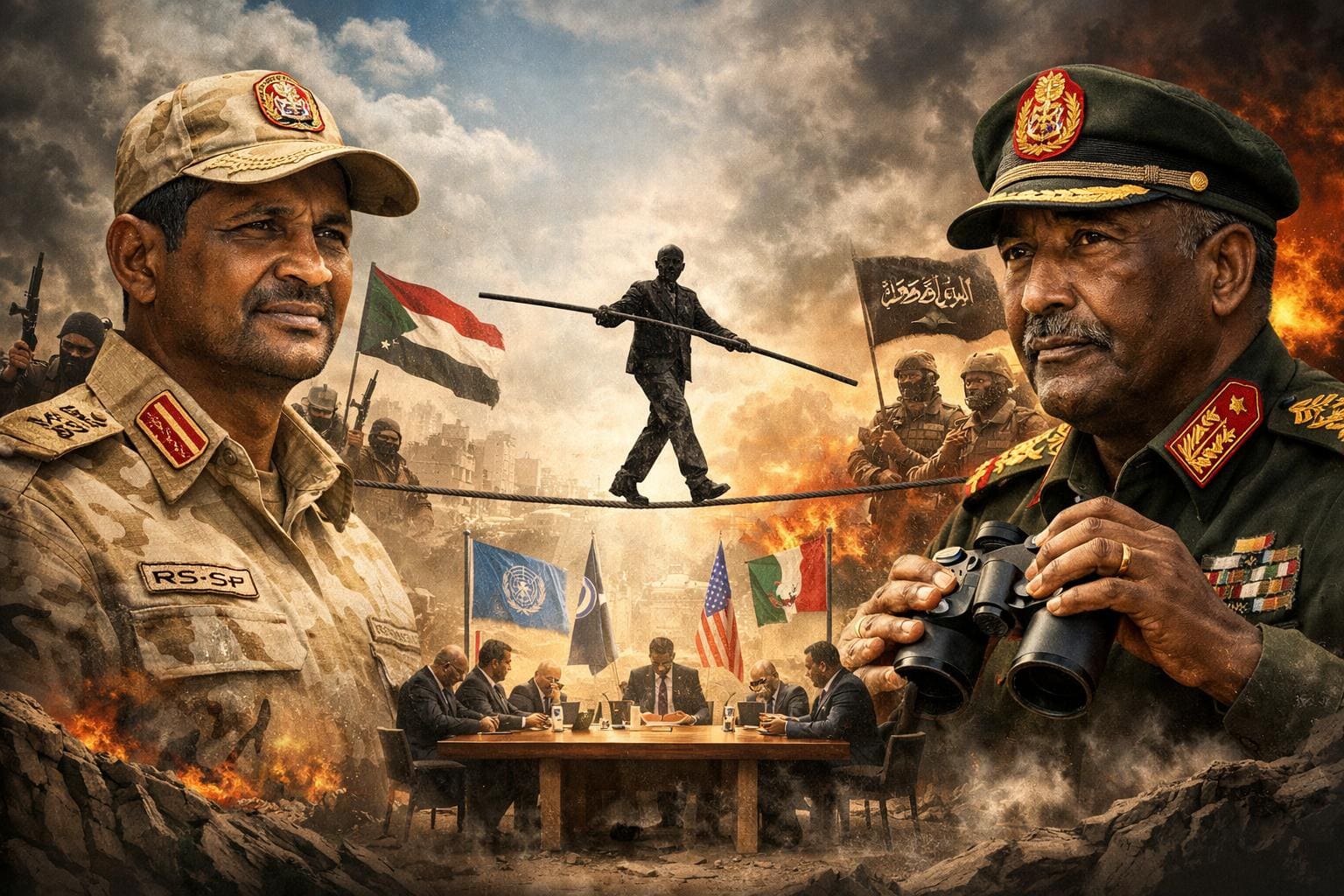
General Mohamed Hamdan Dagalo, the leader of Sudan’s Rapid Support Forces, has reiterated his commitment to ending the three-year civil war and engaging in peace negotiations. He is open to allowing UN-supervised humanitarian support in the areas under his control. In recent talks in Nairobi with Pekka Haavisto, the UN secretary-general’s envoy, Dagalo expressed readiness to stop the war and collaborate with the UN to alleviate Sudanese suffering. He invited the UN to establish offices in Nyala, the RSF-led Tasis government’s capital.
However, the Sudanese Armed Forces, led by General Abdel Fattah al-Burhan and his allies from the Muslim Brotherhood, refuse to engage in talks unless they dictate the terms, insisting on the disarmament of opposing armed groups. This pattern has persisted since diplomatic efforts began in late 2023, with the RSF open to negotiations, but facing obstruction from Burhan and the SAF.
In August 2024, the US invited both parties to Geneva for peace talks. Hemedti confirmed the RSF’s commitment to negotiation, aiming for a peaceful political solution and a return to civilian rule. Conversely, Burhan rejected the invitation, vowing ongoing conflict. In February 2025, the RSF established a Government of Peace and Unity in their territories, highlighting a transitional constitution and a diverse presidential council.
Later, the RSF declared a three-month humanitarian truce and signaled acceptance of a ceasefire framework proposed by the US-led Quad. Despite this, Burhan reiterated his refusal to negotiate. The International Crisis Group attributes Burhan’s stance to internal army divisions and Islamist generals who resist peace talks, fearing their loss of power. The appointment of hardliner Lt-Gen Yasser al-Atta as Chief of Staff further diminishes prospects for negotiations or power-sharing.
The stark contrast is evident: Hemedti and the RSF regularly seek negotiations and establish governance structures, while Burhan leverages Islamist hardliners within the SAF to maintain a militaristic stance. With the region destabilized by Gulf War 3 and Iran’s weakening, Burhan clings to power despite pressure from Gulf, US, and European states. The Berlin conference could determine future actions if the SAF continues avoiding talks, potentially leading to increased pressure on Burhan to negotiate.



Leave a Reply