


Minnesota, January 2026 — The US immigration court ruling has emerged as a defining legal moment in Minnesota, placing federal enforcement practices under intense judicial scrutiny while drawing national political attention. The ruling comes after weeks of tension following an aggressive federal immigration operation that resulted in fatalities, protests, and a rare legal confrontation between state officials and Washington authorities.
As Minnesota’s legal challenge reached the federal bench, the US immigration court ruling became central to debates about constitutional authority, civil liberties, and the limits of federal power within U.S. states. The case now stands as a benchmark for how immigration enforcement will be conducted in politically divided regions.
Background: How Minnesota Became the Legal Battleground
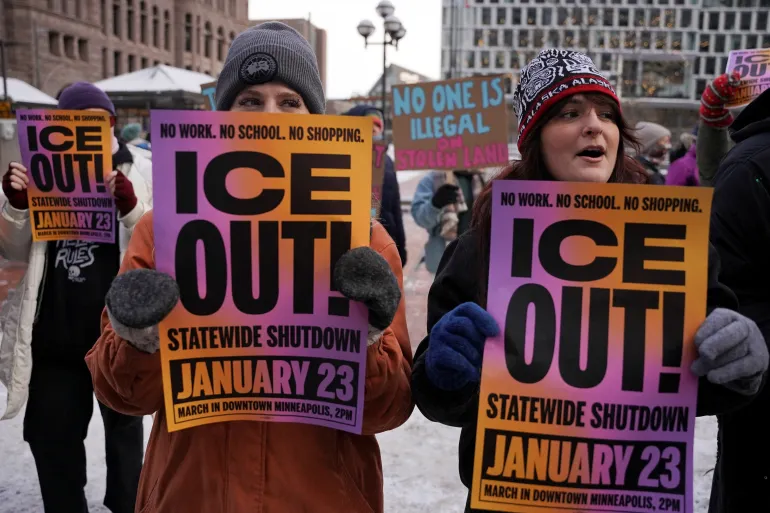
Minnesota found itself at the heart of the national immigration debate after federal agents intensified enforcement actions in the Minneapolis–St. Paul area. The crackdown was part of a wider strategy to demonstrate federal control over immigration enforcement amid rising political pressure.
The situation escalated when two U.S. citizens were killed during enforcement encounters, sparking immediate public backlash. State officials responded by filing a lawsuit questioning the legality and scope of the operation. This legal action ultimately led to the US immigration court ruling, which now governs how federal agencies may proceed within Minnesota’s borders.
Federal Enforcement Strategy Under Legal Review
The enforcement surge brought thousands of federal personnel into Minnesota, raising concerns about jurisdiction, coordination with local law enforcement, and operational transparency. State attorneys argued that federal agencies failed to properly consult state authorities before deploying large-scale operations.
At the center of the dispute is whether federal immigration powers allow such actions without state cooperation. The US immigration court ruling evaluates this question by weighing executive authority against constitutional limits designed to protect state sovereignty.
Judicial Examination of Constitutional Boundaries
The federal court reviewed extensive legal arguments from both sides. Minnesota’s legal team emphasized the Tenth Amendment and argued that unchecked federal action risks undermining democratic accountability at the state level.
Federal lawyers countered that immigration enforcement remains an exclusive federal responsibility under U.S. law. The US immigration court ruling reflects the court’s effort to balance these competing interpretations without undermining established immigration statutes.
Legal analysts describe the ruling as cautious but impactful, signaling that federal authority may be subject to procedural limitations when enforcement actions affect public safety.
Political Response From Washington
Former President










Leave a Reply