


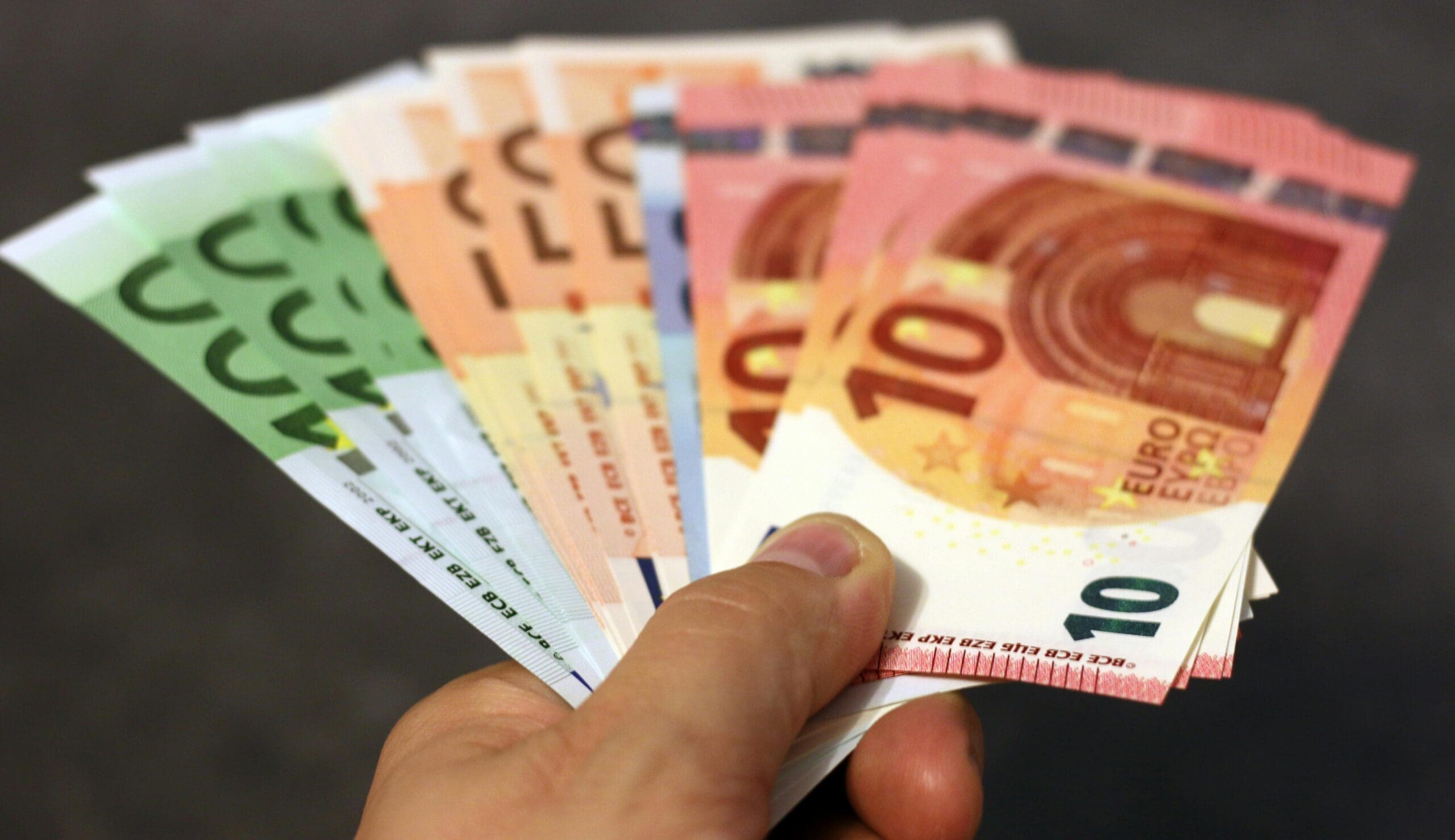
Reflect on the question, ‘How much are you worth?’ Today, thinking in monetary terms seems logical, as money is omnipresent—it serves as a payment method, a success metric, and a social status indicator. Quite rightly so, as everything around us can be converted into money. I could sell the laptop I used to write this for a certain sum. You could sell the device you’re reading this on for a set price. You could even sell your ability to work (labor power) and earn money for the five minutes spent reading this.
Your time equates to money. Depending on how you use it, you either gain or lose money. (In economic terms, there’s no neutral time where you neither earn nor lose money.) Those who earn money contribute to wealth—for themselves, their employers, and the economy. Some people can both spend and earn money; others can earn no more or are too young to do so. Some have never had the chance to make money for various reasons. The difference between money-earners and non-money-earners in conventional economics is crucial to explore if we aim to ascertain whether we are merely money.
According to the no money, no importance view, society may be divided into money-makers and non-money-makers. Simply stated, money-makers actively contribute to the wealth-generating process. They engage in the economy in some capacity. Conversely, non-money-makers do not actively partake in money-making. Regarding work as a money-making activity, three groups generally fit the non-money-makers category: future workers (children who will eventually join the workforce and unemployed individuals), former workers (like pensioners), and non-workers (those physically or mentally unable to work). This division, outlined in the diagram below, is particularly helpful when identifying who remains hidden from the economy.
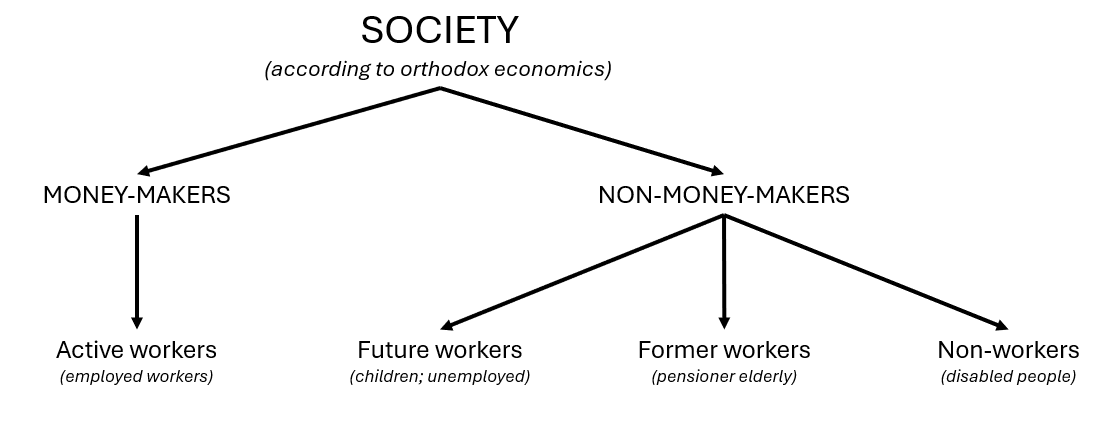
So, who remains invisible to the economy? Active workers are not excluded from economic discussions, as they are the economy’s backbone. Therefore, if money-makers are essential, non-money-makers are deemed less significant. Yet, among non-money-makers, future workers are viewed as untapped resources by the economy. They don’t currently participate actively in the economy or earn money but have the potential to do so later. They are seen as long-term investments that will eventually be as valuable as current workers, if not more so.
In conventional economics, a term called human capital signifies a person’s economic value due to their skills, knowledge, abilities, and status. In simpler terms, human capital refers to the societal segment that contributes or could contribute to economic development. This concept further divides society from an economic standpoint. The intriguing aspect of this term is that it only encompasses individuals who possess economic value. Thus, human capital is the part of society deemed useful in the wealth creation process. Consequently, some non-money-makers are viewed as more important than others—namely, children and the unemployed.
Human capital is often used to justify investing in individuals who can or will potentially earn money. After all, investments are made with the expectation of returns exceeding what was invested. Therefore, it makes sense to invest in those who will generate income. Investment in a person (such as through education or training) might not lead to immediate profit, but they may become more qualified and skilled in the future, thus more productive for the economy. As a result, human capital comprises only those parts of society that can generate more money than was invested in them (see the diagram below).
Comments
20 responses to “Is It All About the Money?”
-
Money’s the name of the game, eh? If you ain’t raking it in, you might as well be invisible – just like my last tax return. 😂💸
-
Just what we needed – a deep dive into how the worth of a human can be boiled down to a price tag. Bravo, I always thought my life’s purpose was to boost GDP, not to enjoy a lovely cup of coffee! ☕💸
-
Isn’t it just delightful how we’ve turned human beings into mere assets? 🤔 I suppose next they’ll start charging us rent for occupying space on this planet—talk about a capitalist holiday! 💸
-
Isn’t it just delightful how we can now measure our worth like we’re haggling at a flea market? 💸 If only my charm and wit could be converted into euros, I’d be rolling in it! 😂
-
Money’s the name of the game, isn’t it? I mean, who knew our worth could be calculated in euros and dollars? 💸 Just call me a future worker in the economy of ‘do I pay rent or buy coffee?’ 😂
-
Money talks, but it seems like some of us are just here to admire the scenery while the cash flows by. 💸 If only potential got you a pint at the pub, we’d all be millionaires! 🍻
-
Isn’t it charming how our worth now hinges on the ability to convert our very existence into euros? 🙄 Who knew that the secret to happiness was just a well-placed currency symbol away? 💸
-
Money is the new god, isn’t it? Just like that fancy coffee machine at the office — you can’t brew success without it! ☕💸
-
Money, eh? Who knew our worth was reduced to the price tag on our forehead? 💸 Next thing you know, they’ll be auctioning off our lunch breaks! 😂
-
Cynical, isn’t it? Seems like you’re either a cash cow or just a moo-er waiting for your moment in the sun. 💸😏
-
Isn’t it just delightful how we’ve turned life into a bizarre game of Monopoly? I suppose the only way to prove your worth these days is to have a bank account that looks like a phone number—cheeky, innit? 💸😏
-
So, it’s all about the money, eh? Brilliant! I suppose next they’ll start charging us for breathing—after all, that’s the most valuable thing we do for free! 💸😏
-
Honestly, if I had a euro for every time I heard “it’s all about the money,” I’d be rich enough to buy my own island. 😂 But hey, who needs a soul when you’ve got a balance sheet, right? 💰
-
Is there anything better than being reduced to a mere price tag? 💰 Next, they’ll be auctioning off our thoughts—let’s hope mine comes with a discount! 😏
-
Isn’t it just delightful how we can quantify our very existence with a price tag? 💸 I suppose if I could sell my sense of humor, I’d finally be a millionaire! 😂
-
Oh, marvelous! A riveting discussion on how to measure our worth in euros and pounds—because who needs self-worth when you can just check your bank balance, right? 💸🙄
-
Funny how the only time we ask “what’s your worth?” is when we’re not at the bar, eh? 😂 Just a tad ironic that the future of our economy rests on the shoulders of kids and folks on the sofa, while the rest of us are stuck trading time for a paycheck like it’s the medieval market! 🍻💸
-
Isn’t it just delightful how we’ve boiled down our existence to a mere price tag? 💸 Next, we’ll be auctioning off our personalities at the local flea market! 😂
-
Seems like we’re all just stepping stones for the money-making machine, eh? 😂 If only my time in the queue for a coffee could be converted into cash, I’d be a billionaire by now! 💸
-
Money’s the name of the game, eh? Just another reminder that we’re all just cash cows waiting for our milking moment! 💸😂

Last News

Fears Over UK Trade Policy Resurface Amid Brexit Divisions in London, 2026
Ex-PM Tsipras Aims to Unite Greece’s Divided Opposition with New Party
“Her stances are reminiscent of [Italy’s] 5Star Movement, but with a more

What Jesus Likely Ate Based on Historical Records
These scriptures also reference some of the foods he ate. For instance, the Gospel of Matthew recounts the miracle where Jesus fed five thousand, as well as wom
Lithuania Faces Heightened Baltic Security Crisis Amid Russian GPS Threat Warning in 2026
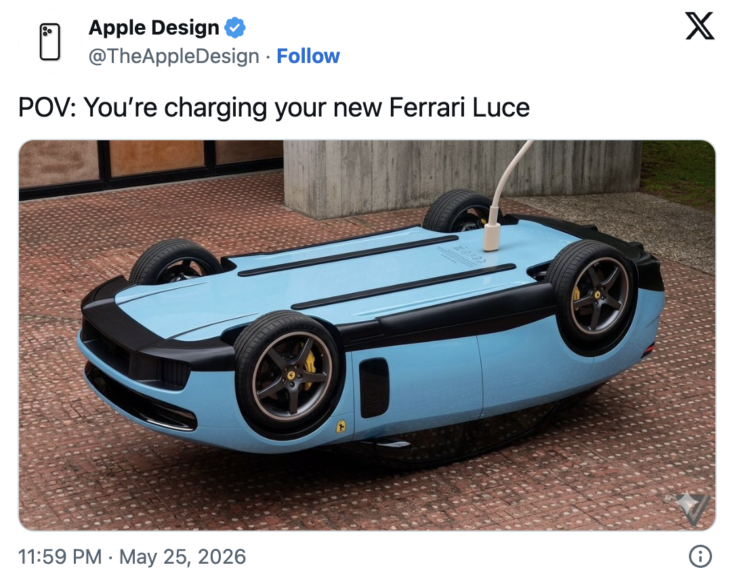
Electric Ferrari Sparks Outrage from Transport Minister and Across Italy
The contentious Luce — the first Ferrari model to be entirely electric and to feature five seats — has immediately caused a stir among traditionalists in Italy.
It also failed to immediately reassure
Galileo’s Relics: The Museum Display of His Sacrificed Fingers and Teeth
His righ
Senegal-IMF Discussions Jolt African Bond Markets Following PM’s Exit in Dakar 2026
Analysts warn that the leadership transition could delay ongoing negotiations with the International Mon
Metropolitan Hilarion (Alfeev) Arrested in Karlovy Vary, Czech Republic
“Currently, Metropolitan Hilarion cannot personally address the channel’s subscribers. Due to the events in Karlovy Vary, we provide information from the defe
French poll shows far-right Bardella winning, far-left Mélenchon surging in 2027 election
The Odoxa poll indicated that the leader of France Unbowed would garner 16 percent of the vote in the first round, an increase from 12 percent in a similar
Trump Reiterates 2020 Election Claims 107 Times as U.S. Midterms Approach Washington 2026
The repeated statements have intensified political divisions across the countr
Leave a Reply