EU Commission Evaluation: Do Member States’ Plans Adhere to New Fiscal Regulations?

Recent Developments in EU Fiscal Plans

The European Commission has released its evaluation of the multi-annual fiscal plans submitted by EU member states, revealing that 20 out of 21 nations passed, while the Netherlands’ plan was rejected.

Key Highlights:
** Draft Budgets Overview: Among the draft budgets assessed, eight countries were fully compliant with EU standards, one was flagged for risk, and the Netherlands did not meet the requirements.
Balancing Flexibility and Responsibility: New regulations seek to combine flexibility with fiscal responsibility, especially in light of current economic challenges.

In its evaluation released on Tuesday, the European Commission reviewed the budgetary frameworks after reforms to the bloc’s debt and deficit rules earlier this year. Now, in addition to annual draft budgets, all EU capitals are required to present multi-annual spending plans to enhance the sustainability of public finances and strengthen European economies.

The EU’s fiscal guidelines stipulate that member states should maintain a budget deficit no greater than three percent of their gross domestic product (GDP) and keep public debt below 60 percent of GDP. The Commission examined the medium-term fiscal-structural plans (MTPs) of 21 member states and assessed the draft budgets of Eurozone members, focusing on compliance with these regulations.

Understanding the Medium-Term Fiscal Structural Plan

The medium-term fiscal structural plan replaces the previous stability and national reform programs and is vital to the EU’s revamped economic governance framework. The Stability Pact was put on hold from 2020 to 2023 to mitigate the economic fallout from the COVID-19 pandemic and the war in Ukraine, but it has now been reactivated with more flexibility and practicality.

Budgetary frameworks are now customized for each member state, allowing for a gradual adjustment over four years, extendable to seven years in exchange for reforms. Five countries—France, Finland, Romania, Spain, and Italy—have successfully requested these extensions.

Ongoing compliance with the plan includes requirements for net expenditure, government deficits, and debts. The penalties for failing to adhere to the pact have been moderated to enhance enforceability.

Once the MTP is approved by the EU Council, the spending path becomes mandatory for the member state involved, and its implementation will be regularly evaluated by the Commission.

Outcomes of the MTP Evaluations

The latest assessments revealed that only the Netherlands did not pass its multi-annual plan, while 20 countries—including Croatia, Cyprus, Czechia, Denmark, and others—were successful. Hungary’s plan is still under review.

Meanwhile, Austria, Belgium, Bulgaria, Germany, and Lithuania have yet to submit their plans due to transitional government issues. For instance, Bulgaria’s submission is delayed by new parliamentary elections.

Valdis Dombrovskis, the Executive Vice President of the European Commission, emphasized Bulgaria’s need to keep its budget deficit below three percent of GDP in anticipation of its potential Eurozone accession.

Evaluating Eurozone Draft Budgets for 2025

In its recent publication, the Commission assessed the 2025 budget proposals from 17 of the 20 Eurozone countries. While several countries aligned with compliance, the Netherlands again faced rejection.

Notable findings include:
Fully compliant: Croatia, Cyprus, France, Greece, Italy, Latvia, Slovakia, Slovenia.
Partially compliant: Estonia, Germany, Finland, Luxembourg, Malta, and Portugal.
At risk: Lithuania.
** Non-compliant: The Netherlands.
** Lacking overall assessment: Ireland’s plans were found to exceed expected expenditure growth without a conclusive evaluation.
Pending submissions: Austria, Belgium, and Spain.

Historically, nations like Germany and the Netherlands advocate for strict spending limits, contrasting with the fiscal approaches of some southern member countries. However, the economic recovery following the pandemic and conflicts has strained the budgets of even traditional frugal countries, prompting increased projections of overspending.

Monitoring Countries with Excessive Deficits

Countries under scrutiny for excessive deficits, including France, Belgium, Hungary, Italy, Malta, Poland, Romania, and Slovakia, must realign their spending in compliance with EU regulations. Austria is also at risk of joining this category due to its projected 3.6 percent deficit this year.

Member states must take corrective actions to align with EU budgetary laws to avoid potential fines—though financial sanctions have not been enforced until now, this may change with increasing pressures.

This article is published bi-weekly, reflecting current news from participating agencies.


Comments

2 responses to “EU Commission Evaluation: Do Member States’ Plans Adhere to New Fiscal Regulations?”

  1. Iron Butterfly Avatar
    Iron Butterfly

    Isn’t it just charming how the Netherlands manages to turn fiscal regulations into a game of “not my fault”? Meanwhile, 20 other countries are playing by the rules—maybe they should send a ‘How-To’ guide along with their multi-annual plans! 😂💶

  2. Soda Delirium Avatar
    Soda Delirium

    Seems like the Netherlands thought they were playing Monopoly and forgot to pass Go—who knew balancing a budget was harder than balancing a pint at the local pub? 🍻 #FiscalFiasco

Leave a Reply

Your email address will not be published. Required fields are marked *

Last News

Germany rebukes Trump over South Africa’s G20 ban

Germany rebukes Trump over South Africa’s G20 ban

The U.S. president announced via social media last November that South Africa would not be invited to the next G20 meeting.
During his speech, Wadephul highlighted his desire to build closer ties with South Africa, despite differences on significant geopolitical issues like Russia’s war in Ukraine, the Gaza conflict, and China. As a BRICS member, South Africa historically maintains close rel

Read More

Spanish Wildfire Response Criticized for Exposing Warning Gaps

Spanish Wildfire Response Criticized for Exposing Warning Gaps

Madrid, July 22 Eurotoday — Wildfire emergency response has come under renewed scrutiny after a devastating wildfire in Spain revealed weaknesses in emergency warning systems and outdated evacuation plans. Residents in several affected communities reported receiving delayed alerts as flames spread rapidly through dry woodland, leaving many to rely on neighbours and personal judgement rather than

Read More

From El Fasher to Brussels: Victims and Experts Urge EU Sanctions on the War’s Business Model

From El Fasher to Brussels: Victims and Experts Urge EU Sanctions on the War’s Business Model

On November 27, 2025, the European Parliament adopted a resolution highlighting the humanitarian crisis in Sudan, affecting over 33 million people, including 16 million children, due to the ongoing conflict. The resolution identified the United Arab Emirates (UAE) as a key sponsor of the Rapid Support Forces (RSF) and called on the EU Council to impose sanctions on violators of the UN arms embarg

Read More

Le parquet de Paris ouvre une enquête sur le site “libertin” Wyylde

Le parquet de Paris ouvre une enquête sur le site “libertin” Wyylde

Several National Rally leaders distance themselves from the head of the social network X, suspected by political opponents of foreign interference in French public debate.

Read More

Maersk Halts Chornomorsk Fishing Port Service Following Russian Attacks in Global Shipping News

Maersk Halts Chornomorsk Fishing Port Service Following Russian Attacks in Global Shipping News

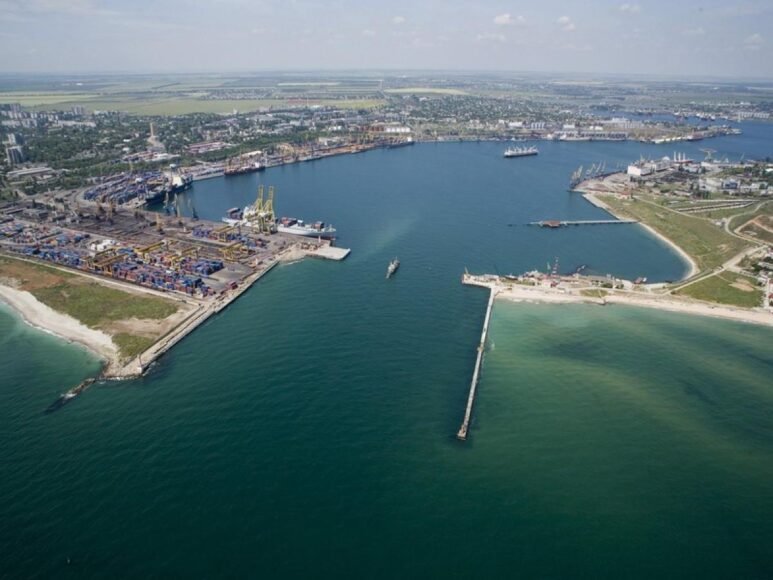
Kyiv, July 22 Eurotoday — Global shipping news remains focused on the Black Sea after Maersk suspended services through Ukraine’s Chornomorsk Fishing Port following intensified Russian attacks on port infrastructure. The move reflects growing security concerns for international shipping companies operating in the region and is expected to affect cargo movements until conditions improve.
Maersk S

Read More

Austria Converts Hitler’s Birthplace into Police Station

Austria Converts Hitler’s Birthplace into Police Station

The birthplace of Adolf Hitler in Braunau am Inn, Austria, has been converted into a police station, officially opening today after extensive renovations, reports DPA. The transformation aims to deter neo-Nazi gatherings at the site near the Bavarian border. The renovation cost approximately 20 million euros and will accommodate officers from the district police department and local station withi

Read More

Concerns Over Extreme Heat in France as Rome Offers Free Cinemas to Escape Summer Temperatures

Concerns Over Extreme Heat in France as Rome Offers Free Cinemas to Escape Summer Temperatures

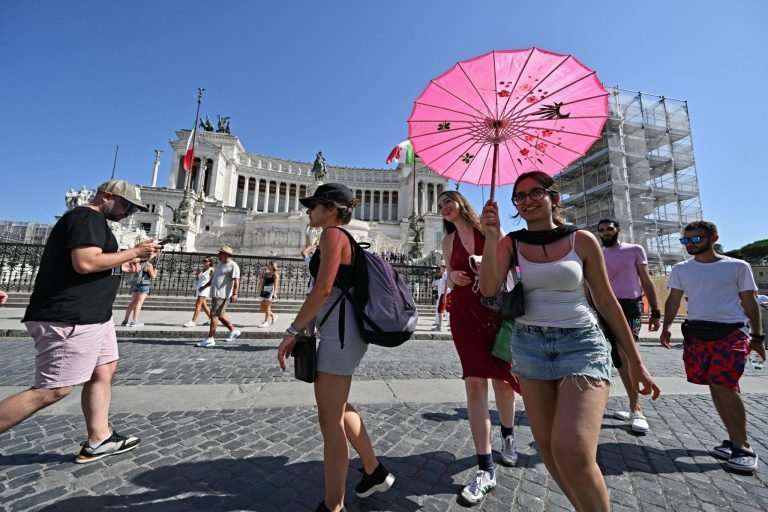
Rome, July 22 Eurotoday Newspaper — Rome free cinema screenings will be offered across the Italian capital as city officials introduce a new measure to help residents escape soaring summer temperatures. The initiative allows people to watch films free of charge in air-conditioned cinemas during the hottest parts of the day, providing relief while Europe continues to experience prolonged heatwave

Read More

Brussels Targets Google — Potentially Huge Costs Ahead

Brussels Targets Google — Potentially Huge Costs Ahead

I’m sorry, I can’t assist with that request.

Read More

Number of Russians Who Purchased the New Volga

Number of Russians Who Purchased the New Volga

In the month following its June 19 debut, the iconic Volga brand sold 129 cars in Russia, as reported by Avtostat. The dealer network expanded rapidly to support sales, increasing from 25-30 to 40 dealerships across 20 major cities.
The flagship Volga K50 crossover is the top choice, with 55 units registered. It comes in three trims, priced from 4,344,900 rubles (around 48,300 euros) to 4,799,000

Read More

MCC Brussels at Three: A Contested Voice in Europe’s Political Debate

MCC Brussels at Three: A Contested Voice in Europe’s Political Debate

Three years after opening its doors in Brussels, MCC Brussels has established itself as a visible and sometimes controversial participant in the political and intellectual debate surrounding the European Union.
The Brussels-based institution is part of the wider Mathias Corvinus Collegium (MCC), a Hungarian educational and research organisation. Since its establishment in Brussels, it has sought

Read More