


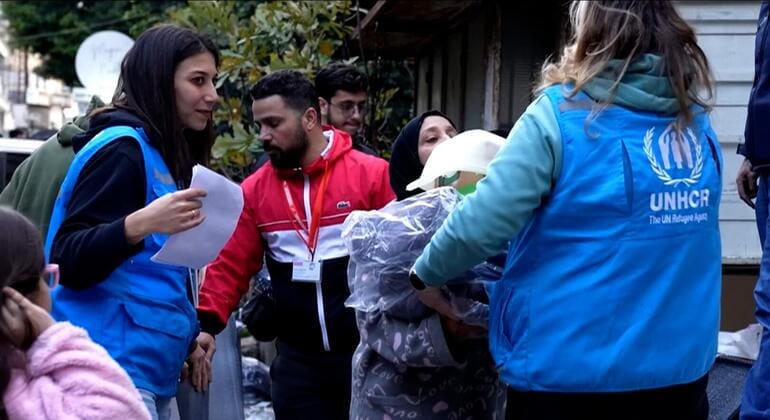
In the wake of Israeli and US bombing in Iran, counter-strikes across the Middle East continue, causing significant disruption in Lebanon. Humanitarians report that hundreds of shelters are at capacity, as Beirut’s suburbs have largely emptied.
Ravina Shamdasani, spokesperson for the UN human rights office, stated, “Israeli military incursions into southern Lebanon, displacement orders for Beirut’s southern suburbs, the Bekka region, and areas south of the Latani River, along with ongoing airstrikes, are compounding the suffering of the already beleaguered civilian population.”
Intensified Israeli strikes in Lebanon
According to Mathieu Luciano from the UN migration agency, IOM, the situation in Lebanon deteriorated significantly on Thursday night with “multiple air strikes on Beirut’s southern suburb by the Israeli army.”
He noted that many shelters, particularly in Beirut and Mount Lebanon, are full, forcing people to move to other shelters, especially in the north, Al Qaa, and safer areas in the Bekka.
The escalating crisis has been deemed a significant humanitarian emergency by the UN refugee agency, UNHCR, necessitating a swift regional response.
Ayaki Ito, UNHCR Director for Emergencies, reported that the conflict is driving significant population movements across the region and into Southwest Asia.
Nearly 25 million affected individuals are already refugees, internally displaced, or recent returnees, exerting additional strain on fragile host countries.
Strait of Hormuz bottleneck
The war-induced commercial shipping crisis has effectively stopped vessel movement in the Strait of Hormuz south of Iran, affecting UN agencies and partners trying to deliver lifesaving aid to Gaza and Sudan, among other emergencies.
This narrow channel carries about one-fifth of global oil and large quantities of commercial goods.
Anne Schaefer, IOM Deputy Director for humanitarian response and recovery, stated, “All sea traffic has significantly slowed down,” affecting Port Sudan and other continental ports.
Restricted Gaza aid
In Gaza, shelter items like tarps, tents, and lamps “are unable to reach their destination“, indicating “a significant deterioration of the supply chain very rapidly.”
The impact on Sudan’s relief missions is particularly worrying as the humanitarian situation “is worsening quickly,” according to the IOM official.
She emphasized the urgency, noting that with the rainy season approaching, supplies must arrive within the next six to eight weeks or it will be challenging to reach people, especially in Darfur.
The UN health agency’s Dr. Hanan Balkhy confirmed that critical supplies are not passing through the Strait of Hormuz but mentioned resumed flights from Dubai, a major logistics hub for the humanitarian system.
Impacted emergency healthcare
Dr. Balkhy noted, “Over 50 emergency supply requests across 25 countries have been affected by the current pause,” including Lebanon, Yemen, and Somalia.
In Geneva, OHCHR’s Ms. Shamdasani highlighted the dire situation in Afghanistan, where 66,000 people have reportedly been displaced due to recent fighting with Pakistan.
“In Pakistan, shelling and other attacks have forced people to flee, with civilians on both sides of the border escaping airstrikes, heavy artillery, mortar shelling, and gunfire,” she added.









Leave a Reply