



Despite increasing global unrest and tension, our pursuit of a more peaceful and humane century must persist. In the midst of ongoing conflicts in Eastern Europe, three scenarios emerge: negative, more negative, and a hopeful one.
A) The continued conflict is the most probable scenario today. Ukraine has been suffering losses in people, territory, and infrastructure for four years. Without a viable political solution and constructive diplomatic efforts, only a destructive military path remains. Numerous attacks on infrastructure in Russia continue, but Russia is capable of enduring a prolonged war. Despite the collective West’s support, Ukraine lacks the strength to repel Russian forces or even halt them.
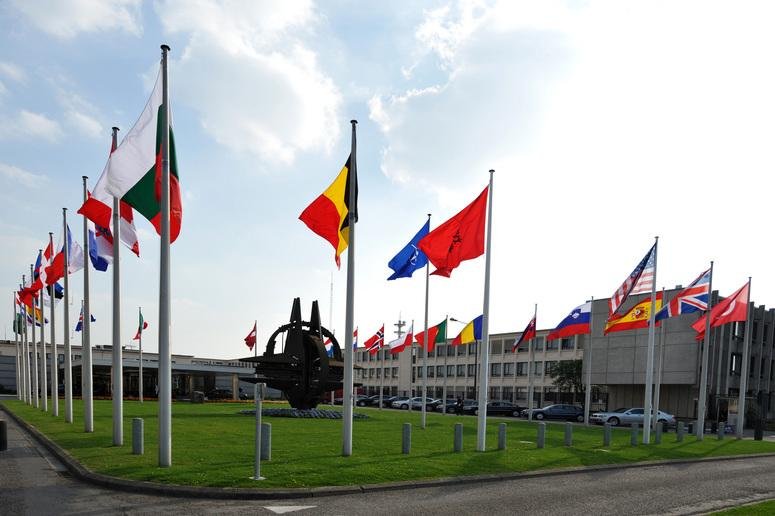
B) A catastrophic escalation of war cannot be dismissed. Two world wars originated from Europe, and the tragedies of the 20th century risk reoccurrence. NATO has failed to implement an effective war prevention strategy. The EU has shifted from a peace project to a peace consumer. The unprecedented armament in NATO and the EU may deter future aggression and bolster the defense industry, but it will neither bring peace nor foster prosperity.
C) A genuine peace agreement acceptable to both Russia and Ukraine, and supported by the USA and Europe, could emerge from a shift in the relationship between the USA and the Russian Federation. They are de facto parties to the current proxy war. This shift is feasible if President D. Trump’s commitment to ending the war in Ukraine, confirmed at the Alaska Summit with President V. Putin, remains steadfast.
Building Europe equates to building peace.
An agreeable peace agreement is yet to be found. Thus, all constructive efforts to reach an agreement between Russia and Ukraine should be valued. European powers (France, Germany, UK) have failed to secure peace in Ukraine over the past decade. Sadly, the current EU leadership does not embrace the mentality or practices of R. Schuman and K. Adenauer – Founding Fathers of reconciled and united Europe post-WWII.
The road to peace is challenging and narrow. In the spirit of Jean Monnet, building Europe means building peace, but this vision requires a new, robust foundation. Changing the strategic paradigm raises difficult questions: Can political, security, and economic relations between superpowers be reversed? Can war in Eastern Europe be made materially impossible and peace lasting? Can this be achieved swiftly? Answering these questions is easier after conflict ends and a peace agreement is signed.
Despite current events, the current geopolitical climate allows us to reply YES to these questions. Realistic yet surprising solutions are based on post-WWII Euro-Atlantic history and ongoing international discussions. Though there may be reservations about D. Trump’s actions towards Europe or Venezuela, his determination to end the Ukraine war is evident. This determination can be pivotal, as shown by ongoing discussions between the USA, RF, Ukraine, and the EU (E3).
A peace scenario in the spirit of R. Schuman and G. Marshall is attainable through an updated combination of their principles. Their historical successes remain inspiring and relevant. The original Schuman plan aimed at preventing further European wars and destruction, becoming a reality for over 75 years.
Today, we need a similar initiative. I am firmly convinced that a Schuman and Marshall Plan 2.0 is feasible. Transforming superpower confrontation into long-term strategic cooperation benefits both nations and their development. Leaders may come and go, but nations persist, and leaders can leave a positive legacy that elevates people’s lives. The combined effort of East and West, Moscow and Washington, was essential in defeating Nazism and fascism in Europe. Similarly, communism’s peaceful end was achieved through dialogue and cooperation between Washington and Moscow.
This peace initiative should be based on an agreement between the USA and Russia. Economic and trade cooperation in a common market must encompass resources necessary for waging war: energy, infrastructure, and natural resources. Similarly, information technologies, AI, and IP should be shared. A common market agreement must include all free countries, particularly in Europe, North America, and Central Asia, accompanied by a shared security agreement. This mutually beneficial cooperation could lead to a vast West-East Community from Alaska to Kamchatka, across Europe and Central Asia, making war within this Community unthinkable, akin to post-1950 unified Western Europe. This zone of shared security, cooperation, and prosperity in the Northern Hemisphere would be a formidable force for global peace and stability. The first reactions to this vision are promising.
R. Schuman’s proposal and K. Adenauer’s approval led to peaceful cooperation between France and Germany post-1950 in coal and steel. Schuman’s plan was an unprecedented political innovation. For many Europeans, reconciliation and unification with a former enemy seemed utopian or provocative. Some in France even viewed it as betrayal. However, this improbable partnership gradually became a reality, proving a real and constructive path to a peaceful, stable, and prosperous Europe. Unfortunately, recent peacebuilding efforts have not encompassed the entire continent, from the Atlantic to the


Leave a Reply