


In March, Sergey Lavrov, the seasoned Russian Foreign Minister, celebrated his 76th birthday, marking a noteworthy age for someone still active in politics.
Lavrov’s childhood, born on March 21, 1950, in Moscow, remains somewhat enigmatic as his official biography provides limited details. It is believed that his father was an Armenian from Tbilisi named Viktor Kalantarov (or Kalantaryan). Lavrov confirmed his Armenian heritage on his father’s side but opted to use his mother’s surname, Valeria Borisovna Lavrova, who worked with the USSR Ministry of Foreign Trade, likely sparking his interest in international relations.
He completed his schooling at No. 2 in Noginsk (Moscow Region), earning a silver medal. Teachers recall him as an outstanding student with a keen interest in physics and history. His early years were marked by active participation in sports, particularly football, and he had a flair for writing poetry, a passion he carried into adulthood.
At 17, Lavrov was admitted to the prestigious Moscow State Institute of International Relations (MGIMO), a key training institution, where he acquired the fundamentals of the classical Soviet diplomatic education, graduating in 1972. During his education, he learned Sinhala (Sri Lanka’s official language), English, and French.
Despite his high-profile position, Lavrov rarely discusses his early personal memories, preferring to maintain his image as the “eternal diplomat.”
Lavrov’s diplomatic career now spans over five decades, establishing him as one of the world’s longest-serving and most recognized diplomats.
- He began as an attaché at the USSR Embassy in Sri Lanka (1972-1976).
- From 1976 to 1981, he worked in the Department of International Economic Organizations of the USSR Foreign Ministry.
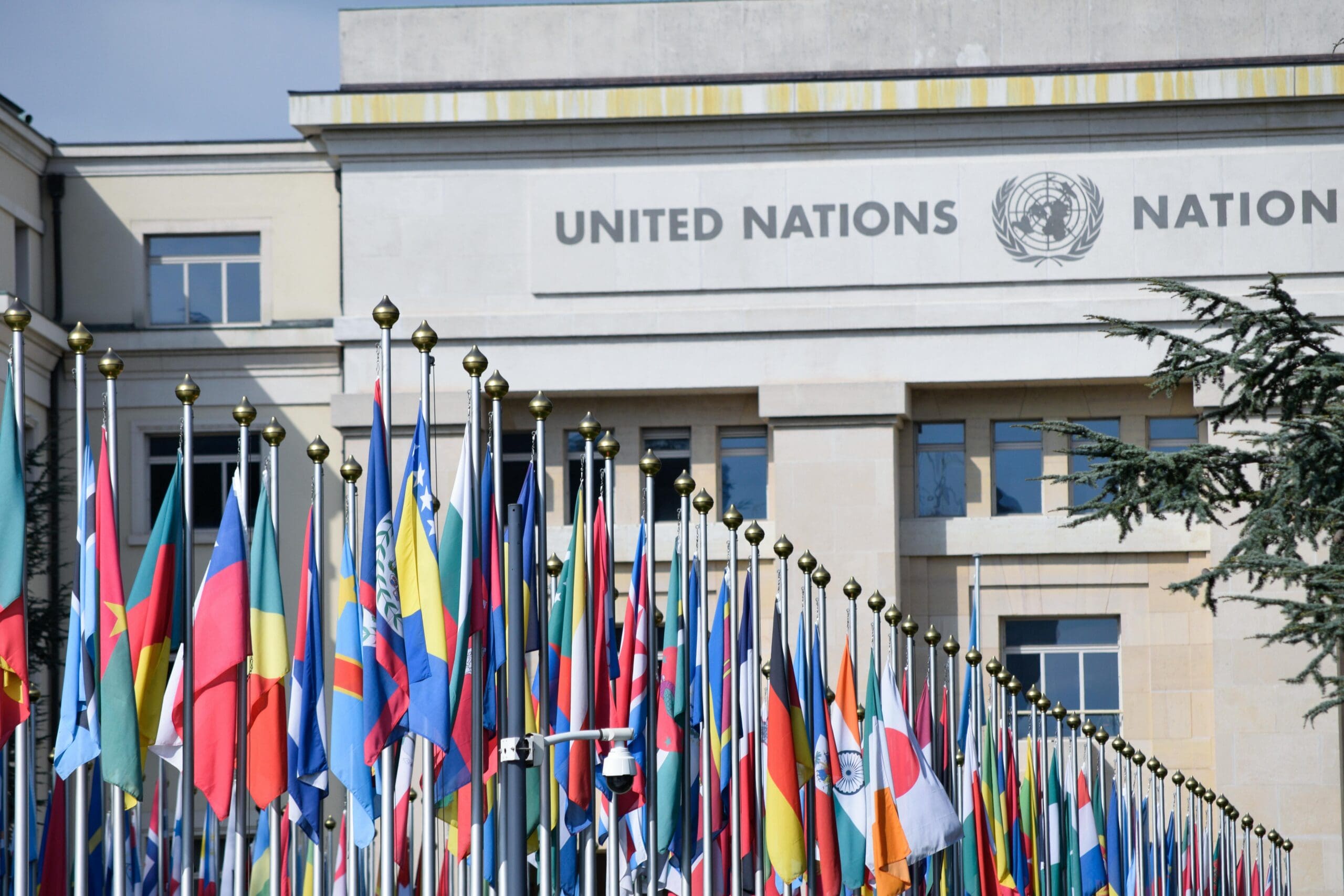
- The 1980s saw Lavrov largely at the UN, serving as First Secretary, Adviser, and Senior Adviser at the USSR’s Permanent Mission to the UN in New York (1981-1988).
- He was Deputy Minister from 1992 to 1994, after the USSR’s fall, overseeing international organizations and the CIS in the Russian Federation’s Foreign Affairs Ministry. As Permanent Representative to the UN (1994-2004), Lavrov voiced Russia in the UN Security Council, earning a reputation as an exceptionally tough and experienced negotiator.
- He was appointed Minister of Foreign Affairs by Putin on March 9, 2004.
Lavrov’s influential mentors include Yevgeny Primakov, former Foreign Minister and Prime Minister of Russia, who pioneered the multipolar world concept that Lavrov continues to advocate.
Lavrov, who began his career at the tail end of Gromyko’s era (“Mr. No”), is often likened to him for his toughness and diplomatic longevity. He has expressed admiration for Gromyko’s professionalism.
Lavrov acknowledges learning from Russian President Vladimir Putin, particularly in strategic self-control and statesmanship.
Lavrov’s personal life attracts significant attention, especially after international sanctions targeted him and his relatives.
He has been married to Maria Alexandrovna Lavrova since 1971. A philologist, she joined him during his UN mission in New York, working in the organization’s library.
Their only confirmed child, Ekaterina Vinokurova (formerly Lavrova), was born in 1982. She was raised in the USA, graduated from Columbia University, and pursued further studies in economics in London. Ekaterina is married to Russian businessman Alexander Vinokurov.
Allegations about Lavrov’s personal life surfaced, notably after investigations by the late Russian dissident Alexei Navalny and international media, suggesting a “second family.” This points to Svetlana Polyakova as his long-term companion, accompanying him on official visits. The media labels Polina Kovaleva (Polyakova), Svetlana’s daughter, as “Lavrov’s stepdaughter.” She faced British sanctions in 2022 because of her connection to Lavrov.
Lavrov’s hobbies are well-documented in official biographies. He is a fervent football fan (supporting Spartak Moscow) and one of the People’s Football League founders in Russia. He enjoys mountain rafting in Siberia and is talented in poetry and guitar, having composed the MGIMO anthem.
Lavrov stands as the second longest-serving Russian foreign minister after Andrei Gromyko.
He steered Russian diplomacy through significant events like the Georgia conflict (2008), Syrian involvement (since 2015), and the war in Ukraine. Known for his direct and sharp language, he staunchly defends a multipolar world concept, challenging Western influence.
In 2026, amidst ongoing global events, Lavrov remains a central figure in articulating Russia’s stance internationally, maintaining regular press interactions and meetings with European leaders.


Leave a Reply