


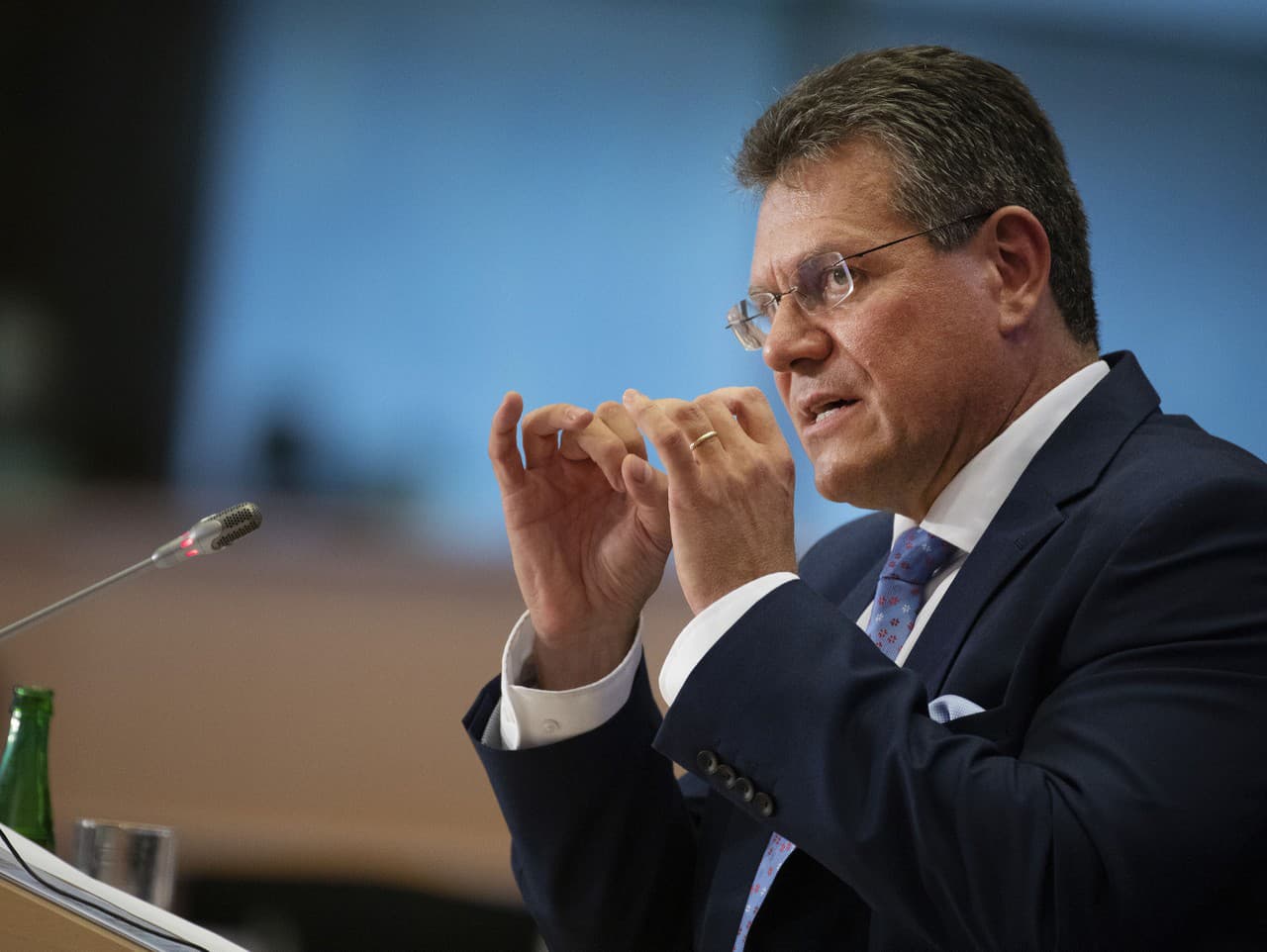
Limassol – Concerns and criticisms regarding the free trade agreement with Mercosur nations persist among EU member states and farmers, but there is no cause for alarm, according to EU Commissioner for Trade and Economic Security Maroš Šefčovič, as reported by TASR.
Maroš Šefčovič spoke on Thursday (15 January) prior to departing for Paraguay, where he will accompany European Commission President Ursula von der Leyen and European Council President Antonio Costa to sign the agreement with Mercosur on behalf of the EU. He participated in a joint meeting of the College of Commissioners with Cypriot government officials in Limassol.
Šefčovič expressed appreciation for the Cypriot Presidency’s achievement on 9 January in securing a qualified majority vote among member states in favor of the Mercosur agreement. Following the signing in Paraguay, the agreement will undergo a similar process in the European Parliament, and Cyprus will play a key role in ensuring its swift ratification by member states.
He recalled the EU’s previous experience with the Canada trade agreement (CETA), which also faced intense discussions and community concerns prior to approval.
“Canada serves as a recent example where similar discussions occurred, with significant apprehension from the food industry. Today, eight years after its establishment, we see mutual trade has increased by 60 percent,” he noted.
Šefčovič emphasized that none of the anticipated negative outcomes from CETA came to fruition. The agreement has proven beneficial for farmers, engineers, and has significantly supported both European and Canadian economies.
“The Mercosur agreement includes robust financial and administrative guarantees. Farmers will not be at risk. The protective mechanisms proposed by the European Commission have been approved by the European Parliament,” he stated.
He mentioned that the European Commission handled this agreement with great care, ensuring that import quotas for sensitive products like beef, ethanol, and chicken meat were meticulously defined, posing no threat to European farmers.
“We have also implemented unprecedented legal safeguards to protect European farmers. If imports from Mercosur nations were to increase by five percent or if prices of sensitive products rose by five percent in the EU market, the European Commission would need to take action, including the activation of emergency brakes. All protective measures for farmers have been encapsulated in a European regulation, the strongest legal tool at the EU’s disposal,” he elaborated.
The Commission continues to work on harmonizing protocols concerning pesticide use, animal welfare, and enhancing controls through European veterinary audits of goods from Mercosur, focusing on key import points like European ports and airports.
“We have taken every possible step to guarantee that products imported into Europe meet the highest European standards. Additionally, a financial safety net of 6.3 billion euros for farmers has been approved as an extra safeguard. I see this as a form of insurance,” said Šefčovič. He expressed confidence that, similar to Canada, there would be no adverse trends in the implementation of the Mercosur agreements, and everyone would be pleasantly surprised by the significant positive effects on the economies of both Mercosur and EU countries. (16 January)




Leave a Reply