


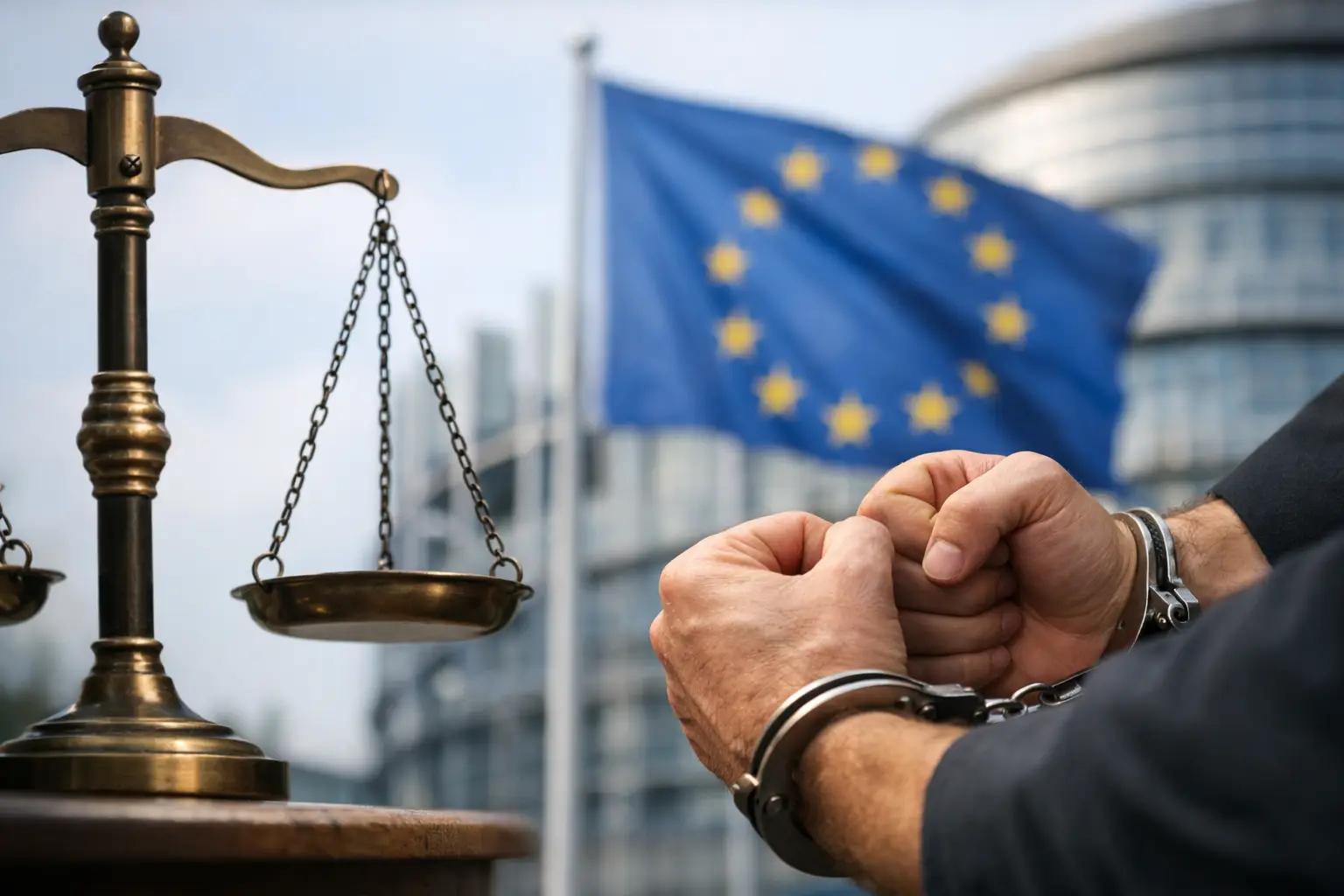
Why European human rights violations still matter
A government might sign every significant convention and advocate for dignity and the rule of law yet still allow abuses at its borders, in prisons, through digital systems, and in the treatment of minorities. Hence, European human rights violations remain a pressing political issue rather than just a historical one. Across Europe, the concern is not just whether rights are recognized formally, but whether they are upheld when security, migration, majority politics, or state convenience push against them.
Europe positions itself as a global leader in democracy, legality, and rights protection. The European Convention on Human Rights, Strasbourg court case law, the EU Charter of Fundamental Rights, and dense national constitutional frameworks all suggest a region with robust safeguards. On paper, that framework is impressive.
But these rights systems are challenged precisely where governments claim exceptions, urgency, or necessity. Migration pressures have led to unlawful pushbacks and collective expulsions. Counter-extremism and national security agendas have broadened surveillance powers with minimal oversight. Minority communities, including Roma, Muslims, Jews, migrants, and some religious groups, continue to face discrimination that, though perhaps not headline-grabbing, persistently shapes everyday life.
The core question is not whether Europe has human rights law. It clearly does. The question is why violations continue despite that law and what this indicates about political incentives, institutional weaknesses, and selective enforcement.
Where the most serious violations are appearing
Migration control is one of the most evident areas of concern. At several European borders, allegations of pushbacks, arbitrary detention, denial of asylum access, and mistreatment by border authorities are difficult to dismiss as mere isolated incidents. These practices directly challenge refugee law, the prohibition on inhuman or degrading treatment, and the right to an effective remedy.
What makes this area particularly concerning is that enforcement is often weakest where state power is most concentrated and public sympathy most divided. People on the move, especially those without documentation, struggle to document abuse, access legal aid, or challenge official narratives. Rights may depend on visibility.
Detention and prison conditions are a second pressure point. The European Court of Human Rights has repeatedly addressed issues like overcrowding, poor sanitation, inadequate healthcare, and excessive pre-trial detention in various states. These issues are not mere procedural details; they go to the heart of whether states respect human dignity when individuals are entirely under public control.
A third area of concern is civic space. Journalists, anti-corruption campaigners, whistleblowers, faith communities, protest movements, and NGOs face various forms of pressure across Europe. Sometimes methods are blunt, such as arrests, punitive fines, or politicized inspections. Other times they are more administrative and less headline-grabbing—like funding restrictions, foreign-agent labeling, strategic lawsuits, or selective use of public-order rules. The chilling effect remains significant.
Surveillance, technology, and the quiet expansion of state power
Some of Europe’s most significant human rights concerns now exist behind screens, procurement contracts, and intelligence justifications. Spyware scandals, unlawful data retention, intrusive facial recognition proposals, and opaque information-sharing arrangements demonstrate how quickly rights protections can erode when technology advances faster than oversight.
This is where violations often become technically complex and politically elusive. Governments might claim measures are lawful, targeted, and necessary. Yet, necessity must be demonstrated, limited, and independently supervised. Without discipline, exceptional powers can solidify into routine governance.
Rights at risk include privacy, freedom of expression, freedom of association, and due process. Surveillance affects not only suspected criminals but also journalists protecting sources, activists organizing campaigns, minorities vulnerable to profiling, and religious groups concerned that lawful beliefs or associations might be misconstrued through a security lens.
For a region frequently discussing digital rights, this is a credibility test. The issue is not whether states need tools to address genuine threats—they do. The question is whether those tools remain proportionate and accountable once public fear enters the equation.
Minorities, religion, and unequal protection
Rights failures in Europe are also evident in the treatment of minorities whose vulnerability is structural and longstanding. Roma communities face segregation, discriminatory policing, educational barriers, and housing exclusion. Antisemitic incidents remain threats in several countries, while anti-Muslim hatred is normalized in parts of public discourse, sometimes bolstered by policies claiming neutrality while disproportionately impacting specific communities.
Freedom of religion or belief warrants special attention as it intersects with conscience, public order, secularism, and identity politics. While European institutions are generally strong in principle on this right, application can be inconsistent. Small religious groups may encounter stigmatisation, excessive scrutiny, or hostile administrative treatment








Leave a Reply