


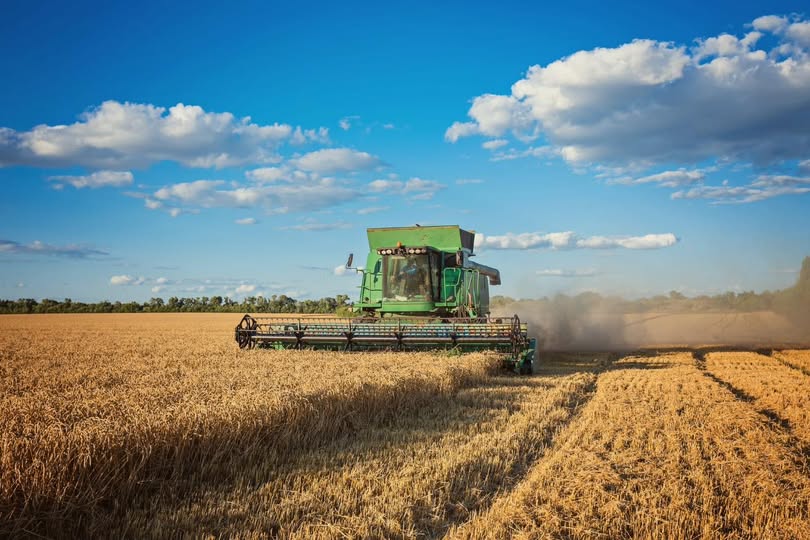
Bucharest – The Forum of Professional Farmers and Processors from Romania (APPR Forum) has voiced its concerns about the economic and social consequences of the recently proposed free trade agreement between the European Union and the Mercosur bloc, as announced by the European Commission.
While acknowledging the significance of trade exchanges and free trade agreements for economic advancement, the APPR Forum highlighted the potential adverse effects on Romanian and European farmers and agricultural industries. They pointed out that the agreement promotes broad tariff liberalization but does not adequately address the stark differences in production standards between Europe and Mercosur countries. The less stringent subsidies, environmental regulations, and social standards in Mercosur create an uneven playing field for European farmers,” according to a communiqué sent to AGERPRES.
The representatives stressed that cereal production could face substantial challenges due to an influx of low-priced South American imports.
In line with the stance shared by the European Confederation of Maize Producers (CEPM), of which it is a member, the APPR Forum warned of the risks regarding the potential loss of markets for European cereals. This loss could stem from extensive imports of corn, sorghum, and rice that come with reduced or zero customs duties, jeopardizing farmers’ financial stability and adversely affecting processing sectors due to competition from cheaper imported products.
To ensure fair implementation of the agreement and safeguard the European agricultural sector—particularly the unique aspects of Romanian agriculture—the APPR Forum proposes several measures: the inclusion of legally binding clauses mandating compliance with social, environmental, and health standards by Mercosur exporters; stringent controls and traceability methods for imported goods to prevent unfair competition based on lower standards; and a reassessment of tariff structures and protective measures in case of market disruptions to shield European farmers from economic shocks.
Furthermore, the organization advocates for ensuring reciprocal production standards between the EU and Mercosur, especially concerning pesticide use and animal welfare compliance.
The EU-Mercosur agreement, which involves Brazil, Argentina, Paraguay, and Uruguay, received political backing on December 6 in Montevideo. The text will now be presented to the Council and Parliament. This agreement aims to establish one of the world’s largest free trade zones, impacting over 700 million people, with an emphasis on reducing tariffs and fostering trade. (18.12.2024)





Leave a Reply