


Brussels – According to a report released by the European Commission on Wednesday, Spain ranks lowest among European Union countries in terms of social convergence, primarily due to high levels of poverty, social exclusion, school dropout rates, and unemployment.
The report indicates that Spain performed poorly in 10 out of 17 social indicators assessed by the Commission, positioning it among the ten EU member states facing “potential risks for upward social convergence.” This analysis takes into account the labor market conditions, educational challenges, and social issues across the Union.
Other countries in a similar situation include Romania, Greece, and Italy, which showed worse results than Spain, alongside Bulgaria, Estonia, Hungary, Lithuania, Croatia, and Luxembourg—all of which will now undergo more in-depth scrutiny by the Commission.
Using a “traffic light” system, the report categorizes Spain’s status on four indicators related to poverty risk and school dropout as “critical” (red). Income inequality and the rate of “ninis” (youths not in education or employment) are marked as requiring “monitoring” (orange), while Spain’s overall employment scenario is deemed “weak but improving” (yellow).
Poverty and Exclusion
The European Commission’s analysis states, “Spain faces significant challenges concerning social protection and inclusion.” The report notes that, in 2023, the proportion of the population at risk of poverty and social exclusion rose to 26.5%, with a staggering 34.5% among children—well above the EU averages of 21.3% and 24.8%, respectively.
This increase is attributed in part to social protection systems struggling to provide adequate coverage, regional disparities in accessing public services, and high poverty rates among employed individuals.
Despite improvements, income inequality remained elevated in 2023, with a ratio of 5.5 between the incomes of the richest 20% and the poorest 20%, compared to the EU average of 4.7. Furthermore, the effectiveness of social benefits (excluding pensions) in poverty reduction has dropped to 22.9%, significantly lower than the EU average of 34.7%, particularly in addressing child poverty.
Unemployment and School Dropout
Regarding the labor market, the Commission notes that while “it has improved significantly, challenges remain.” The employment rate has risen substantially to 70.5%, though it still lags behind the EU average of 75.3%. Unemployment stands at 12.2%, with long-term unemployment at 4.3%, both of which, despite significant reductions, are still considered high.
The report emphasizes the need to monitor the persistent rate of “ninis,” even as it has decreased to 12.3% in 2023. Although household per capita incomes have shown a “strong increase,” this measure is still categorized as “weak.”
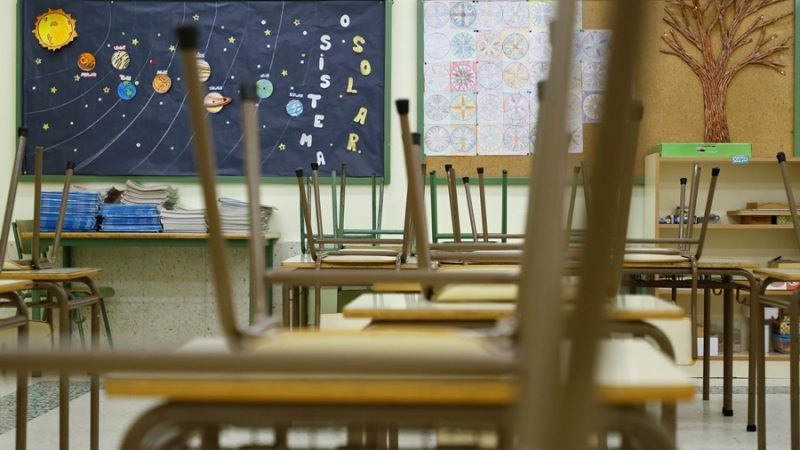
Another critical issue is the school dropout rate, which is at 13.7% compared to the EU average of 9.5%. Despite improvements, this rate remains particularly high in southern and eastern regions of Spain.
On a positive note, Spain ranks among the best in the EU for the employment gap for individuals with disabilities, which is one of the lowest in the bloc and continues to decrease. Additionally, the country exceeds the EU average in the enrollment of children under three in nursery programs and the proportion of citizens possessing digital skills.
Spain’s performance is comparable to the EU average in other assessed areas, including housing costs, healthcare access, adult education, and the gender employment gap.
This marks the second consecutive year that Spain is listed among the lowest performers in this report, which was first created in 2023 at the request of the Spanish and Belgian governments. The initiative aimed to broaden the focus of the European Semester—which coordinates the economic policies of the EU member states—to include social indicators as well. (December 18)










Leave a Reply