


Police Violence in Georgia: Widespread Abuse Reported in Tbilisi
According to Georgia’s Public Defender (Ombudsperson’s Office), troubling accounts of police misconduct have emerged in Tbilisi. Of the 327 detainees interviewed by the office’s representatives, 225 reported instances of ill-treatment, with 157 displaying visible physical injuries.
Accounts of Abuse and Police Tactics
Reports highlight that special forces engaged in violent acts, including physical abuse, robbery, and degradation of detainees. Detainees were reportedly stripped of personal belongings, such as clothing, shoes, mobile phones, wallets, glasses, and religious items. Accounts also suggest detainees were forced to chant self-deprecating statements or praise Zviad Kharazishvili, head of the Special Tasks Department. In some instances, Kharazishvili himself recorded videos of the injured individuals, according to a joint statement from several civil society organizations.
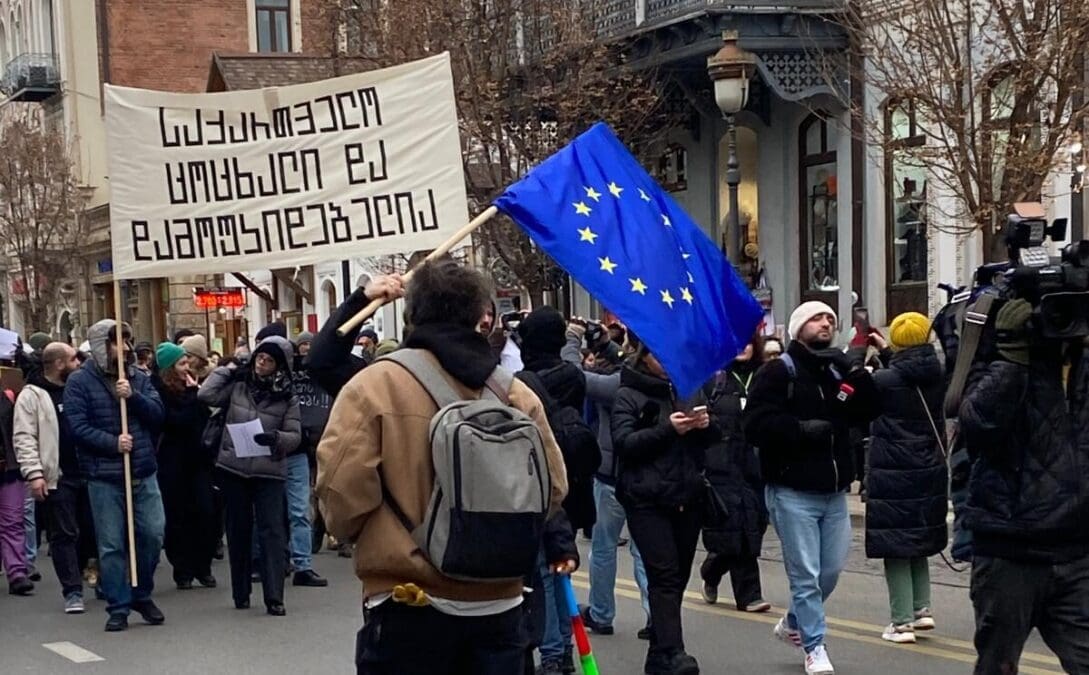
The Ministry of Internal Affairs deployed extreme measures to suppress tens of thousands of peaceful demonstrators. Tactics included the use of water cannons, which reportedly contained unknown substances, along with pepper spray, tear gas, and other chemical agents.
Before some crackdowns began, officials issued warnings to disperse the crowds, though in many cases, state forces pursued demonstrators directly, making arrests often without adequate warning. After deploying water cannons, authorities followed up with tear gas, causing severe respiratory and vision issues among demonstrators. These measures incited chaos, panic, and fears of stampedes.
Even those who complied with dispersal orders were not spared. Peaceful protesters were ambushed, surrounded, and detained by special forces. Once in custody, detainees were subjected to further abuse, indicating a systematic pattern of misconduct.
—
Georgian President Salome Zurabishvili Addresses the EU
Amid the escalating crisis, Georgian President Salome Zurabishvili took a stand during her December 18 address to the European Parliament. She called for swift action from the EU in response to what she described as a dire situation in Georgia, exacerbated by the rigged parliamentary elections and ongoing state violence.
Zurabishvili drew historical parallels between the current events and the Soviet occupation of 1921, highlighting the existential threats to Georgian democracy and sovereignty. She warned that Europe must not allow a newly minted candidate for EU membership to violate fundamental democratic principles.
Quoting her speech, she stated:
“This also concerns the credibility of Europe. Europe cannot allow a country that has just received candidate status to violate all democratic norms and its fundamental principles. Georgia was, is, and I am sure will remain, a bulwark for the West and Europe in the region. Russia is also trying to take it over, because Russia remembers the saying of its imperial generals that whoever owns Tbilisi owns the Caucasus. This has not changed for Russia.”
Zurabishvili emphasized that Georgians reject any attempts to “Russify” their country and are resolute in their demand for new, free, and fair elections. However, she stressed the need for Western support to achieve these goals.
—
A Movement Fueled by Civil Disobedience
Over the course of 21 days of protests, the movement has expanded to encompass nearly all sectors of Georgian society. Zurabishvili underscored that the population is mobilizing because they perceive their European future as being at stake. She described the protests as a peaceful civil disobedience campaign aimed not at revolution, but at reclaiming the stolen democratic mandate:
“The only time when people in Georgia take to the streets is when they feel that an existential issue is at stake. This is a very peaceful, civil disobedience movement that demands two things: give us back the votes taken away due to the stolen elections and give us back our European future. This is not a revolutionary movement; this is a demand for new elections.”
She warned that Georgian democratic institutions are already under significant threat, with many falling under one-party or one-man rule. The media and human rights NGOs remain independent for now, but their autonomy is increasingly precarious.
—
Calls for Urgent European Action
Zurabishvili urged Europe to step up its political support, adding that Georgians need reassurance that they are not alone in their fight for democracy:
“Georgians are still waiting for tough measures from Brussels and Washington. And I hope we will not have to wait for a deeper crisis for Europe to act. What can Europe do? First of all, political support. We need constant political attention from the highest levels, because Georgians need to know that they are not alone and that we have your back.”
While the European Parliament has already called for new elections in Georgia, concrete measures remain limited. EU Member States have discussed suspending visa-free travel for Georgian diplomatic

Leave a Reply