


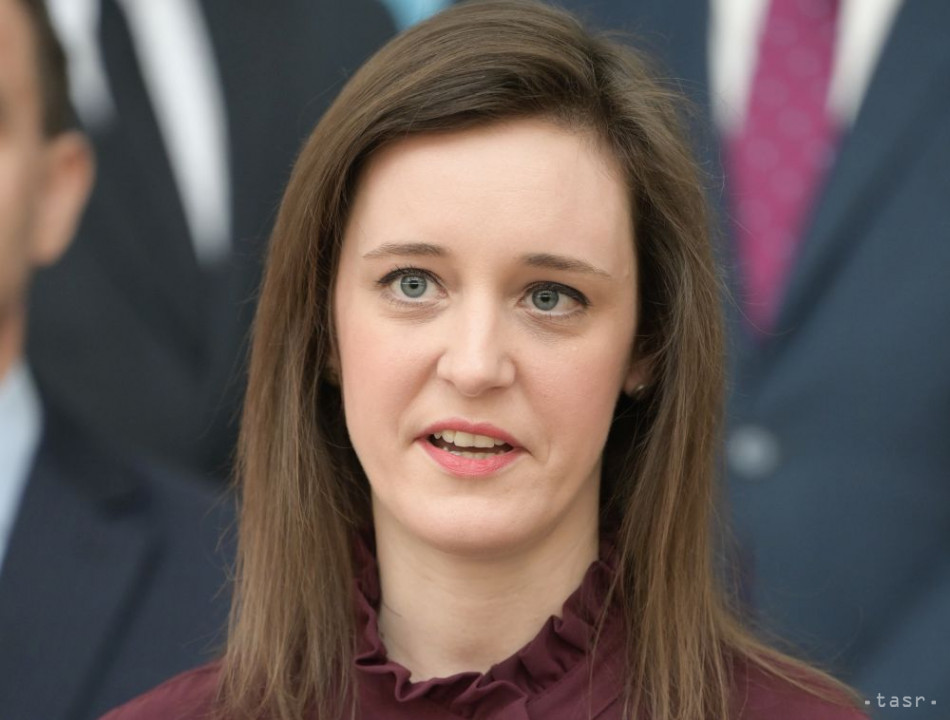
Bratislava – While the United States views China as its primary competitor, it paradoxically allows China to gain ground through its practical political and economic choices. This is evident in situations where the U.S. opts for confrontation rather than collaboration with the European Union, as noted by Slovak MEP Ľubica Karvašová (PS) during her appearance on TASR TV on Tuesday.
Karvašová, who serves as a substitute member on the European Parliament’s International Trade Committee (INTA), cited the Trump administration’s decision to eliminate programs under the USAID agency as an example of this retreat. “Who will step in to fill that void of U.S. influence globally? Inevitably, it will be China, which sees this as an opportunity,” she stated.
In terms of trade, where both the U.S. and the EU share a common interest in combating China’s unfair trading practices, Karvašová perceives a lack of collaboration and an increase in confrontation. “With its current policies, the United States is ceding ground to China instead of aligning with other allies who recognize the risks posed by China,” she explained.
According to Karvašová, the economic relationship between the U.S. and the EU should be founded on trade and cooperation. However, she noted that the introduction of tariffs by the current U.S. administration is undermining this foundation. “At present, I do not see a willing partner in the United States interested in reaching an agreement. The U.S. has imposed 25 percent tariffs on steel and aluminum, and we are bracing for more tariffs from Trump since April 2, with discussions looming regarding cars,” Karvašová remarked.
In this context, she highlighted the significant contribution of car manufacturing to Slovakia’s GDP.
“Trump’s strategy of using tariffs as a weapon is detrimental to both the European and Slovak economies. The question of how we will protect our industry needs to be our top priority,” she asserted. While acknowledging that the EU has implemented reciprocal measures in response to American tariffs, she emphasized that “trade wars yield no winners, only losers, and ultimately, consumers—including those in the U.S.—will bear the burden.”
Discussing the ongoing meetings between American and Russian officials concerning the Ukraine conflict, Karvašová described them as more of a consultation process than genuine peace negotiations. She stressed that, alongside the U.S., Ukraine, and Russia, the European Union must also be involved in peace talks given their implications for the security of European nations. She believes that security guarantees must be included in the discussions that follow the cessation of hostilities.
Karvašová pointed out the formation of a coalition of willing European nations aimed at establishing international forces to ensure stability following peace agreements. She stated that while Slovakia may not need to be part of this military force, it should have a seat at the negotiating table regarding European security.
“We should be part of the discussions on these critical issues. Currently, we are not included in that dialogue,” she stressed. (March 18)
“Trump’s approach of weaponizing tariffs is harming both the European and Slovak economies. Addressing how to safeguard our industry should be our foremost concern.” Ľubica Karvašová



Leave a Reply