


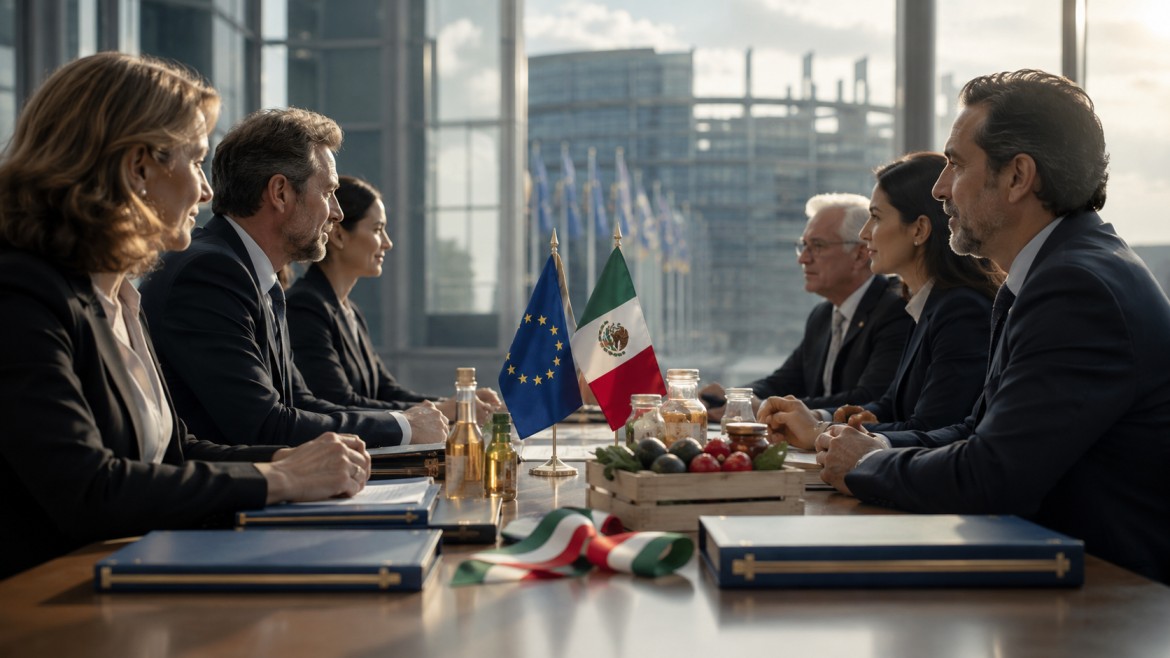
MEPs endorse revised EU-Mexico partnership focusing on reducing tariffs, expanding procurement access, and strengthening trade ties with democratic principles
The European Parliament has endorsed two EU-Mexico agreements aiming to redefine this key Latin American relationship by supporting lower tariffs, enhanced market access, and improved cooperation on rule of law, anti-corruption, and human rights.
On Wednesday, July 8, MEPs in Strasbourg voted to approve the modernised global agreement and an interim trade deal, paving the way for the Council to proceed with formal adoption. This vote is not an instant activation of the entire partnership; it requires ratification by EU member states and Mexico. However, it marks a significant parliamentary milestone for a strategy that Brussels regards as both commercial and geopolitical.
The European Parliament backed the modernised global agreement with 479 votes to 119, with 65 abstentions. The interim trade agreement passed with 474 votes to 131, with 60 abstentions.
A Strategically Important Trade Agreement
This updated framework will replace the EU-Mexico agreement in place since 2000, including provisions on customs duties, protection for European innovations and traditional products, and access to Mexican public tenders. The interim agreement allows trade aspects to be implemented sooner, without the need for full national ratifications of the broader partnership.
The agreement is expected to offer practical benefits for EU exporters, potentially eliminating nearly all remaining tariffs and saving EU companies up to €100 million annually in customs duties. It also projects a possible 75% increase in total EU exports of goods and services under the most ambitious scenario.
These projections are significant as Europe seeks to diversify trade connections and mitigate risks from volatile tariff policies. The vote follows a separate EU-US tariff arrangement, highlighting how trade policy supports Europe’s pursuit of stability in a fragmented global economy.
Impacts on Agriculture, Public Contracts, and Protected Names
Agri-food producers are among the main anticipated beneficiaries. Mexican tariffs on some European products, such as cheese and pork, can reach 45%. The agreement also plans to protect 568 EU geographical indications in Mexico, preventing the sale of imitations for these regional specialties.
The procurement chapter is politically meaningful as well. MEPs noted the agreement grants EU bidders access to public procurement in 14 Mexican states and a broader variety of public contracts. They advocated for further efforts to expand procurement opportunities throughout all Mexican states while endorsing the inclusion of environmental and social considerations in public purchasing.
For Mexico, the agreement enhances connections with a major economic partner. The European Commission identifies Mexico as the EU’s second-largest trading partner in Latin America, while the EU is Mexico’s third-largest trading partner and second-biggest export market. The Commission’s EU-Mexico agreement overview indicates the new framework intends to bolster secure material supplies necessary for green and digital transitions.
Implementation of Rights Commitments
Beyond tariffs, the agreement embeds broader political principles, emphasizing democratic values, the rule of law, and fundamental human rights. It highlights institutional dialogue on protecting civil society, journalists, and human rights defenders, alongside collaboration on judicial independence, transparency, anti-corruption, money laundering, and organized crime.
While the agreement includes a values-based framework, its effectiveness in implementing these commitments will be tested. Trade agreements can promote market access and leverage but may become technical instruments without scrutiny by parliaments, civil society, and impacted communities.
The next steps involve the Council and national ratification procedures. The interim trade agreement is anticipated to take effect on the first day of the second month after mutual notification of procedural completion by the EU and Mexico. The comprehensive modernised global agreement will require approval by member states and Mexico to fully replace the existing framework.
For Brussels, the parliamentary vote signals Europe’s intent to strengthen ties with democratic partners beyond its immediate region. For both Mexico and the EU, the real challenge begins post-signature: ensuring trade, procurement, and political cooperation have tangible impacts for






Leave a Reply