MCC Brussels at Three: A Contested Voice in Europe’s Political Debate

Three years after opening its doors in Brussels, MCC Brussels has established itself as a visible and sometimes controversial participant in the political and intellectual debate surrounding the European Union.

The Brussels-based institution is part of the wider Mathias Corvinus Collegium (MCC), a Hungarian educational and research organisation. Since its establishment in Brussels, it has sought to contribute to discussions on issues including freedom of expression, migration, energy policy, agriculture, national sovereignty, democracy and the future of Europe.

From the beginning, MCC Brussels presented itself as an organisation willing to challenge what it considers the dominant political and intellectual consensus in the European capital. Its supporters argue that European public debate has, in some areas, become too narrow and that alternative viewpoints deserve greater space.

Critics, however, argue that MCC Brussels represents a particular conservative political perspective and have raised questions about its funding, political connections and relationship with the broader MCC network in Hungary.

A different voice in the Brussels debate

MCC Brussels has sought to distinguish itself from more traditional think tanks and policy organisations operating in the European capital.

The institution has organised conferences, discussions and public events on a range of politically sensitive topics. Its work has included criticism of aspects of European climate policy, multiculturalism, gender politics, migration policy and what it describes as excessive restrictions on freedom of expression.

At the same time, it has supported discussions on nuclear energy, border security, national sovereignty and the interests of European farmers.

Supporters see this agenda as an effort to broaden the political debate and bring previously underrepresented perspectives into mainstream discussions. Critics view the organisation as part of a wider conservative political and ideological network seeking to influence European policy and public opinion.

The debate over political influence

The growing visibility of MCC Brussels has also generated criticism.

Some journalists, activists and civil society organisations have questioned the organisation’s political independence and its relationship with institutions and political actors in Hungary. They argue that MCC Brussels should be examined not only as a think tank, but also within the broader context of the political and financial networks surrounding the MCC organisation.

MCC Brussels and its supporters reject what they consider to be politically motivated criticism. They argue that disagreement with their ideas should not be used to question their legitimacy or their right to participate in public debate.

The disagreement reflects a wider debate about the role of think tanks and advocacy organisations in European politics: where the boundaries lie between research, political influence and ideological advocacy.

The Transparency Register dispute

One of the most significant controversies surrounding MCC Brussels has involved its status in the European Union Transparency Register.

In 2026, the organisation was suspended from the register following a dispute concerning the application of the EU’s transparency rules and the so-called “single registration principle.” MCC Brussels has argued that the decision was unfair and politically motivated, while the issue has also prompted questions about the organisation’s registration, financial disclosures and relationship with its parent organisation.

The dispute has produced different interpretations.

For MCC Brussels, the case represents a broader concern about institutional treatment and the ability of organisations with dissenting political views to participate in the European debate. Critics, however, argue that transparency rules must apply equally to all organisations seeking access to European institutions.

The issue remains contested.

A changing European political landscape

The emergence of MCC Brussels has taken place during a period of significant political change across Europe.

Questions surrounding migration, energy security, climate policy, agricultural regulation, national sovereignty and freedom of expression have become increasingly polarised. Political movements across the ideological spectrum have challenged long-standing assumptions about the direction of European policy.

MCC Brussels has positioned itself within this changing environment, presenting itself as a platform for viewpoints it believes have not received sufficient attention.

Whether this represents a necessary expansion of political pluralism or a deliberate effort to advance a particular ideological agenda remains a matter of political interpretation.

The future of MCC Brussels

Three years after its launch, MCC Brussels has become a recognised participant in the debate taking place in the European capital.

Its supporters point to its events, publications and public engagement as evidence of its contribution to political pluralism. Its critics continue to scrutinise its funding, political connections and ideological orientation.

Both perspectives form part of the organisation’s story.

The future of MCC Brussels will depend not only on its ability


Comments

One response to “MCC Brussels at Three: A Contested Voice in Europe’s Political Debate”

  1. B@d B0y Avatar

    Looks like MCC Brussels is trying to shake things up in a city where the only thing more stale than the pastries is the political debate. 🤔 I mean, who knew that a little Hungarian spice could turn the Brussels sausage fest into a proper buffet of opinions? 🥨

  2. skittle mine Avatar
    skittle mine

    Isn’t it charming how MCC Brussels thinks it’s reinventing the wheel while most of us are just trying to avoid driving into the ditch? 🤔 If only they could add a bit more flair to their ‘alternative perspectives’—maybe a side of fries with that hot debate? 🍟

Leave a Reply

Your email address will not be published. Required fields are marked *

Last News

MCC Brussels at Three: A Contested Voice in Europe’s Political Debate

MCC Brussels at Three: A Contested Voice in Europe’s Political Debate

Three years after opening its doors in Brussels, MCC Brussels has established itself as a visible and sometimes controversial participant in the political and intellectual debate surrounding the European Union.
The Brussels-based institution is part of the wider Mathias Corvinus Collegium (MCC), a Hungarian educational and research organisation. Since its establishment in Brussels, it has sought

Read More

NATO Approves €27 Billion Overhaul of Cold War-Era Fuel Network

NATO Approves €27 Billion Overhaul of Cold War-Era Fuel Network

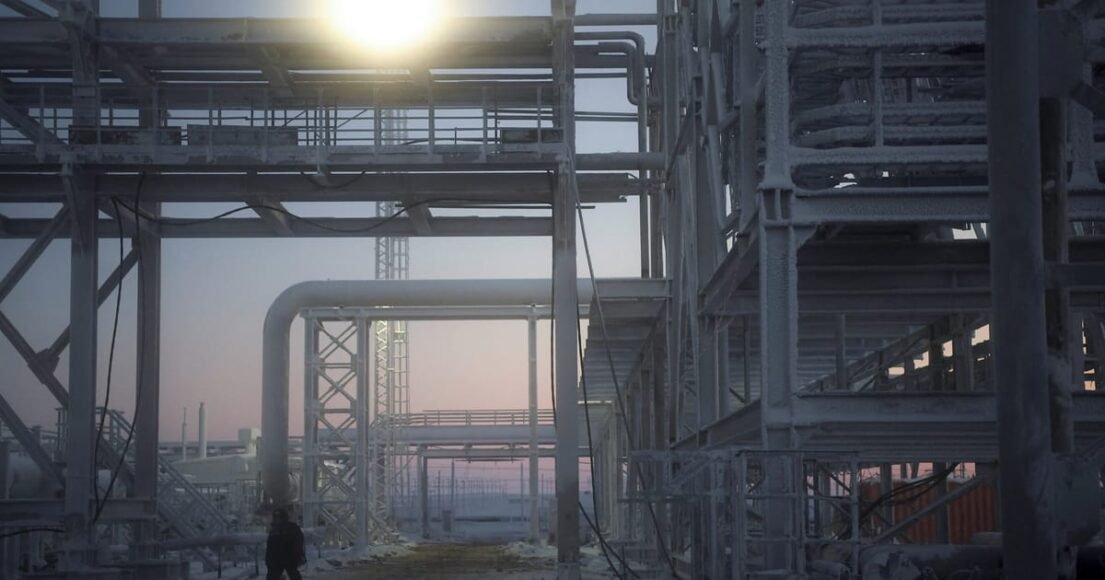
The military alliance has agreed to increase its common funding budget to “up to EUR 6.5 billion” for the coming year and has approved its investment priorities for the next five years. By 2026, allies settled on a budget of €5.3 billion.
Countries have been negotiating for months on the overhaul of the alliance’s 10,000-kilometer Cold War-era pipeline network, intended to connect NATO

Read More

UK Joins Ukraine Loan Framework

UK Joins Ukraine Loan Framework

EU Approves UK’s Role in Ukraine Loan, Linking Security Cooperation to Oversight
EU countries have agreed to the UK’s involvement in the €90 billion Ukraine Support Loan, expanding Kyiv’s financial resources and supplier access for maintaining public services and civilian protection through 2026 and 2027. This move, announced in Brussels, is part of rebuilding EU-UK security ties centered on Ukr

Read More

Bologna Seeks Answers After Fakir’s Death

Bologna Seeks Answers After Fakir’s Death

The death of Abderrahim Fakir, a Moroccan man, during a police intervention in Bologna has stirred a national debate in Italy about restraint, accountability, and minority rights. Fakir, 42, died in the Pilastro district, prompting prosecutors to review bodycam footage and witness videos. His family is seeking truth and justice amid public scrutiny and demonstrations that turned tense. The incide

Read More

Greece Disrupts EU’s Russia Sanctions Strategy

Greece Disrupts EU’s Russia Sanctions Strategy

Ambassadors are set to hold an additional round of negotiations on Thursday morning to salvage the package, confirmed by an EU diplomat.
Ireland, currently holding the rotating Presidency of the Council of the EU, proposed on Wednesday that European gas tankers be allowed to export Russian liquefied natural gas (LNG) to third countries until January 2029. The proposal, which was reviewed by POLITI

Read More

France Records 5,764 Excess Deaths During June-July Heatwaves

France Records 5,764 Excess Deaths During June-July Heatwaves

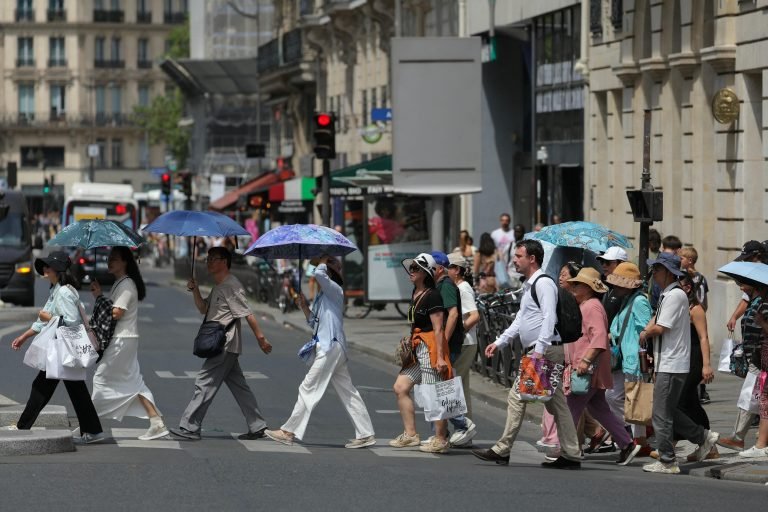
Paris, July 22 Eurotoday Newspaper — France excess deaths reached 5,764 during the June and July heatwaves, according to a report released by Santé publique France. The health agency said prolonged periods of extreme heat led to thousands of additional deaths above normal seasonal levels, underlining the continued public health risks posed by increasingly intense summer temperatures.

Heatwave

Read More

A Plea for the Release of 95-Year-Old Chairman Lee from Pretrial Detention in South Korea

A Plea for the Release of 95-Year-Old Chairman Lee from Pretrial Detention in South Korea

An instance of unfair detention based on presumed guilt. Human Rights Without Frontiers calls for Seoul to free him.
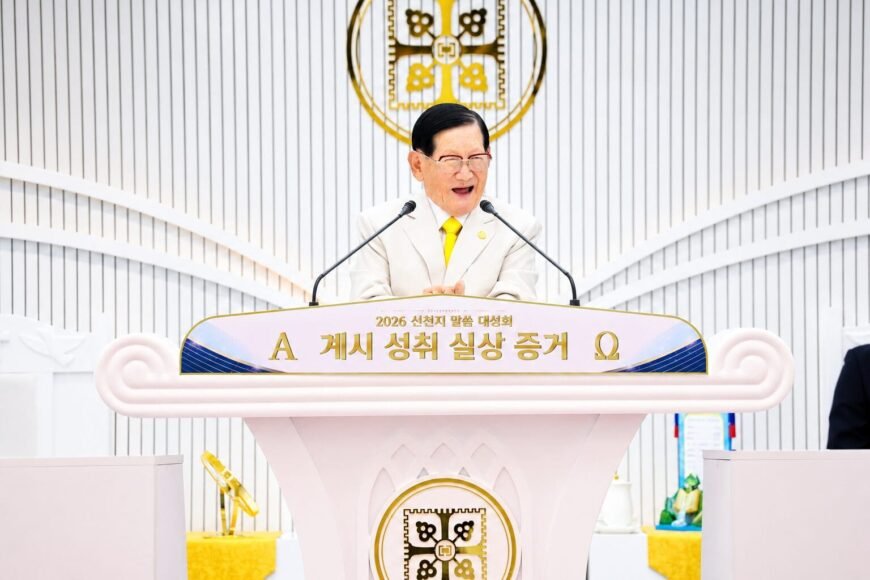
For a month, Chairman Lee (Lee Man Hee, born in 1931), the founder and spiritual head of the Shincheonji Church, has been in pretrial detention since his arrest on June 24, 2026, making him possibly the oldest prisoner in the world, despite not being found guilty of any crime.
This

Read More

Offener Widerstand gegen Alice Weidel

Offener Widerstand gegen Alice Weidel

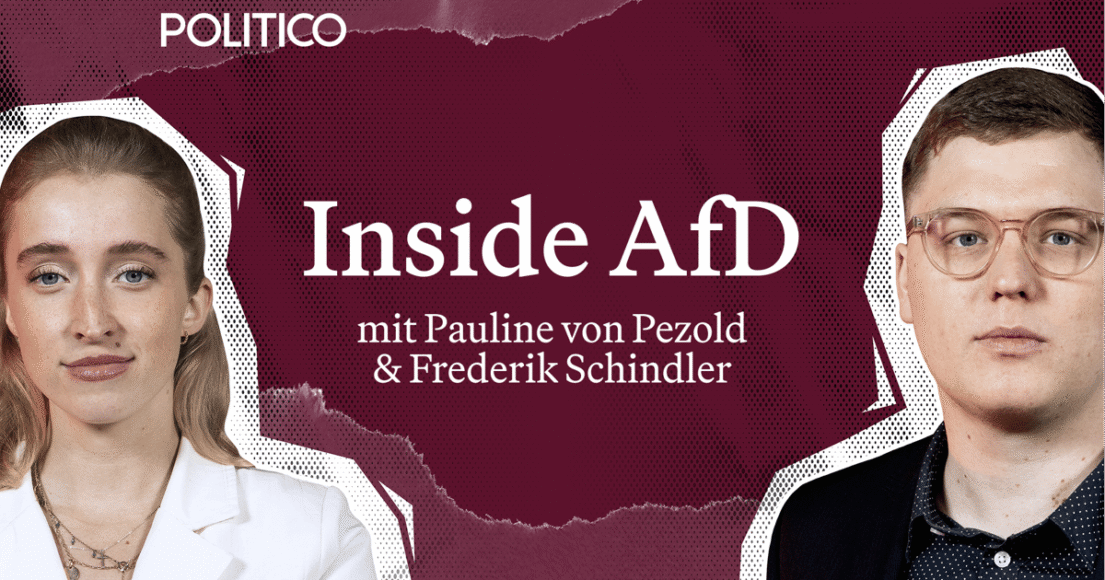
In Nordrhein-Westfalen, dem größten AfD-Landesverband, herrscht ein offener Machtkampf, der der Bundesspitze zunehmend entgleitet. Pauline von Pezold und Frederik Schindler analysieren, wie das radikale Helferich-Lager die Listenwahl sabotieren wollte. Sie besprechen, warum Landeschef Martin Vincentz sich juristisch gegen Alice Weidel wehren wollte und wie das Tabu des Widerstands gebrochen ist.
Z

Read More

Britain’s Leadership Crisis: A Symptom, Not the Disease

Britain’s Leadership Crisis: A Symptom, Not the Disease

Andy Burnham’s rise to Downing Street No. 10 may buy the Labour Party time. But Britain’s political crisis runs far deeper than personalities, campaign skills or messaging strategies.
The question of whether Andy Burnham would make a better prime minister than Keir Starmer misses the point entirely. Britain’s political crisis runs far deeper than personalities, campaign skills or messaging strate

Read More

Zelenskyy Appoints New Head of Ukraine’s Army

Zelenskyy Appoints New Head of Ukraine’s Army

Ukrainian President Volodymyr Zelenskyy has declared that Mykhailo Drapatyi will become the new commander-in-chief of Ukraine’s Armed Forces, succeeding Oleksandr Syrskyi in a significant wartime leadership transition since Russia’s full-scale invasion. The decision, revealed late Tuesday, arrives as Ukraine grapples with maintaining military operations and addressing public concerns about

Read More