



Riga’s rising Belarus frontier numbers prompt regional discussions on security, solidarity, and migrant rights
Latvia is experiencing increased pressure on the EU’s eastern border due to a sharp rise in attempted crossings from Belarus, which is causing Lithuania to consider temporary border checks with Latvia. This situation has expanded a common security issue with Minsk into a broader Schengen discussion: how Europe can secure its borders without allowing vulnerable individuals to become tools in a political conflict.
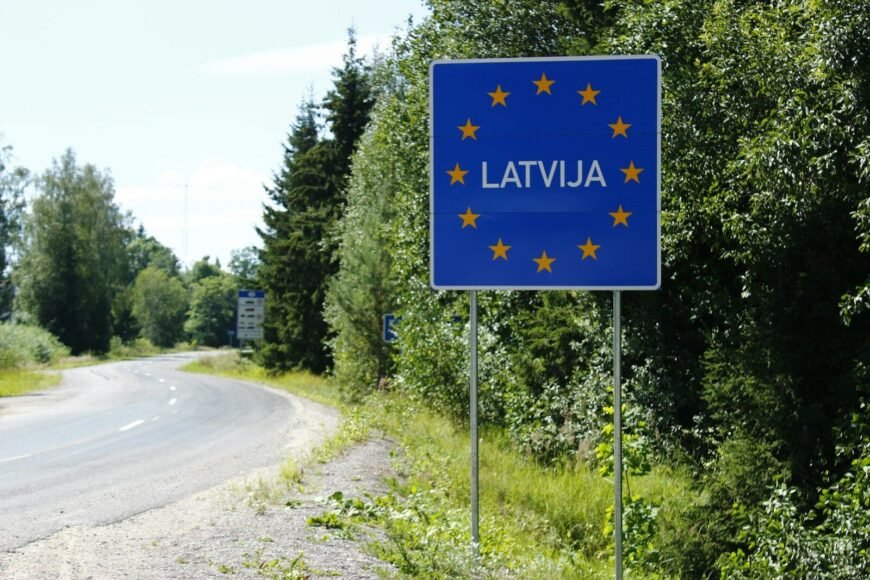
Latvia’s State Border Guard reported that on Thursday, 16 July, 111 individuals were prevented from crossing the Latvia-Belarus border illegally, making the total number this year 8,253. The statistics indicate a shift in pressure towards Latvia after years of Lithuania, Latvia, and Poland accusing Belarus of directing migrants towards the EU border as a form of coercion.
For Riga, the issue is not just operational. Latvian officials view the crossings as part of a hybrid campaign connected to Belarus’s support for Russia’s war in Ukraine and broader efforts to stress EU institutions. However, the people at the border are not merely figures in this conflict. Many are third-country nationals caught between smugglers, authoritarian tactics, and EU states determined to prevent irregular entry.
A border issue becomes a Schengen issue
The pressure is now affecting relations between Baltic neighbors. Lithuanian public broadcaster LRT, reported by Latvia’s LSM, noted that Lithuania’s incoming interior minister has not dismissed temporary controls with Latvia if secondary migration cannot be managed otherwise. Lithuanian officials reported a fourfold increase in secondary migration from Latvia compared to the first half of last year.
This possibility matters because the Schengen area depends on trust in effective management of external borders, while internal border controls should remain exceptional. Once one member state reinstates checks, others may feel pressure to follow, affecting cross-border workers, transport, trade, and the broader sense of a unified European space.
The European Commission’s Schengen guidance suggests internal border controls as a last resort, limited by necessity and proportionality. Politically, this principle becomes harder to defend as member states cite overlapping threats such as irregular migration, smuggling, Russian sabotage, asylum system pressures, and the war in Ukraine.
Security must not override rights
The Baltic states have valid reasons to consider Belarusian tactics seriously. Since 2021, Minsk has been accused of facilitating migrant movements towards EU borders in retaliation for European sanctions and support for Belarusian democratic forces. Latvia, Lithuania, and Poland have heavily invested in border infrastructure and repeatedly extended emergency or enhanced security measures.
Yet, a rights-based approach requires more than just identifying Belarus’s strategy. It involves examining how EU states handle individuals with potential protection claims, health needs, family vulnerabilities, or trafficking exposure. Pushbacks, prolonged limbo, and opaque procedures can turn a legitimate security response into a legal and humanitarian failure.
This tension has surfaced across Europe’s broader border debate. As previous European Times reporting on Schengen controls highlighted, Brussels strives to maintain open internal borders while addressing member states’ security concerns. Latvia’s situation underscores why this balance is becoming more fragile on the eastern front.
Solidarity must be practical
For Latvia, the immediate priority is personnel, coordination, and consistent support from neighbors and EU agencies. For Lithuania, the concern is that pressure at Latvia’s external border may resurface as secondary movement within the Sch









Leave a Reply