



Stage 14 showcased Tadej Pogacar’s dominance in the 2026 Tour de France as he won with a late attack in the Vosges, strengthening his hold on the yellow jersey with his fourth stage victory. However, 19-year-old French rider Paul Seixas turned the day into a coming-of-age story for France by finishing third and taking the white jersey, giving the home crowd a glimpse of both the present and the future.
Pogacar’s win on the 155.3-kilometre route from Mulhouse to Le Markstein Fellering, featuring 3,800 metres of climbing and four major ascents, added clarity to the race’s chaos. He crossed the line in 4hr 00min 07sec, with teammate Isaac del Toro second, 38 seconds behind, and Seixas third on the same time. Jonas Vingegaard finished fourth, 44 seconds down, and Remco Evenepoel fifth, 48 seconds adrift.
Pogacar’s decisive attack came late, a familiar Tour image of a champion seizing the moment after his rivals had exhausted their strategies. His 25th Tour stage win places him alongside André Leducq, only behind Mark Cavendish, Eddy Merckx, and Bernard Hinault in stage-win history. The victory not only secured his lead but also left the rest of the podium contenders fighting for second place. Vingegaard remains his closest recognized challenger, with Evenepoel, Seixas, and Juan Ayuso trailing behind.
Seixas’s performance gave French cycling a new focal point. As a 19-year-old rider, he impressed by surviving one of the Tour’s toughest mountain stages, finishing with the front group and taking the young rider classification lead. For France, the Tour is more than a race; it’s a public ritual, and Seixas’s success offers a fresh investment for the crowd. He has yet to challenge Pogacar directly, but his growth under attention is closely watched.
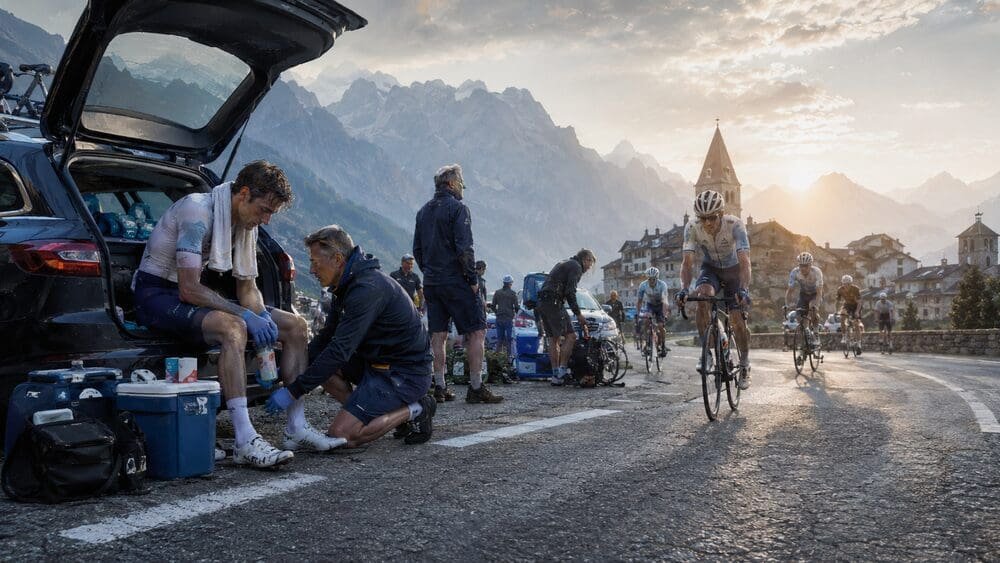
Pogacar acknowledged the significant public presence, highlighting cycling’s unique connection between performance and spectators. Mountain stages are moving assemblies across open roads, creating a shared theatre of geography when successful. Stage 14 clarified the sporting hierarchy, with Pogacar reinforcing his authority, Del Toro confirming UAE’s dominance, and Seixas adding local sentiment and youthful promise.
As the Tour continues with a week of racing, nothing is certain. Crashes, weather, illness, or a single misstep can alter the course. Pogacar is aware, but the Vosges stage made it clear that his rivals need more than strong performance to disrupt the race pattern.
Departing Le Markstein, the Tour offers two images: Pogacar, calculating moments with precision, and Seixas in white, a symbol of French hope to be safeguarded as it is celebrated. The first image signifies who controls the race; the second explains why the audience remains engaged.








Leave a Reply