Khartoum’s Silent War: Reimposing Religious Restrictions on Women During Civil Conflict

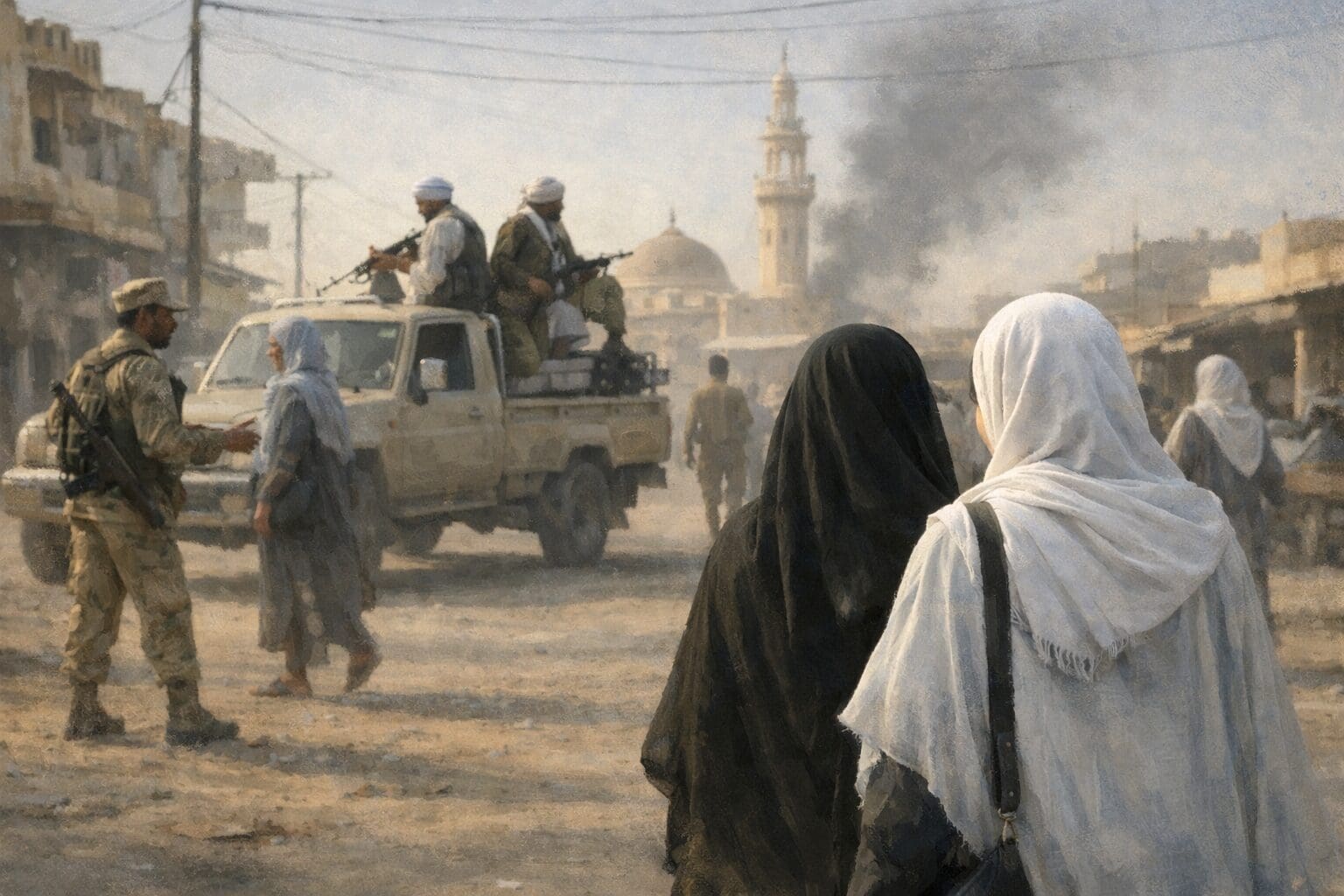
Brussels – Amid the artillery exchanges between the Sudanese Armed Forces (SAF) and the Rapid Support Forces (RSF), a quieter conflict is changing the lives of Khartoum’s residents. According to a recent Mediapart investigation titled “In Khartoum, women are victims of the return of Islamists,” there is a rise in Islamist influence in the capital. The report highlights the targeted harassment and coercion of women, signaling a regression in human rights, particularly regarding freedom of religion or belief and women’s bodily autonomy in a fractured state.

The events reveal a phenomenon termed the “return of Islamists.” As the government seeks support against the RSF, it seems to be reintegrating elements of the former regime’s ideological apparatus. This is not just political but social, manifesting in the enforcement of moral codes challenged after the 2019 revolution. For women in Khartoum, this means renewed surveillance and intimidation, with public spaces increasingly regulated by strict religious interpretations.

Eyewitness accounts indicate women face pressure to adhere to conservative dress codes and behavioral norms, enforced often by security forces or aligned militias, creating fear. Historically, targeting women is a tactic to control the social fabric. In international law terms, these actions violate fundamental human rights.

The legal framework on Freedom of Religion or Belief (FoRB) explicitly protects against coercion. The International Covenant on Civil and Political Rights (ICCPR), Article 18, includes the freedom “to have or to adopt a religion or belief of [one’s] choice.” The UN Human Rights Committee clarifies that this freedom prohibits state coercion to adopt a particular belief.

Khartoum’s situation contradicts these obligations. When state authorities enforce religious dress codes or conduct under threat, it violates women’s rights to manifest their beliefs—or lack thereof. Coercing citizens into specific religious interpretations breaches the ICCPR and the Universal Declaration of Human Rights (UDHR), Article 19, which protects freedom of opinion and expression.

The “Faith in UN Human Rights Treaties” analysis shows that using religion to enforce gender conformity is a perversion of FoRB rights. Treaties protect individuals from the state, not empower the state to enforce piety. Khartoum’s dynamics invert this purpose, using religious mandates for political and social oppression.

This imposition of religious conformity warrants broader analysis of how such policies take root. As Hannah Arendt noted, ideological enforcement can occur through ordinary individuals executing orders without critical reflection. Enforcing morality laws doesn’t require a grand decree but relies on security officials and local groups believing they restore order. This “ordinariness” of perpetrators—regular police or soldiers enforcing a dress code—makes rights erosion more insidious, posing a threat not through anarchy but suffocating order.

The psychological impact on women is significant, as the threat of punishment for non-compliance forces subjugation, stripping them of agency. This dynamic is worsened by ongoing conflict, displacing the rule of law. In this vacuum, extremist ideologies fill the gap, and religious strictures enforce power over vulnerable civilians.

These actions must be analyzed under the Convention on the Elimination of All Forms of Discrimination Against Women (CEDAW). Despite Sudan’s reservations, the principle of non-discrimination and freedom from coercion remains an international benchmark. Targeting women for religious enforcement is sex-based discrimination that cultural or religious relativism cannot justify. Reports by the UN Special Rapporteur on freedom of religion or belief affirm that manifesting one’s religion does not include imposing it on others.

The “return” of Islamist elements raises questions about Sudan’s future. If military leadership appeases religious hardliners as a war strategy, long-term civil liberties consequences are dire. Normalizing religious policing sets a precedent hard to dismantle post-conflict, risking governance that views the female body not as individual possession but state-regulated.

International observers and human rights bodies must address this ideological shift beyond immediate humanitarian crises. Defending women’s rights in Khartoum is tied to defending FoRB. Allowing coercive religion on women negates their personhood and legal standing under international covenants.

Reports from Khartoum detailing women’s victimization by Islamist factions reveal critical international human rights law violations. Coercion into religious observance violates the ICCPR and undermines UDHR principles. As the conflict continues, eroding these fundamental freedoms is a parallel war, fought over individual autonomy against ideological absolutism. The international community must recognize protecting Sudan’s women requires not just aid but a steadfast defense of their right to live free from religious compulsion.

Comments

11 responses to “Khartoum’s Silent War: Reimposing Religious Restrictions on Women During Civil Conflict”

  1. Commando Avatar
    Commando

    Just what we needed, a charming revival of medieval values amidst modern conflict—who knew enforcing dress codes could be the next big thing in “civilized” warfare? 🤦‍♂️ You’d think we were trying to win a fashion contest instead of a battle for basic human rights!

  2. Sweetness Avatar
    Sweetness

    Just what every woman dreams of in a civil war—strict dress codes and a side of intimidation! Who needs freedom when you can have the “joy” of religious policing? 😏

  3. Heartbreaker Avatar
    Heartbreaker

    Just what Sudan needs, right? Another “brilliant” idea to keep the ladies on a tight leash while the world watches the circus from afar. 🤦‍♂️

  4. icy avenger Avatar
    icy avenger

    Seems like Khartoum’s gone from civil war to a dress code debate—who knew fashion policing was on the agenda? 🤷‍♂️ But hey, at least they’re keeping it classy in a war zone, right?✨

  5. Scratch Avatar

    It’s fascinating how in times of chaos, the best solution some can come up with is to impose a dress code—because who needs food or safety when you can have a tailored moral wardrobe, right? 😂 Just another day in the paradoxical world of “freedom” in Khartoum!

  6. Twinkle Cocoa Avatar
    Twinkle Cocoa

    Isn’t it charming how amidst all the chaos, the powers that be have decided to keep their focus on women’s dress codes? One would think the whole world was on fire, but clearly, priorities are in check! 🙄💼

  7. dangle Avatar

    Seems like Khartoum’s idea of a “return to tradition” means dragging women back to the Dark Ages—who needs progress when you can have a full-time job enforcing dress codes, right? 🤦‍♂️

  8. sw00sh Avatar

    Just when you think you’ve seen it all, Khartoum serves up a masterclass in how to turn back the clock on women’s rights while the world watches with popcorn in hand. 🤦‍♂️ If only their strategy was as impressive as their ability to ignore basic human decency!

  9. Kevlar Wanted Avatar
    Kevlar Wanted

    Just what we needed, a masterclass in how to turn a civil war into a women’s fashion police state. Who knew heavy artillery and moral policing would go hand in hand? 🤦‍♂️

  10. Grave Digger Avatar
    Grave Digger

    Just when you thought the world’s gone bonkers, Khartoum serves up a masterclass in ‘how to regress into the Middle Ages’—who needs modernity when you’ve got a dress code enforced by your friendly neighbourhood militia? 😏

  11. troubled pie Avatar
    troubled pie

    Oh, brilliant! Just when you thought it couldn’t get any worse, Khartoum decides to reinvent the wheel with a delightful mix of religious policing and civil conflict—who knew oppression could come with such a charming backdrop? 🌧️

Leave a Reply

Your email address will not be published. Required fields are marked *

Last News

Récupérer les superprofits de TotalEnergies : oui, mais comment ?

Récupérer les superprofits de TotalEnergies : oui, mais comment ?

Dans son analyse, l’IPP attribue la faible récolte de la taxe sur les profits pétroliers de 2022 à un périmètre d’entreprises concernées plus restreint que prévu ainsi qu’à la possibilité pour les compagnies d’imputer leurs pertes des années antérieures. L’IPP estime que “quelques dizaines d’entreprises représentant 72% des superprofits” ont été épargnées.
C’est pour cette raison que, dans l

Read More

Magyar Aims May Agreement to Unlock €10B of EU Funds for Hungary

Magyar Aims May Agreement to Unlock €10B of EU Funds for Hungary

Following a meeting, described as “highly constructive,” Magyar expressed optimism about Hungary soon receiving EU funds, emphasizing no conditions were imposed against Hungary’s national interests.
Von der Leyen shared on X about a positive exchange with Péter Magyar in Brussels, focusing on steps needed to release EU funds stalled due to corruption and rule-of-law issues. The E

Read More

Berlin Strengthens Military Ties with Washington Amid Merz-Trump Rift

Berlin Strengthens Military Ties with Washington Amid Merz-Trump Rift

A digital marketplace for freelance recruiters is sourcing new combatants for Ukraine, strengthening Vladimir Putin’s position in negotiations and causing concern among European leaders regarding the potential actions of his expanding military force.

Read More

EU Anti-Fraud Office Considers Investigation into Senior Far-Right Patriots Official

EU Anti-Fraud Office Considers Investigation into Senior Far-Right Patriots Official

Transparency International requested the EU’s anti-fraud office (OLAF) on April 24 to investigate administrative failures and recommended disciplinary action against former Belgian MEP and Secretary-General of the Patriots group, Philip Claeys, as per a letter viewed by POLITICO. Transparency International claims Claeys was accountable due to his approval of the spending.
An OLAF spokesperson conf

Read More

Horizon Europe’s SWIFTT Project Unveils Copernicus-Based Tool for EU Forest Threat Prevention

Horizon Europe’s SWIFTT Project Unveils Copernicus-Based Tool for EU Forest Threat Prevention

The SWIFTT platform enhances decision-making in addressing spruce bark beetle outbreaks, wildfires, and windthrow.

The SWIFTT platform enhances decision-making in addressing spruce bark beetle outbreaks, wildfires, and windthrow.
PARIS, FRANCE, April 15, 2026 /EINPresswire.com/ — SWIFTT is an advanced forest management tool utilizing Copernicus Sentinel satellite data and machine learning.

Read More

Last Year’s Heat Was Intense; Next Year Promises Greater Extremes.

Last Year’s Heat Was Intense; Next Year Promises Greater Extremes.

The year 2026 is likely to become the second-warmest on record globally, as indicated by various analyses.
In Europe, last winter was among the coldest in recent times, but temperatures have been recovering. March was the continent’s second-warmest on record.
Wednesday’s report highlighted 2025 as Europe’s worst wildfire season, regarding land burnt and the emissions from these fires.
Sea temperat

Read More

The Devil’s Pills: The Lady of Elche

The Devil’s Pills: The Lady of Elche

In 1990, 36 years ago, I released a book titled The Devil, the Evil Syndrome, co-authored with a Galician writer, with whom I never collaborated again. The title’s relevance today lies in the term The Evil Syndrome. Back then, I found it intriguing how people in trials confessed to actions supposedly influenced by negative forces, yet often, the consumption of mood-altering pills was a recu

Read More

Hidden Messages in King Charles’s Speech to Congress

Hidden Messages in King Charles’s Speech to Congress

Statement: “In the immediate aftermath of 9/11, when NATO invoked Article 5 for the first time, and the United Nations Security Council was united in the face of terror, we answered the call together as our people have done so for more than a century, shoulder to shoulder, through two world wars, the Cold War, Afghanistan and moments that have defined our shared security.”
Interpretat

Read More

Kremlin: Moscow Praises Radev’s Remarks on Dialogue with Russia

Kremlin: Moscow Praises Radev’s Remarks on Dialogue with Russia

On April 19, Bulgaria conducted its eighth National Assembly elections since 2021.
The Russian government has expressed positive reception to future Bulgarian Prime Minister Rumen Radev’s remarks on fostering pragmatic dialogue with Russia, as reported by the press secretary of the Russian President, Dmitry Peskov.
“We are notably impressed by Mr. Radev’s statements, who triumph

Read More

EU Parliament and Germany Clash Over Budget

EU Parliament and Germany Clash Over Budget

“Never underestimate the Parliament,” its president, Roberta Metsola, stated in a press briefing post-vote, emphasizing that lawmakers will not merely “rubber-stamp” the budget proposed by the capitals.
Pro-EU parties in Parliament — the conservative European People’s Party (EPP), the Socialists & Democrats, the centrist Renew group, and the Greens — all supported the push for i

Read More