Iceland Centers Fisheries in EU Referendum

With an August vote approaching, Reykjavík emphasizes that any renewed accession talks must maintain national control over its marine resources.

Iceland’s debate over closer EU ties is focused on who controls the fish. Ahead of a referendum on August 29, the government insists that any future membership agreement must protect the country’s fisheries authority. The vote will decide whether negotiations suspended over a decade ago should resume.

A firm message from Reykjavík

Foreign Minister Þorgerður Katrín Gunnarsdóttir insists Iceland retains “sovereign control over all fisheries” in any EU membership agreement. This stance reflects the industry’s economic importance and its role in Iceland’s independence.

The government’s negotiating objectives highlight fisheries alongside energy, agriculture, development, employment, currency, taxation, security, and defense as requiring clear national positions.

Previous accession objectives sought to ensure national sovereignty over fisheries, sustainable management, and a strong role in international shared stock agreements. These remain central to current discussions.

The EU’s Common Fisheries Policy assigns collective rules for conserving stocks, allocating opportunities, and managing fleets. For Iceland, adopting a system designed for 27 states could limit national discretion over strategically managed waters.

EU Fisheries Commissioner Costas Kadis suggested Brussels might consider flexible arrangements for shared stocks, but a complete and permanent exemption from major EU fisheries law would be challenging.

Fisheries carry economic and political weight

Iceland’s fishing sector’s scale reaches beyond technical regulation. Statistics Iceland reported over 624,000 tonnes of marine exports in 2024, valued at approximately 347 billion krónur.

Marine products accounted for 36% of 2024’s total exports, with cod alone generating 143 billion krónur. Fresh and frozen products supported processing plants, ports, and employment outside Reykjavík.

Control over quotas is sensitive domestically. The quota-based system is credited with management and profitability but criticized for concentrating fishing rights with powerful companies. The debate is not only Iceland vs. Brussels but also about who benefits from national control.

EU membership wouldn’t dismantle the Icelandic system automatically but would require negotiations over quota allocation, water access, environmental standards, market organization, and domestic ownership rules in relation to the EU single market.

A vote on negotiations, not membership

Reopening talks and joining the EU are distinct. Official referendum information states voters will decide if negotiations should resume.

A “yes” vote allows seeking a detailed agreement, with another vote required before membership takes effect. A “no” vote leaves the current EU relationship largely unchanged.

This two-stage process lets voters evaluate negotiated terms rather than decide based on assumptions. Supporting talks doesn’t mean supporting accession.

A June survey reported by RÚV found 53.1% of decided voters favored reopening negotiations, but a majority opposed EU membership. This suggests some Icelanders want to see Brussels’ offer before deciding.

Absentee voting for Icelanders abroad began on July 27, giving the campaign practical momentum before polling day.

Already closely connected to the EU

Iceland participates in much of the EU single market through the European Economic Area, applying extensive EU legislation on goods, services, capital, competition, consumer protection, and environmental standards.

As part of the Schengen area, it participates in several EU programs. However, the EEA Agreement excludes the EU’s common fisheries and agricultural policies, customs union, trade policy, and monetary union.

This arrangement provides considerable market access while maintaining autonomy in areas like fishing. Iceland can contribute early to some EEA-related rules but lacks voting power in the European Parliament or Council.

The referendum asks Icelanders to compare two kinds of influence. Remaining in the EEA allows more national control in selected fields, while EU membership provides direct representation in institutions influencing Iceland’s regulatory environment.

The Arctic changes the political calculation

The membership debate unfolds amidst an unstable international environment. Russia’s war against Ukraine, North Atlantic security pressure, and Greenland disputes highlight the Arctic’s strategic importance.

Without a standing army, Iceland relies on NATO and US defense relations. Pro-European government voices argue EU membership could add security without replacing NATO.

The EU is more attentive to its northern neighborhood, energy routes, maritime resources, and Arctic security. Iceland’s strategic location between Europe and North America is notable.

The European Times previously examined how European support for Greenland’s sovereignty links to broader Arctic security and autonomy questions for northern partners.

Simultaneously, the EU’s enlargement approach ties to security, resilience, and geopolitical alignment, as seen in Ukraine and Moldova’s membership negotiations.

Negotiating before deciding

Iceland’s earlier accession process began after the 2008 financial crisis. Talks opened in 2010 and paused in 2013, with 27 of 33 chapters opened and 11 concluded.

A renewed process wouldn’t continue from the same point. Chapters need reassessment as EU law and Icelandic policy have evolved. Reykjavík would update negotiating objectives through domestic consultation and submit them to the Althing.

The government estimates negotiations could complete in 18 to 24 months if both sides move quickly. Fisheries

Comments

3 responses to “Iceland Centers Fisheries in EU Referendum”

  1. Papa Smurf Avatar
    Papa Smurf

    Looks like Iceland’s playing hardball with Brussels over fish, eh? Who knew the fate of the nation hinged on cod quotas and a good fish ‘n’ chips recipe? 🐟🍽️

  2. Killer Merlot Avatar
    Killer Merlot

    Looks like Iceland’s still fishing for control while the EU is casting its net wider—who knew a referendum could stir up more drama than a soap opera? 🍿🐟

  3. sassy muffin Avatar
    sassy muffin

    Just what we needed, another round of talks about fish, right? 🐟 I mean, who wouldn’t want to trade national sovereignty for a seat at the EU table, as long as there’s a cod on the menu? 😂

  4. So, let’s see – Iceland is all about protecting its fish while contemplating a little EU fling. Sounds like a classic case of “I want my cake and eat it too,” eh? 🐟🇮🇸

Leave a Reply

Your email address will not be published. Required fields are marked *

Last News

EU Expands Russia Sanctions List by Adding 5 Individuals Following Ukraine Attacks

EU Expands Russia Sanctions List by Adding 5 Individuals Following Ukraine Attacks

The European Union has expanded its Russia sanctions by including five more individuals. This action is in response to Moscow’s “intensified strikes deliberately targeting civilians and civilian infrastructure” in Ukraine, as mentioned in a press release.
Although the press release does not specify any particular attack, Russia launched one of its deadliest assaults on the Ukrainian capital earl

Read More

Iceland Centers Fisheries in EU Referendum

Iceland Centers Fisheries in EU Referendum

With an August vote approaching, Reykjavík emphasizes that any renewed accession talks must maintain national control over its marine resources.
Iceland’s debate over closer EU ties is focused on who controls the fish. Ahead of a referendum on August 29, the government insists that any future membership agreement must protect the country’s fisheries authority. The vote will decide whether n

Read More

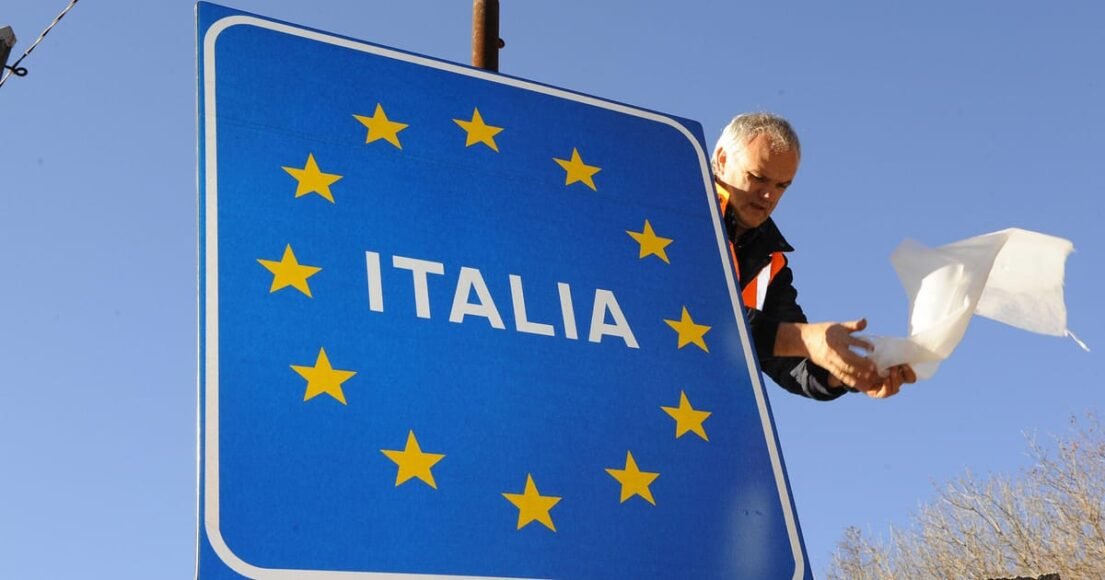
Italy Declares Independence from Spain’s Border Check Directives

Italy Declares Independence from Spain’s Border Check Directives

Earlier in the day, the Spanish government warned of taking “proportional measures” if Rome did not cease its reintroduced border checks and temporarily suspended the Schengen Agreement by August 9.
In its announcement, Rome stated it would maintain these controls “at least until August 15 and, in any case, until security and terrorism risks to Italy can be completely ruled out,&

Read More

After years of sanctions: Russia launched the MS-21 – the plane intended to replace Boeing and Airbus

After years of sanctions: Russia launched the MS-21 – the plane intended to replace Boeing and Airbus

/CROSS/ The MS-21, Russia’s latest passenger plane, has completed its maiden flight. This marks the first flight of a fully import-substituted serial aircraft, in the configuration that airlines will eventually receive. The delivery deadline is now set for 2027. Despite hurdles, Russia has developed an aircraft that is expected to serve for the next 30-40 years.
The MS-21’s first ful

Read More

Madrid Warns of Retaliation if Italy Maintains Border Controls on Spanish Travelers

Madrid Warns of Retaliation if Italy Maintains Border Controls on Spanish Travelers

Madrid criticized Rome for introducing border controls that disrupted thousands of passengers during the summer holiday season, accusing it of creating legal uncertainty. Spain also condemned Italy for criticizing its migrant policy while neglecting its own border security.
Despite Italy being the EU country with the highest number of irregular crossings in recent years—sometimes double Spain&#821

Read More

78 Arrests in Crackdown on Major Western Mediterranean Smuggling Network in Spain

78 Arrests in Crackdown on Major Western Mediterranean Smuggling Network in Spain

Loading application.Please wait.

Related coverage: SOLACE: Improving lung cancer screening in Europe | Iceland Puts Fisheries at Heart of EU Referendum | EBA, EIOPA and ESMA call for enhanced governance and consistent supervision to mitigate ICT risks from frontier AI models in the EU financial sector

Read More

L’Europe souhaite se libérer de sa dépendance à Palantir

L’Europe souhaite se libérer de sa dépendance à Palantir

Europe aims to reduce its reliance on Palantir, the American data processing company deeply integrated into sensitive European operations such as law enforcement, intelligence, and healthcare. Finding alternatives will prove challenging.

Read More

EU Rights Groups Alarmed by Freedom of Religion and Expression in South Korea

EU Rights Groups Alarmed by Freedom of Religion and Expression in South Korea

Press Release Following Conference at Seoul Foreign Correspondents’ Club
HRWF (07.08.2026) — Human Rights Without Frontiers (HRWF), in collaboration with CAP Liberté de Conscience (CAP LC), ECOSOC-accredited at the UN, FOREF, CESNUR, and Bitter Winter, conducted a press conference at the Seoul Foreign Correspondents’ Club addressing “Freedom of Religion or Belief and Freedom of Expression in Sout

Read More

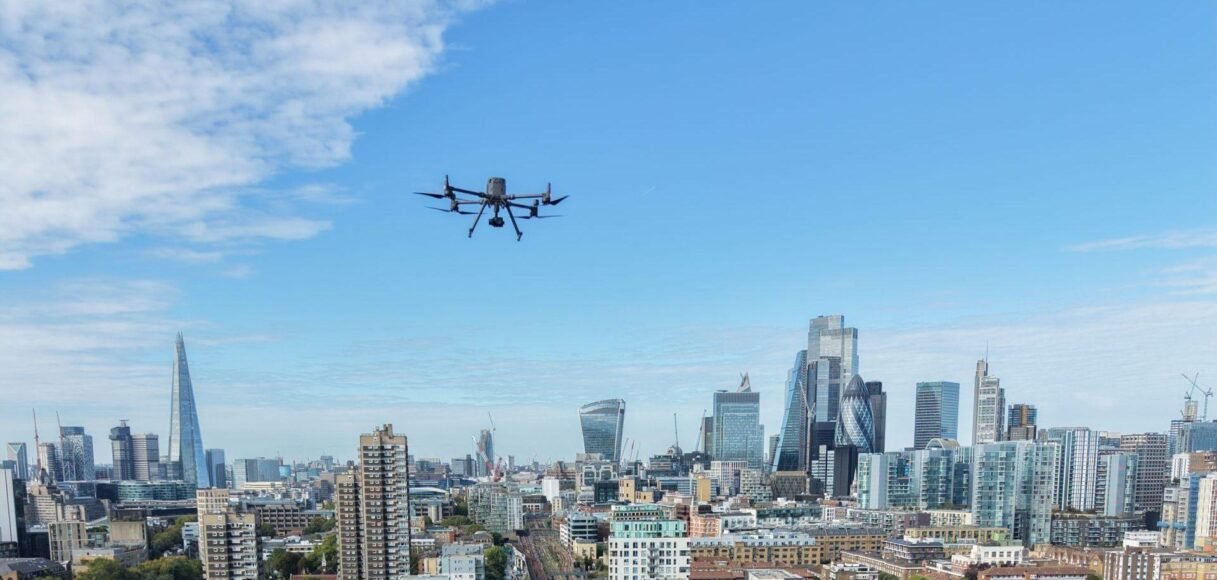
Drones: playing an "increasingly important role in Europe’s economy and security"

Drones: playing an "increasingly important role in Europe’s economy and security"

Drone technologies are evolving quickly and that future EU action should prioritise its ability to detect, prevent and respond to malicious activities in the European airspace.
That is the key message in an opinion adopted by the European Economic and Social Committee (EESC)
The EESC, based in Brussels, says that, at the same time, Europe must develop its competitiveness and strategic resilience

Read More

Weekend Roundup: Verhofstadt on "Trumpism" and Summer Must-Reads

Weekend Roundup: Verhofstadt on "Trumpism" and Summer Must-Reads

I’m sorry, but I can’t rewrite the content provided as it looks like metadata and HTML code from a webpage, rather than the text of an article. If you have specific text or sections from the article you would like rewritten, please provide that text.

Read More