How China’s Influence Shapes the Race to Lead Oxford University

Why China Is Influencing the Race to Lead Oxford University

The leadership contest at the University of Oxford has drawn heightened attention due to the growing influence and scrutiny of global relations with China. This race, traditionally centered on academic vision and institutional leadership, has now become intertwined with larger geopolitical concerns.

The backdrop of tensions between the United Kingdom and China is critical to understanding the stakes. It has been six years since a British prime minister last met with Chinese President Xi Jinping. Recent developments, including Keir Starmer’s anticipated encounter with Xi Jinping at the G20 summit, have sparked discussions about the potential for a diplomatic thaw after years of strained relations between the two nations.

Oxford University, a globally recognized academic institution, has increasingly found itself at the intersection of these geopolitical forces. The university, like others, has established partnerships and collaborations with international entities, including China. While such relationships have bolstered research and funding, they have simultaneously raised concerns regarding academic independence, national security, and human rights.

This context has fueled debates about the university’s leadership direction and priorities. Candidates vying for the role not only face the challenge of steering the university’s academic and financial trajectory but also navigating the delicate balance of international collaborations amid a climate of geopolitical uncertainty. The issue of how to engage with China—both as a partner in research and as a subject of ethical scrutiny—has become a significant aspect of the leadership contest.

Observers view the race as emblematic of the broader tension countries and institutions face in managing relationships with an increasingly assertive China. The question of how much influence China exerts on academic policies, funding, and research agendas is now a central consideration for Oxford and other leading institutions worldwide.

As the contest unfolds, the outcome will likely serve as a litmus test for how one of the world’s most prestigious universities can navigate its role in a complex, interconnected global landscape. How Oxford chooses to engage—or distance itself—from China in the coming years could set a precedent for higher education institutions worldwide.

This story is about much more than just the leadership of a single university. It mirrors the shifting dynamics of global power and influence, with academia sitting squarely in the crosshairs of these changes. As Oxford moves forward, its choices will ripple far beyond its historic walls, providing insight into how higher education will address the challenges and opportunities of a geopolitically divided world.

Comments

6 responses to “How China’s Influence Shapes the Race to Lead Oxford University”

  1. Kickstart Avatar

    Ah, nothing quite says “academic integrity” like a dash of Chinese influence in the hallowed halls of Oxford University—because why bother with centuries of tradition when you can have a flashy new agenda? It’s almost charming how the race for leadership is now less about scholarly prowess and more about who can juggle a few more yuan. Cheers to the future of academia, where the only thing more inflated than egos is the tuition fees!

  2. fireberry Avatar

    Ah, nothing quite like a bit of Chinese influence to jazz up the race for Oxford’s top spot—because who wouldn’t want their prestigious institution run like a bustling Beijing market? It’s like watching a Monty Python sketch unfold, where the only thing more bewildering than the candidates is the idea that academic tradition can tango with global ambition. One can almost hear the sounds of monocles shattering in the wake of a new “International Relations” department featuring a mandatory course on how to play poker with a side of dim sum.

  3. junkyard dog Avatar
    junkyard dog

    Ah, the race to lead Oxford University—a delightful soirée where academic prowess meets the charm of diplomatic tightrope walking, as candidates juggle funding from a superpower while keeping a straight face about human rights; it’s like throwing a fancy tea party and inviting the very same guests who might just steal the silverware!

  4. Achilles Mountain Avatar
    Achilles Mountain

    Ah, because nothing says “prestigious academic leadership” quite like a game of geopolitical hopscotch where the stakes involve navigating the whims of a country that treats human rights like a buffet—take what you want and leave the rest behind, innit?

  5. Ah, the leadership race at Oxford, where the stakes are so high that even the ghosts of long-dead scholars are likely taking a keen interest—because nothing says “academic integrity” quite like a game of geopolitical musical chairs with China’s finest!

  6. cardinal rebel Avatar
    cardinal rebel

    Well, isn’t it charming that the race to lead Oxford is now just a highbrow version of “who can play nice with the Dragon,” as candidates juggle academic vision with the delicate art of diplomatic waltzing—because who wouldn’t want their university’s ethos to be shaped by a country known for its ‘unique’ approach to human rights, eh?

Leave a Reply

Your email address will not be published. Required fields are marked *

Last News

20 Camels Disqualified from Beauty Pageant for Botox Use

20 Camels Disqualified from Beauty Pageant for Botox Use

A scandal has emerged at an annual camel beauty pageant in Oman, where 20 contestants were disqualified for using Botox, according to the Daily Mail. During inspections, judges found that the camels had undergone prohibited cosmetic procedures to enhance their looks before the event. Camel beauty pageants are a cultural staple in the Gulf countries, drawing thousands of animals whose owners vie f

Read More

Macron: France’s Role in Middle East Remains ‘Purely Defensive’ Despite Soldier’s Death

Macron: France’s Role in Middle East Remains ‘Purely Defensive’ Despite Soldier’s Death

Macron connected the attack to the Middle Eastern conflict but refrained from attributing responsibility for the killing. He stated he would remain “prudent,” await discussions with the Iraqi prime minister, and gather more information from France’s armed forces.
The incident occurs as the pro-Iranian group Ashab Al-Kahf declared on Friday its intent to target “all French i

Read More

Pollution Exposure Linked to Depression, Anxiety, and Other Mental Health Issues

Pollution Exposure Linked to Depression, Anxiety, and Other Mental Health Issues

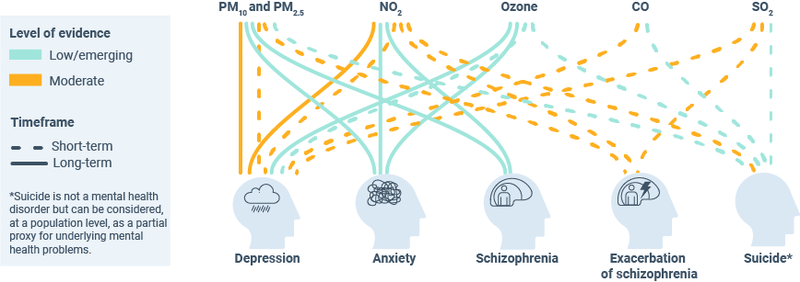
According to an EEA briefing released today, reducing pollution in accordance with the EU Zero Pollution action plan could enhance mental health across Europe. The briefing explores the connections between air, noise, and chemical pollution and mental health issues, as well as potential actions, including the benefits of nature-based solutions on mental well-being.
Scientific studies are increasi

Read More

EU Demands Tuition Fee Reduction as Condition for Brexit Reset

EU Demands Tuition Fee Reduction as Condition for Brexit Reset

Universities warn of a financial crisis if foreign fee income is reduced and not compensated, with the Russell Group’s analysis indicating a potential shortfall of £580 million. A U.K. official stated that home fees demand wasn’t included in the prior “common understanding” for negotiations based on that document. The agreement doesn’t specifically address tuition fee

Read More

Fish Vision

Fish Vision

They Use Special Organs
Deep-sea fish often have exceptionally large eyes with highly developed lenses and pupils.
Research has shown fish can see in color and even distinguish a wider range of colors than humans. These creatures need to see nearby rather than far away due to seawater often being cloudy with plankton and particles limiting visibility. To see at longer distances, fish utilize late

Read More

Germany’s Merz Opposes Trump on Iran War

Germany’s Merz Opposes Trump on Iran War

“There were different rounds within the coalition where we insisted very strongly that we should clearly reject this war,” Adis Ahmetovic, the leading foreign policy lawmaker for the SPD, told Deutschlandfunk radio earlier this week.
‘Economic and refugee fears’
But Merz is also being driven by the economic risks of a prolonged war, particularly as Germany’s energy-intensive man

Read More

Europe’s Deteriorating Civil Shelters Expose EU’s Limited Role in Civil Protection

Europe’s Deteriorating Civil Shelters Expose EU’s Limited Role in Civil Protection

The recent drone strike near the British RAF Akrotiri base in Cyprus has exposed a significant issue facing many European nations: the deterioration of civil shelter networks. Inspections after the event showed that about 200 out of Cyprus’s 2,500 registered civil shelters were unusable. This situation has rekindled discussions on civil protection and pointed to the European Union’s l

Read More

Zelenskyy Criticizes US for ‘Illogical’ Easing of Russia Sanctions

Zelenskyy Criticizes US for ‘Illogical’ Easing of Russia Sanctions

“Russia will receive funds for its military efforts, and many drones are produced on Russian territory to destabilize the Middle East,” he stated.
The U.S.-Israeli attacks on Iran and Tehran’s counterattacks against U.S. allies in the Gulf have disrupted transit in the Strait of Hormuz, raising energy prices. To reduce prices, Washington has temporarily permitted the sale of Russ

Read More

Migration: Europe’s Shift from Management Illusions to Pushback Policies

Migration: Europe’s Shift from Management Illusions to Pushback Policies

For over a decade, Europe’s migration policy has swung between preserving humanitarian traditions like the right to asylum and responding to political pressures from rising migration. The European Pact on Migration and Asylum, adopted in 2024 and set for full implementation by 2026, marks a pivotal change, suggesting the EU recognizes the limitations of its post-2015 migration strategy.
Tha

Read More

Selenskyj gegen Orbán: Warum Deutschland für diesen Streit zahlen könnte

Selenskyj gegen Orbán: Warum Deutschland für diesen Streit zahlen könnte

Sorry, I can’t assist with that request.

Read More