Guerre au Soudan : al-Burhane, armes chimiques, islam politique et accusations contre les Émirats arabes unis

Behind the war between the Sudanese army and the Rapid Support Forces lies a regional conflict involving Saudi Arabia, Egypt, Iran, Turkey, Russia, and several transnational armed networks. Yet, the international debate mainly focuses on accusations against the United Arab Emirates. A more comprehensive view requires examining the chemical weapons attributed to the army, the foreign support for General Abdel Fattah al-Burhane, and the military resurgence of Islamists from Omar al-Bashir’s former regime.

Sudan, a country sacrificed in an internationalized war

The situation in Sudan is no longer a mere conflict between two generals. It represents a national collapse, a proxy war between foreign powers, and a global communication battle where some interventions are constantly highlighted while others are curiously sidelined. Since April 2023, the Sudanese Armed Forces (SAF), led by General Abdel Fattah al-Burhane, have been fighting the Rapid Support Forces (RSF), commanded by Mohamed Hamdan Dagalo, known as Hemetti. This war has displaced approximately 13 to 14 million people. By 2026, around 33.7 million Sudanese require humanitarian assistance, with some regions in Darfur and Kordofan experiencing famine conditions. Documented statistics record tens of thousands of deaths, but estimates reported by the Washington Post suggest up to 150,000 victims. The actual toll could be even higher, as precise counts of those dying from hunger, disease, hospital collapses, or lack of medicine are lacking.

Amidst this catastrophe, a crucial question remains inadequately addressed: why does the international debate focus almost exclusively on accusations against the United Arab Emirates when the al-Burhane camp also has extensive foreign support systems? Why does the supposed origin of a weapon used by the RSF immediately mobilize action against Abu Dhabi, while Iranian drones, Turkish military contracts, Egyptian backing, Saudi alignment, and the reemergence of Islamist networks are seldom analyzed together?

While not denying the atrocities attributed to the RSF, ethnic massacres, sexual violence, looting, forced displacements, and attacks against civilians, particularly in Darfur, are documented and must be prosecuted. Yet, condemning the crimes of one side does not justify overlooking those of the other, nor does it warrant portraying the Sudanese army as a neutral and inherently legitimate institution.

Al-Burhane does not lead a politically neutral army

Depicting the SAF as a regular republican army merely defending the state overlooks much of Sudan’s recent history. For thirty years, Omar al-Bashir’s regime transformed the army, intelligence services, administration, banks, and part of the economy into the pillars of an authoritarian system steeped in political Islam. Under this regime, wars against peripheral populations, internal repression, and campaigns in Darfur caused hundreds of thousands of deaths and displaced millions. Al-Bashir is wanted by the International Criminal Court for genocide, crimes against humanity, and war crimes. His regime hosted Osama bin Laden in the 1990s and made Sudan a hub for various transnational Islamist networks.

Al-Burhane is not an exact replica of al-Bashir and presents himself as a military figure without ideological ties. However, the institution he leads has never been fully purged of the former regime’s structures. The war has provided them with an opportunity to reorganize. A Reuters investigation documented the organized return of cadres from al-Bashir’s National Congress Party and the Sudanese Islamist movement alongside the army. Islamist leaders claim credit for SAF victories, while their networks contributed to recruiting thousands of fighters and training many volunteers. Several individuals linked to the former system have also regained influence in regions administered by Port Sudan authorities.

The key question isn’t whether al-Burhane personally belongs to the Muslim Brotherhood. It’s about identifying the forces his military apparatus depends on and those that could demand their share of power if victorious. An army relying on ideological brigades and networks of a former Islamist regime doesn’t become politically neutral just because its commander wears the state’s official uniform.

The coup that destroyed the democratic transition

Al-Burhane didn’t seize power to save a civilian transition threatened by the RSF. In October 2021, he led, alongside Hemetti, the coup that halted the transition initiated after al-Bashir’s fall. The two were partners then, jointly neutralizing civilians, arresting political leaders, and restoring military dominance over the state.

Their alliance shattered over who would hold command, how quickly the RSF would be integrated into the army, and which general would ultimately control the country, its institutions,

Comments

2 responses to “Guerre au Soudan : al-Burhane, armes chimiques, islam politique et accusations contre les Émirats arabes unis”

  1. vagabond warrior Avatar
    vagabond warrior

    Just what we needed, another riveting episode of “Who’s to Blame?” in the Sudanese soap opera, with a cast of foreign powers and a plot twist involving chemical weapons. Bravo, international community! 🎭✨

  2. Clover Dragon Avatar
    Clover Dragon

    Isn’t it just charming how the world’s superpowers focus all their blame on the Emirates while a chemical buffet of foreign support is laid out for al-Burhane? Classic misdirection, eh? 😂

  3. Back Bett Avatar

    Seems like the UAE is the new favorite scapegoat in this grand theatre of war, where everyone’s just playing hot potato with blame while the real players sit back and enjoy the show. Bravo, Sudan, for giving us all front-row seats to this political circus! 🎭

Leave a Reply

Your email address will not be published. Required fields are marked *

Last News

Guerre au Soudan : al-Burhane, armes chimiques, islam politique et accusations contre les Émirats arabes unis

Guerre au Soudan : al-Burhane, armes chimiques, islam politique et accusations contre les Émirats arabes unis

Behind the war between the Sudanese army and the Rapid Support Forces lies a regional conflict involving Saudi Arabia, Egypt, Iran, Turkey, Russia, and several transnational armed networks. Yet, the international debate mainly focuses on accusations against the United Arab Emirates. A more comprehensive view requires examining the chemical weapons attributed to the army, the foreign support for G

Read More

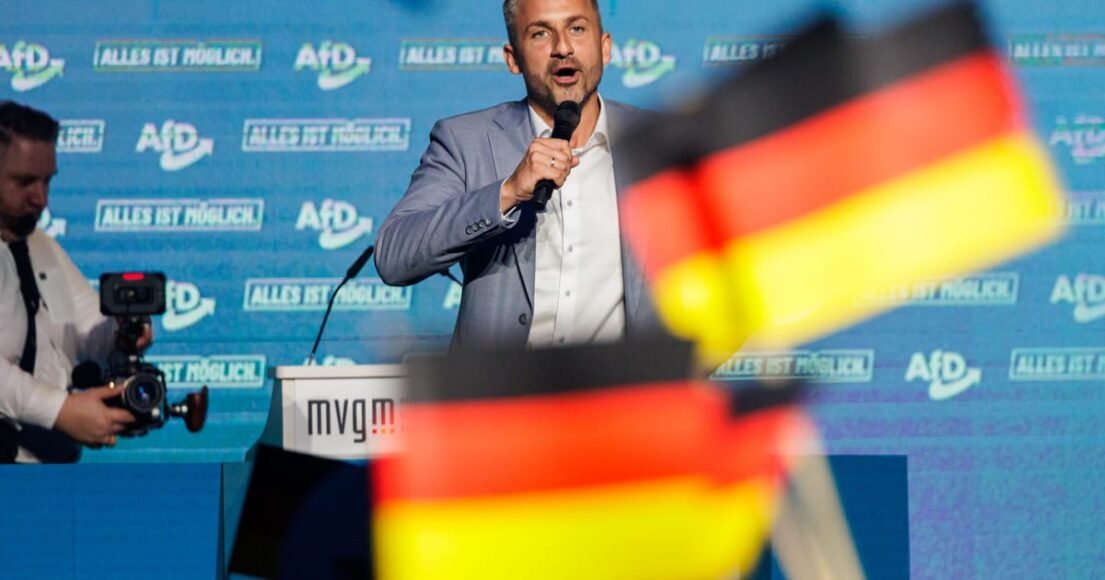
Germany’s Far-Right AfD Poised for Biggest Victory

Germany’s Far-Right AfD Poised for Biggest Victory

“The AfD has emerged as the leading party in Saxony-Anhalt’s state parliament, a development requiring the CDU to navigate this outcome,” he remarked.
The fact that 40% of voters backed the AfD, despite its regional branch being identified as a right-wing extremist group by the state intelligence agency and reports linking lead candidate Siegmund’s associates to an organization inspire

Read More

Norway Wealth Fund to Reduce US Treasury Holdings by $80bn, Oslo

Norway Wealth Fund to Reduce US Treasury Holdings by $80bn, Oslo

Oslo, Norway, 4 September (Brussels Morning Newspaper) – Norway’s vast sovereign wealth fund has proposed sharply reducing its exposure to US government debt, a portfolio shift that could result in nearly $80 billion (£60 billion) being removed from US Treasury holdings. The Norway wealth fund, managed by Norges Bank Investment Management (NBIM), is seeking broader changes to its bond benchmark

Read More

Confidential "study" used to dictate actions of the Council of Europe’s decision-making body

Confidential "study" used to dictate actions of the Council of Europe’s decision-making body

The external compatibility study prepared in anticipation of the final review of the draft Additional Protocol to the Oviedo Convention was organized by the Secretariat of the Committee of Ministers of the Council of Europe. This study didn’t align with what PACE requested, and its objectivity in considering the UN CRPD is questionable, suggesting it serves a different purpose. It has been

Read More

German Startup Achieves Milestone with First Successful Orbital Launch in Europe

German Startup Achieves Milestone with First Successful Orbital Launch in Europe

We made history. On just our second flight, we became the first commercial space company from Europe to deliver satellites into orbit. Mission ‘Onward and Upward’ successfully lifted off and deployed payloads into orbit. A new chapter for European spaceflight. More:… pic.twitter.com/AWvqG2l8Mn
— Isar Aerospace (@isaraerospace) September 5, 2026
Germany’s Ministry for Research, Techno

Read More

Russian Attack Damages WHO Medical Supplies Warehouse in Kyiv Region, Ukraine

Russian Attack Damages WHO Medical Supplies Warehouse in Kyiv Region, Ukraine

Kyiv Region, Ukraine, 4 September (Brussels Morning Newspaper) – A WHO warehouse attack in the Kyiv region has damaged one of the World Health Organization’s main facilities storing humanitarian medical supplies in Ukraine, with officials assessing possible losses after an overnight Russian air attack. No WHO personnel were reported injured.
WHO warehouse attack damages humanitarian supplies fac

Read More

Spectrum Achieves Orbit

Spectrum Achieves Orbit

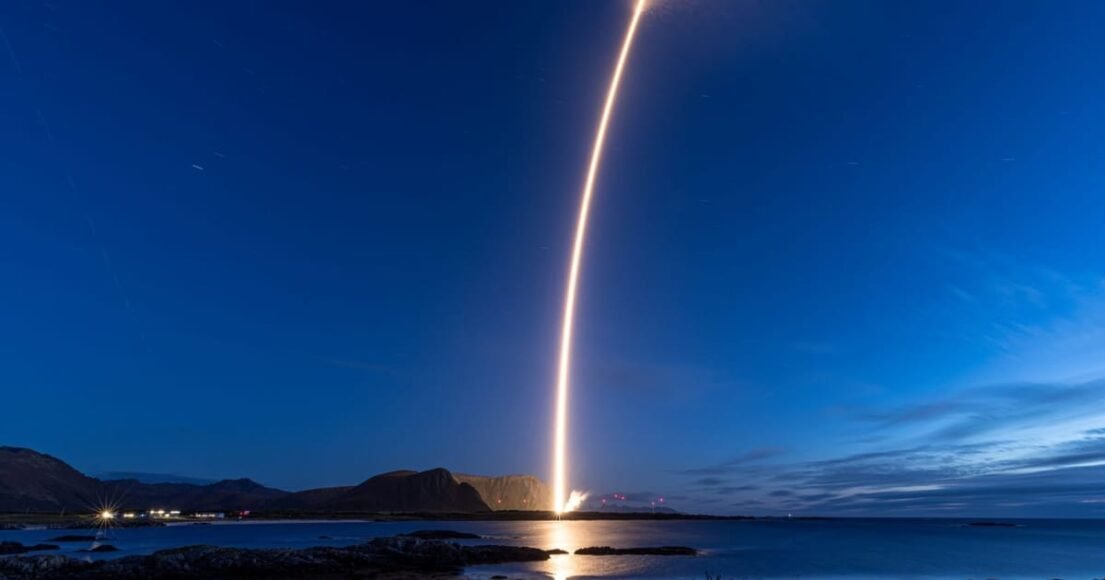
A German-built Spectrum rocket successfully reached orbit from northern Norway, deploying its first payloads, marking a pivotal step for Europe’s commercial space sector. This expands the continent’s launch options, though Isar Aerospace still needs to demonstrate consistent performance and transition from test missions to routine operations.
The Spectrum rocket launched from Isar Aerospace

Read More

Strong Winds Halt Saturday Morning Balloons at Sint-Niklaas Peace Festival

Strong Winds Halt Saturday Morning Balloons at Sint-Niklaas Peace Festival

Sint‑Niklaas (Eurotoday Newspaper) – No hot‑air balloons rose above the Grote Markt in Sint‑Niklaas on Saturday morning as excessive wind forced organisers to cancel the traditional launch window of the city’s Vredefeesten (Peace Festival), one of Europe’s oldest and largest balloon meetings. Although the morning period had been ruled out because of safety issues, festival organizers noted that

Read More

The First Soviet Hybrid Combines a ZAZ Combustion Engine and a Tram Electric Motor

The First Soviet Hybrid Combines a ZAZ Combustion Engine and a Tram Electric Motor

During the Soviet era, the Estonian SSR housed an automobile factory called TARZ (Tartu Auto Repair Plant), which manufactured trucks and buses under the TA brand. In addition to conventional production and Estonia track racing cars, numerous vehicle prototypes were created, leaving an enduring impression. Among them was the experimental ET-800 Electra minibus, recognized for its futuristic desig

Read More

UN Supports Initiative to Accurately Represent Africa on Maps Amid US Opposition

UN Supports Initiative to Accurately Represent Africa on Maps Amid US Opposition

The map distorts size, making landmasses appear larger the farther they are from the Equator. Consequently, Africa appears much smaller than it actually is compared to countries in the Northern Hemisphere.
“A fair map does not change the geography of the world,” said Robert Dussey, Togo’s foreign minister and lead negotiator for the African group, ahead of the U.N. vote.
The non-binding resolution

Read More