



A German-built Spectrum rocket successfully reached orbit from northern Norway, deploying its first payloads, marking a pivotal step for Europe’s commercial space sector. This expands the continent’s launch options, though Isar Aerospace still needs to demonstrate consistent performance and transition from test missions to routine operations.
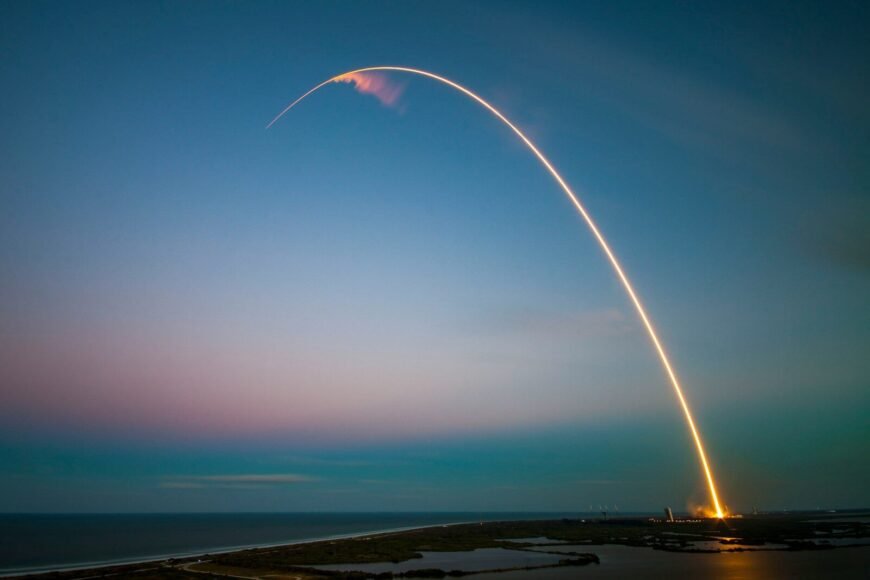
The Spectrum rocket launched from Isar Aerospace’s Andøya Spaceport at 22:12 CEST on Saturday. It passed through maximum aerodynamic pressure, finished main-engine shutdown, stage separation, and ignited its second stage before achieving orbital speed.
After a circularisation burn, the spacecraft separated from the vehicle. Isar Aerospace is collaborating with customers to confirm the condition of the individual satellites, distinguishing between successful deployment and verified operation.
This mission, “Onward and Upward,” is noted as the first instance of a privately developed rocket reaching orbit from continental European territory. Isar Aerospace is the first European commercial company to deliver satellites into orbit.
This distinction requires geographical context. Europe has long-standing orbital-launch capabilities via Ariane and Vega missions from French Guiana. Spectrum stands out as a privately developed vehicle launched from mainland Europe.
The qualification mission carried five small CubeSats and an attached technology experiment, combining commercial research and educational projects to provide European students with practical space hardware experience.
These payloads were selected through the German Space Agency at DLR’s Microlauncher Competition, funded by the European Space Agency’s Boost! initiative, which supports emerging European launch services, aiding Spectrum’s development and production.
According to the European Space Agency, Spectrum, measuring 28 meters high and two meters in diameter, uses ten engines across two stages and is designed to carry payloads up to 1,000 kilograms into low Earth orbit.
This success follows a shorter inaugural flight in March 2025, which ended when the vehicle lost attitude control shortly after launch. Isar Aerospace identified the cause and implemented changes before the second flight.
Europe’s interest in commercial launch ventures is partly economic. The rise of small satellites has increased demand for launch schedules unaligned with larger rockets or rideshare missions.
Strategically, sectors like weather forecasting, navigation, secure communications, climate monitoring, and emergency response increasingly rely on space infrastructure, necessitating not just satellites but also launch vehicles, spaceports, skilled workers, and access to orbital routes.
Spectrum does not directly replace Europe’s larger institutional launch systems like Ariane 6 or Vega-C. A credible commercial launcher could complement these systems, offering customers scheduling flexibility, enhancing technical competition, and minimizing the impact of delays or failures.
One orbital flight alone cannot confirm reliability, affordability, or a sustainable launch operation. These assessments require repeated missions, transparent performance data, and evidence of scalable production without compromising safety or quality.
Isar Aerospace is producing Spectrum vehicles three to seven, with a new facility near Munich aimed at supporting the manufacture of up to 40 launch vehicles annually. The company is also developing a launch complex in Nova Scotia, Canada.
These ambitions are now subject to industrial scrutiny as customers evaluate launch prices, insurance, scheduling, and mission success. European institutions must clarify the goals of public support, contract awards, and whether new providers can establish durable supply chains and skilled employment.
Spectrum’s second flight addresses the technical question of orbit capability. The bigger question now is whether Isar Aerospace can turn this into a reliable service. If successful, the launch from Andøya may mark a significant entry into Europe’s commercial launch market.





Leave a Reply