


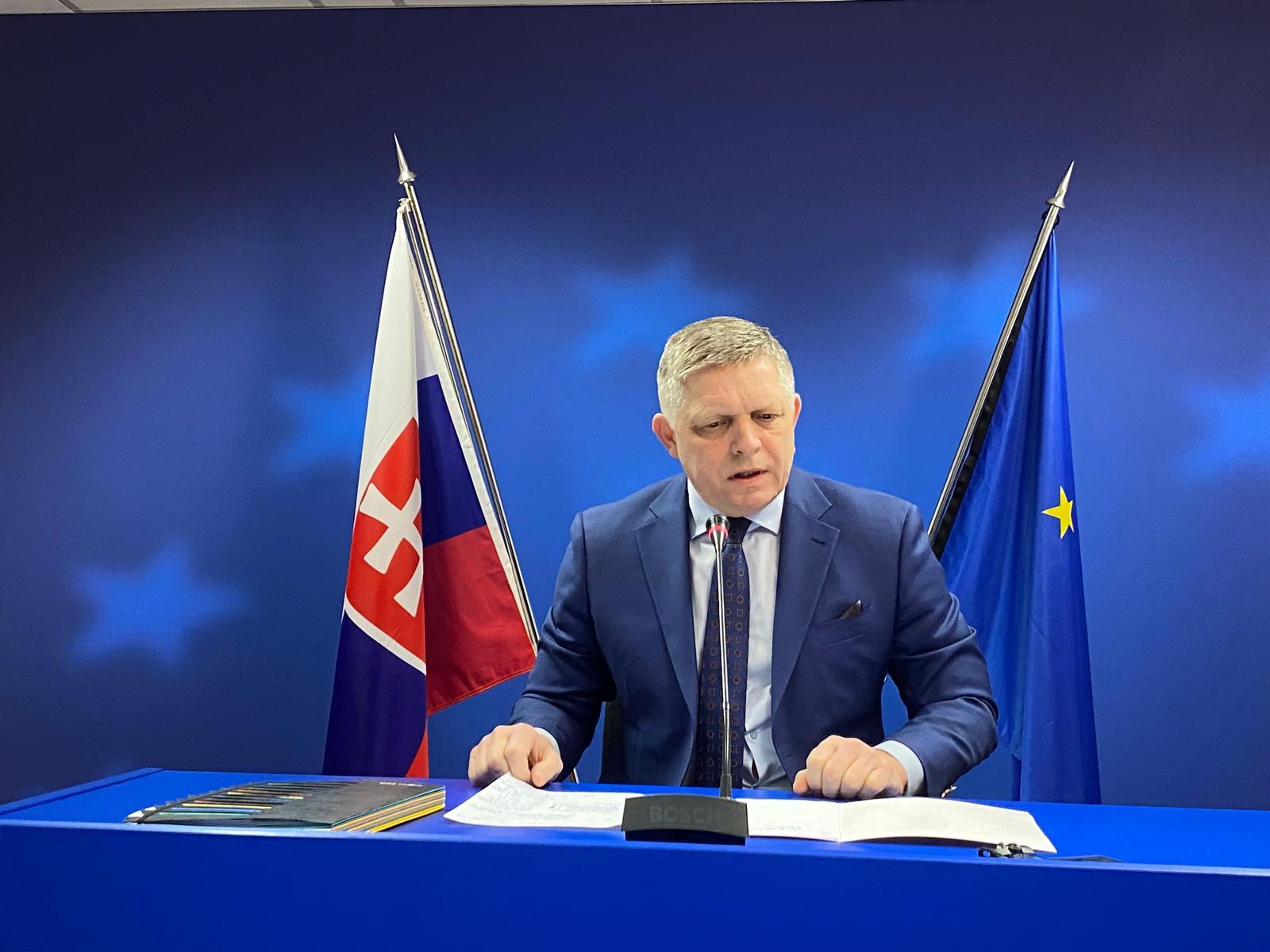
Brussels – The working dinner held during Thursday’s European Council meeting in Brussels focused on the initial discussions regarding the EU’s multiannual financial framework (MFF) for 2028-2035. This was confirmed by Slovak Prime Minister Robert Fico (Smer-SD) following the conclusion of the negotiations. He emphasized that Slovakia’s primary objective is to uphold the cohesion policy and ensure fair payments for farmers, as reported by TASR correspondent.
Fico noted that European Council President António Costa cautioned participants that the discussions are informal and merely preliminary regarding the future long-term EU budget. Consequently, specific financial figures and the so-called “red lines” of individual member states were not addressed.
The Prime Minister highlighted that the MFF after 2027 must account for the repayment of loans totaling 750 billion euros, which were issued under the Next Generation EU recovery plan. This will result in an annual repayment burden of 20 to 30 billion euros. Additionally, he indicated that the MFF will need to factor in increased defense spending and the potential expansion of the EU, including the accession of new member states, which would incur additional costs from the common budget.
“The President of the European Commission sought to gather initial opinions, which will then inform the first proposal for a long-term budget to be discussed in June,” Fico explained.
When asked by TASR about the Slovak government’s priorities regarding potential increases or reductions in the MFF budget chapters, the Prime Minister stated that he arrived at the summit with a mandate from the National Council’s Committee on European and Foreign Affairs. He is charged with advocating for cohesion policy to support regional development and ensuring the protection of Slovak farmers’ interests under the common agricultural policy.
“These are our two primary objectives concerning the budget. I prefer not to discuss red lines at this moment; we are still uncertain about the figures and the final outcomes. Currently, direct payments in Slovakia are at 80 percent of the EU average. Countries with lower payments are always striving to increase them, and there are usually compensatory mechanisms in place,” the Slovak Prime Minister added. (March 21)



Leave a Reply