



Europe faces unprecedented temperatures, severe floods, droughts, and wildfires due to climate change. The European Environment Agency (EEA) has unveiled three new resources to assist decision-makers, communities, and citizens in understanding and addressing these growing impacts. Since the 1980s, Europe’s warming rate has been double the global average, resulting in significant weather-related losses totaling EUR 822 billion between 1980 and 2024, with 25% of these occurring from 2021 to 2024 and causing over 441,000 fatalities. Despite efforts to reduce emissions, further climate resilience and adaptation are imperative to protect people, economies, and infrastructure.
Two new publications from the EEA focus on climate resilience efforts at all governance levels and are supported by a new interactive platform consolidating data on extreme weather events.
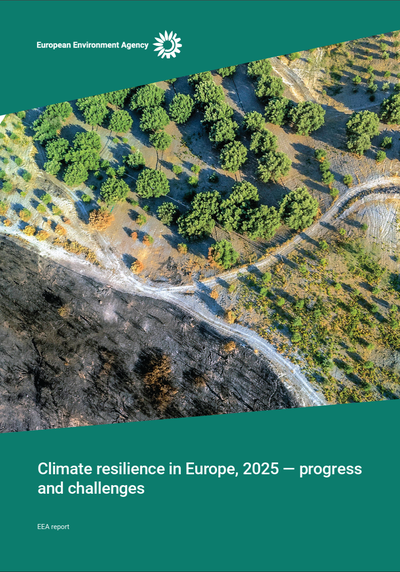
EEA Report: ‘Climate resilience in Europe, 2025 — progress and challenges’
The report evaluates national climate adaptation policies across 32 EEA member countries, highlighting uneven progress. By 2025, all member countries have adopted national adaptation policies, but gaps persist in planning, implementation, and data for tracking adaptation success. Europe is building a stronger climate risk evidence base, but coordinated actions are lacking. The report emphasizes the need for a coherent adaptation policy cycle and stronger enabling conditions, such as a comprehensive legal framework for climate resilience at the EU level. These findings precede the European Commission’s expected release of a European Integrated Framework for Climate Resilience by 2026.
Key findings:
- Climate risk assessments vary in methods, coverage, and timeliness, limiting a cohesive understanding of shared risks.
- Countries are reinforcing adaptation policies, but diverse approaches, complex coordination, unclear risk ownership, variable capacity, and uncertain funding challenge policy coherence at regional and local levels.
- Monitoring, evaluation, and learning systems differ, hindering the assessment of adaptation effectiveness.
- Social vulnerability and equity are not yet fully integrated into national planning.
Future risks highlight increasing heatwaves and temperature changes, with floods and droughts being significant concerns.
EEA Briefing: ‘Small but mighty — climate resilience in Europe’s small municipalities’
This briefing sheds light on small municipalities in Europe, home to over 40% of the EU population, documenting their climate adaptation ambitions and challenges. Despite limited resources and unclear legal responsibilities, many small municipalities act on climate risks, though only 16% have formal adaptation plans compared to 28% of larger municipalities.
Common enablers for overcoming constraints:
- Effective multi-level governance with clear national frameworks and regional support.
- Access to adaptation networks for knowledge sharing and innovative solutions.
- Strong political and community leadership from local leaders.
- Policy integration by embedding adaptation into existing municipal frameworks.
Case studies from Austria, Hungary, and Denmark demonstrate that even small communities can achieve meaningful resilience with the right conditions. The briefing calls for the EU and Member States to utilize the forthcoming Integrated Framework for Climate Resilience to address small municipalities’ unique needs, ensuring no community is left behind.
Interactive Platform: Climate impacts and preparedness in Europe
The EEA launches a new online platform compiling data on extreme weather events like heatwaves, floods, droughts, and wildfires. This platform provides data, projections, and adaptation examples through interactive maps, supporting resilience-building efforts at national, regional, and local levels by consolidating existing data and making it accessible.






Leave a Reply