


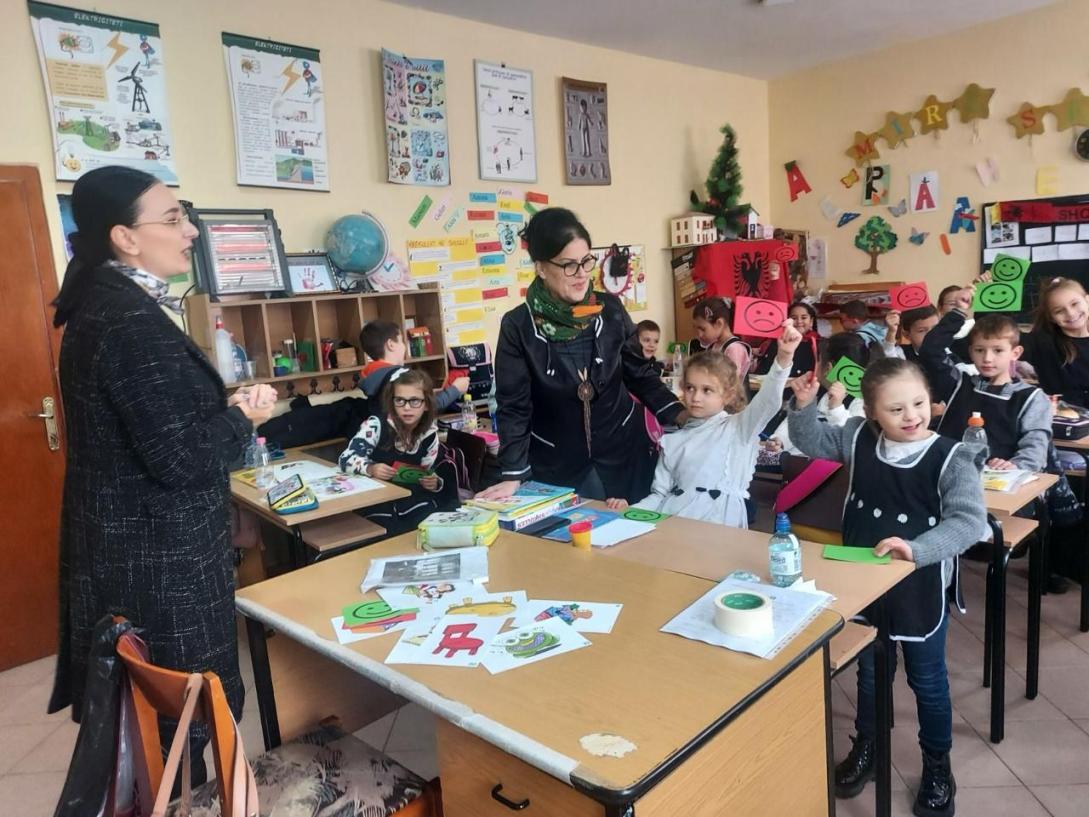
Following the refurbishment of 63 schools through the EU4Schools initiative, another EU-supported project in Albania, EU4InclusiveTeaching, is dedicated to ensuring that every child feels included and inspired within these educational settings.
This initiative emphasizes the European Union’s commitment to fostering a safe and welcoming classroom atmosphere, which is crucial for effective learning.
Through the EU4InclusiveTeaching project, 15,000 teachers across Albania have been trained in innovative methods designed to enhance student motivation, helping children feel more secure and at ease in their learning environments.
Igla Osmanaga, a teacher from Shkodra in northern Albania, shared that these techniques guarantee that all children, regardless of their abilities or special needs, can learn in ways that resonate with them.
The approach focuses on nurturing a sense of belonging and active participation in the classroom. It employs diverse techniques to help children grasp concepts and establish deeper connections with new information, proving successful among modern generations, including those from various social backgrounds.
By shifting the teaching paradigm from passive knowledge acquisition to active engagement, these methods confront and overcome barriers such as hesitation, intimidation, fear of speaking in groups, and the anxiety of making mistakes or being judged.
The “EU for Inclusive Teaching” project, funded by the European Union, aims to enhance learning outcomes for Albanian students and bridge disparities among different socio-economic groups. This effort is vital for fostering social cohesion and ensuring sustainable development in the country.
Implemented by the Open Society Foundation for Albania (OSFA) in collaboration with Tampere University of Applied Sciences (TAMK), the training for 64 school leaders and educators in Tirana has been concluded, with ongoing training for teachers in other districts. A total of 320 enthusiastic teachers have been selected for the “Training of Trainers” program, where they will share their expertise with 15,000 additional educators based on geographical needs. Equipping teachers with essential skills to cultivate a motivating and inclusive learning atmosphere is key to achieving the project’s objectives. (March 21)










Leave a Reply