


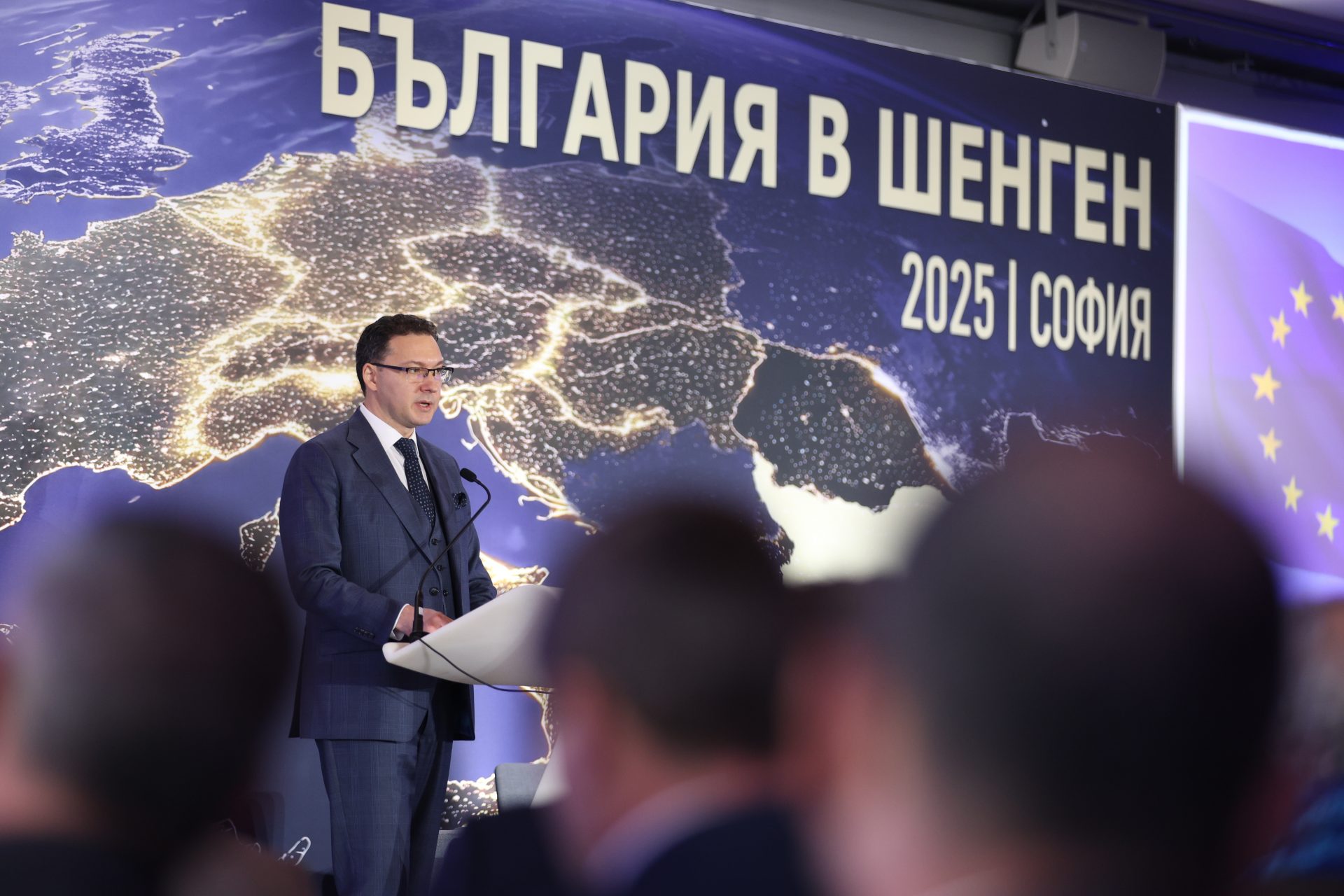
SOFIA – Bulgaria, now a Schengen member, will continue to enhance the overall security of the European Union. This assertion was made by Bulgaria’s Minister of Interior Daniel Mitov at the international conference “Bulgaria in Schengen,” part of EU initiatives commemorating the 40th anniversary of the Schengen Agreement.
Mitov emphasized that maintaining internal security and border protection remains a key government focus. “With internal border controls lifted, we have implemented comprehensive compensatory measures, ensuring no change in crime levels,” he stated. He indicated that Bulgaria is scheduled for its first periodic assessment as a full Schengen member in November, expecting positive outcomes that would highlight the preparedness of personnel for Schengen legislation implementation.
Bulgaria has made substantial investments to bolster border security through equipment modernization, technical infrastructure upgrades, and improved information and communication systems, noted Mitov. He remarked that Schengen plays a vital role in economic growth, the transport sector, and tourism, promoting the seamless movement of goods and enhancing Bulgaria’s appeal as a tourist destination. According to the Minister of Interior, Schengen symbolizes European unity, trust, and solidarity.
For the second year in a row, a 70% reduction in migration pressure towards Bulgaria has been reported, announced Chief Commissioner Anton Zlatanov, Director of the General Directorate “Border Police” (GDGP). He affirmed that Bulgaria is a secure external border of the European Union and is increasingly fortified.
Bulgaria’s Schengen membership recognizes its capability to effectively safeguard one of the EU’s most sensitive and busy borders, stated Deputy Minister of Foreign Affairs Elena Shekerletova. She mentioned that “Bulgaria has faced annual losses exceeding 1.6 billion leva due to delays in lifting land border controls.” Shekerletova added that despite various challenges in Europe, solidarity, trust, and collaborative efforts can help maintain Schengen as a vital achievement of European integration.
Bulgaria officially joined the Schengen area on January 1, 2025, following an 18-year process. The EU Council made the decision to eliminate checks at Bulgaria’s and Romania’s land borders on December 12, 2024, during the conclusion of Hungary’s presidency. This affects border checks between Bulgaria and Greece and between Romania, Bulgaria, and Hungary. Additionally, as of March 31, 2024, checks at air and sea borders for Bulgaria and Romania were lifted following a decision made at the end of Spain’s presidency in 2023. (October 24, 2025)







Leave a Reply