


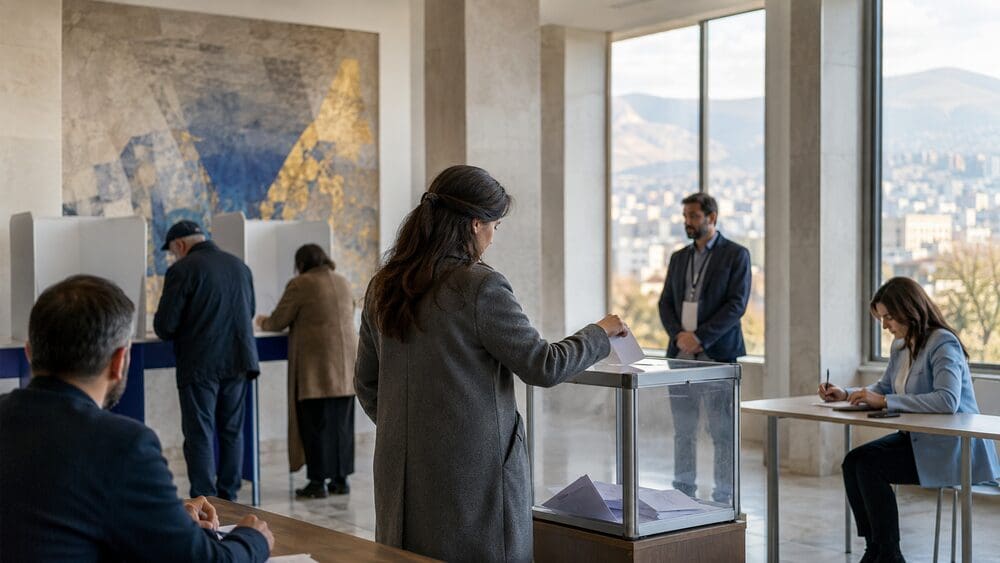
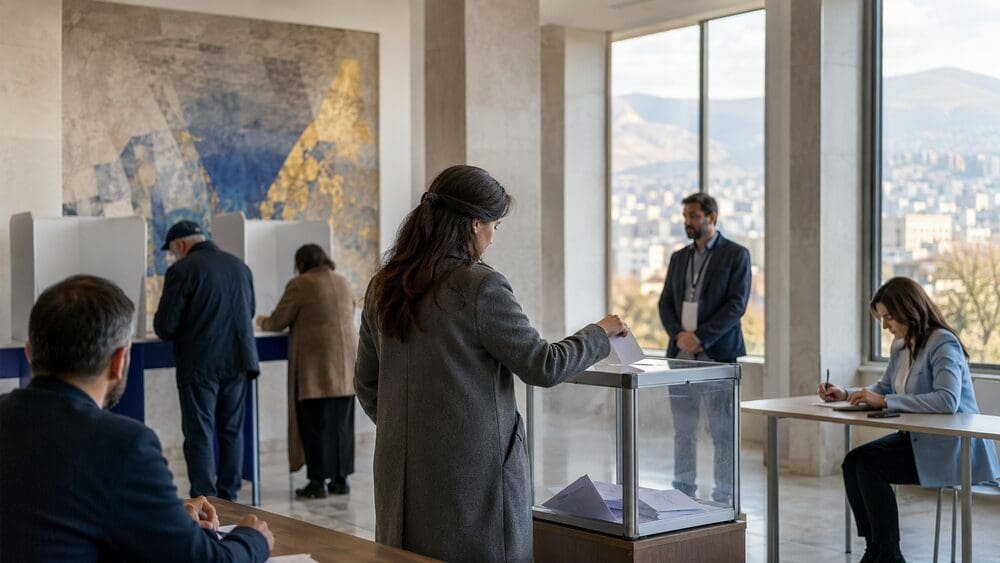
Armenia’s parliamentary election on Sunday, 7 June 2026, transcends a domestic affair, testing whether a small European democracy can choose its strategic path under Russian pressure, while the EU attempts to transform support for sovereignty, resilience, and fair elections into effective policy.
Voters will determine Armenia’s parliamentary composition after a campaign influenced by security concerns, economic pressure, and debates over the country’s position between Moscow and Brussels. Prime Minister Nikol Pashinyan’s administration has sought stronger ties with the EU and the US after years of disappointment with Russia as Armenia’s traditional security ally.
The vote occurs two days after the EU moved to mitigate Russian trade restrictions. European Commission President Ursula von der Leyen announced that Brussels was preparing more than €50 million in immediate assistance for Armenia, along with measures to support affected exporters and a joint EU-Armenia task force for additional support.
The election campaign highlights a central tension in Armenian politics: many citizens desire stronger European connections, yet the country remains economically and strategically tied to Russia. Armenia relies heavily on Russian-led security and economic structures, Russian gas and grain, and hosts a Russian military base in Gyumri.
This dependence makes the election particularly important for the EU. A stable, credible vote would bolster Armenia’s claim to sovereign choice as European institutions work to support democratic resilience in their eastern neighborhood. A disputed or destabilizing outcome would provide Moscow and domestic hardliners more opportunities to challenge Yerevan’s European direction.
The European Parliament’s research service has highlighted foreign policy orientation as a key campaign issue, noting significant support for closer EU integration while many Armenians still favor balanced relations with both Russia and the West. This mixed public sentiment explains why the election is not merely a referendum on Brussels or Moscow, but a broader debate over security, economic risk, and national dignity.
International scrutiny will be high. The OSCE Office for Democratic Institutions and Human Rights has deployed an election observation mission for the 7 June parliamentary elections, with other European parliamentary observers also expected.
Observers’ presence is crucial given growing concerns about foreign interference, disinformation, campaign finance, and intimidation across Europe’s neighborhood. Previous European discussions on Russian influence operations have already identified Armenia as vulnerable to pressure through politics, media, religion, and civic networks.
For Armenian voters, these risks are tangible. The country is still dealing with the political and humanitarian aftermath of Azerbaijan’s 2023 takeover of Nagorno-Karabakh, displacing over 100,000 ethnic Armenians. Many Armenians blame Moscow for failing to prevent the crisis despite Russia’s long-standing security role in the region.
This experience has accelerated Yerevan’s search for alternative partners. Yet, closer EU ties also raise challenging questions: whether Armenia can quickly diversify trade, whether European support can reach affected workers and businesses, and whether democratic reforms can progress without increasing domestic polarization.
For Brussels, Armenia serves as a test case for a broader promise. The EU asserts that neighboring countries should freely choose democratic, economic, and security partnerships without coercion. However, such promises only hold weight if backed by timely help, patient diplomacy, and attention to rights on the ground.
The Commission’s support package is not just financial; it signals the EU’s recognition of economic pressure as part of a larger sovereignty contest. Assistance for agriculture, trade routes, and connectivity, though technical, can determine whether political independence is viable for a landlocked country under pressure.
The election result will not determine Armenia’s future overnight. Coalition dynamics, observer findings, and the reactions of losing parties are all significant. The conduct of state institutions in response to allegations of interference or abuse will also matter.
Yet the stakes are clear. Armenia’s voters are choosing their governance. Europe is being tested on its ability to support that choice without viewing the country simply as a geopolitical chessboard. In a region still marked by war, displacement, and pressure from larger powers, that distinction is crucial.








Leave a Reply