


Here’s a rewritten version of your article:
—
Who Does Europe Turn to in Times of Change?
When the world’s richest man, Elon Musk, dials Europe for advice, he gets Italian Prime Minister Giorgia Meloni on the line. Once considered on the fringes of European politics due to her roots in Italy’s far-right, Meloni has climbed to the center of the continent’s political stage, gaining the trust of both Brussels and Washington. A decade ago, she was brushed off as an ultranationalist outsider. Today, she has transitioned into a figure of influence—an unexpected yet pivotal political force.
The Evolution of Giorgia Meloni's Leadership
Giorgia Meloni, leader of the nationalist Brothers of Italy party, has evolved remarkably from her controversial beginnings. She emerged from the youth wing of the neo-fascist Italian Social Movement, once praising Benito Mussolini as “a good politician,” and rode a wave of right-wing ascendancy in European politics to claim Italy’s premiership in 2022. Yet, her policies on LGBTQ+ rights and immigration—deeply conservative and divisive—have faced muted reactions from EU leaders, who often appear willing to accept her governance style as part of a growing political shift toward the right.
Rather than recoiling from her controversial stance on many social issues, Brussels has largely treated Meloni as someone they can collaborate with—an embodiment of a new political mainstream that reflects the rising popularity of nationalist movements on both sides of the Atlantic.
A Stabilizing Force or an Extended Test?
Despite predictions of her coalition crumbling shortly after forming, Meloni has built one of the most stable governments in postwar Italy. Even as Italy navigates a hefty national debt burden, foreign investors remain drawn to a rare calm in its often chaotic political environment. Meloni’s confident, composed demeanor fortifies her image. For example, after being publicly insulted as a “bitch” by a senior opposition politician, she visited his region and coolly introduced herself as “that bitch”—an interaction that went viral, bolstering her image as an unflappable leader.
Still, her tenure has not been without criticism. Many observers warn of democratic backsliding under her rule, particularly over media freedom and judicial independence. Meloni has repeatedly used litigation to silence critics, from rock stars to teachers, while state broadcaster employees have protested against censorship. Similarly, her public accusations against judges who have ruled against her policies have led to threats against members of the judiciary.
Controversial Policies with Global Impacts
Meloni’s critics also point to her government’s stance on LGBTQ+ rights, which has drawn intense backlash. Her administration has implemented measures denying birth certificates for children of same-sex couples, outlawed surrogacy even when carried out abroad, and sidelined LGBTQ+ rights in public discourse. Data from Arcigay, Italy’s largest LGBTQ+ rights group, shows a sharp increase in anti-LGBTQ+ hate crimes under her government’s watch—mirroring her coalition’s hardline rhetoric on such issues.
Meanwhile, Meloni has deftly used Europe’s migration crisis to align Brussels with her more restrictive vision. Deals forged under her leadership with Tunisia, Mauritania, and Egypt funnel EU funds to clamp down on migration, even as human rights organizations call attention to egregious abuses by these regimes. Her attempt to detain migrants offshore in Albania ran into legal challenges and logistical failures, yet her determination won admiration from some EU leaders who view her migration “model” as groundbreaking.
A Firm Grip on the European Stage
Through careful maneuvering, Meloni has become an indispensable player in European Union politics. While leading the far-right European Conservatives and Reformists Party, she has softened her previous Euroskepticism to work closely with the EU’s top brass. Her transformation into a “team player” reached a high point when she convinced Hungary’s Viktor Orbán—a frequent thorn in the EU’s side—to back a critical €50 billion aid package for Ukraine. This move significantly bolstered her credibility within the bloc.
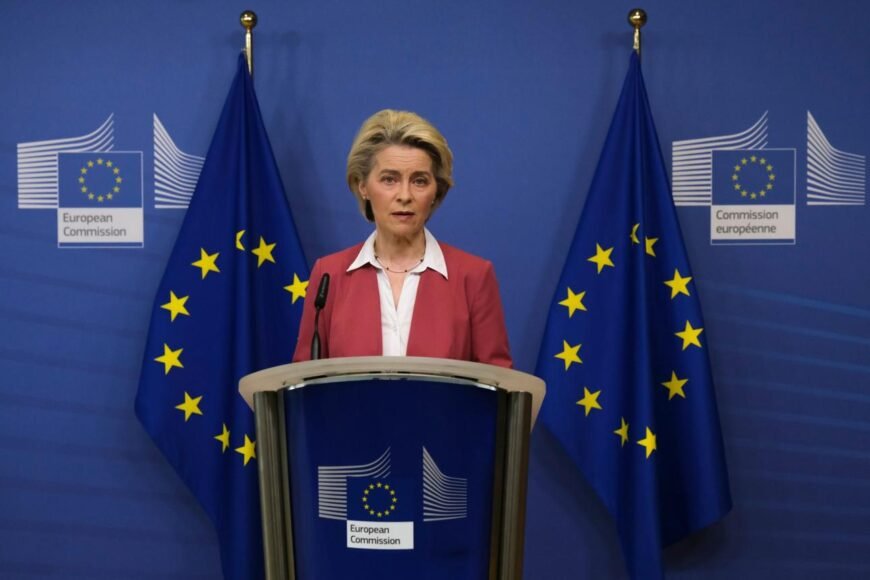
Meloni’s growing political clout coincides with a relative leadership vacuum in Europe. Powerhouses like France and Germany have taken a backseat, allowing Meloni to emerge as a crucial figure straddling far-right populism and mainstream European governance. Leaders from Olaf Scholz to Keir Starmer, and even European Commission President Ursula von der Leyen, have shown interest in her policies and leadership style, with von der Leyen even granting Italy a prestigious role in the next European Commission.
A Global Profile in the Making
Internationally, Giorgia Meloni is increasingly seen as part of a global wave of nationalist populism. While she is not as closely tied to former U.S. President Donald Trump as figures like Hungary’s Orbán, she has courted favor with conservative movements in the U.S., delivering speeches at CPAC and fostering ties with Republican leaders.




Leave a Reply