


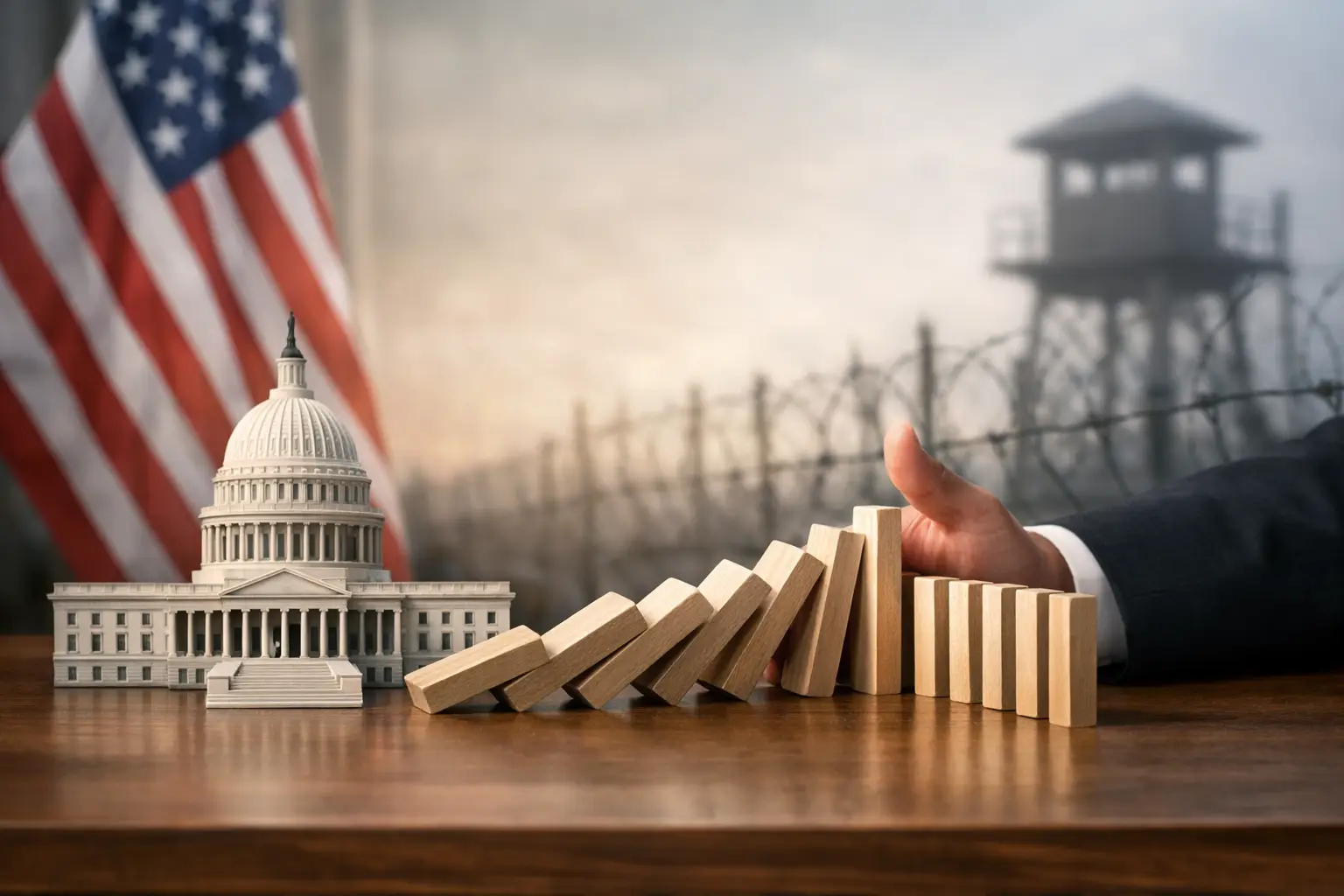
Democracy rarely collapses in a single dramatic moment; it is often hollowed out gradually, through steps like court-packing, hostile media laws, weakened watchdogs, a frightened opposition, and the public being told that rights are obstacles. This gradual weakening, known as democratic backsliding, affects Europe and other fragile democracies, as well as societies that believe elections alone suffice.
Democratic backsliding involves the weakening of institutions, norms, and rights essential for democratic governance. Elections might still occur, parliaments function, and constitutions stand, but their substance changes. Independent oversight is weakened, political competition grows unfair, minority protections erode, and executive power becomes harder to challenge.
What causes democratic backsliding in practice? It usually arises from political ambition, institutional weakness, and public acquiescence. Leaders often claim a democratic mandate to remove supposed obstacles—judges, journalists, civil servants, anti-corruption bodies, universities, faith communities, trade unions, civil-society groups—under the guise of efficiency, sovereignty, security, stability, anti-elitism, or national renewal.
Certain systems may carry deep frustrations long before backsliding becomes visible. If voters see institutions as distant, corrupt, or captured by insiders, they might tolerate measures that weaken checks and balances, with power concentration framed as correcting democracy.
Institutional weakness invites executive capture when institutions, such as courts, electoral bodies, and public broadcasters, are weak, underfunded, or politicized, enabling backsliding. Governments don’t need to abolish constitutions if they can appoint loyalists, rewrite procedures, intimidate regulators, or starve bodies of resources. This vulnerability is not limited to newer democracies, as older systems relying on unwritten norms might also suffer.
Polarisation, or severe political division, is a common driver, turning opponents into enemies and creating demand for hard measures. Supporters might tolerate institutional damage if it hurts the other side, and abuses may be excused if the alternative seems worse. Rights-based institutions may be seen as obstructive in a polarised climate.
Disinformation and media capture distort democratic choice. Without plural sources of information, citizens cannot hold power to account, making media capture central to backsliding cases. This may involve regulatory pressure, selective state advertising, ownership concentration, legal harassment, and smear campaigns against independent reporters. Disinformation further complicates democratic choice by eroding shared accountability.
Economically, while distress doesn’t automatically lead to democratic decline, it can create fertile ground for leaders promising centralized solutions and scapegoating minorities or independent institutions. Anti-system narratives gain traction where mainstream politics seems to fail, and economic grievances might make the public overlook institutional damage.
Corruption and impunity corrode public trust, making citizens receptive to leaders who claim ruthless methods can clean up politics. Paradoxically, such leaders may centralize power, worsening corruption, as distrust weakens democratic norms.
Identity politics and exclusion frequently accelerate backsliding when governments define belonging narrowly. Once some groups are seen as less legitimate, equal rights become easier to dilute. This affects minorities, migrants, dissenting religious communities, political critics, and the broader constitutional order. A state normalizing unequal treatment often uses exceptional methods elsewhere.
Security crises—wars, terrorist attacks, pandemics, emergencies—strain democracies. While governments need room to act, emergency powers can erode democracy if normalised. Without sunset clauses, independent review, and limits, exceptional power becomes routine.
The pace of backsliding quickens when opposition is fragmented, civil society intimidated, and international pressure weak. Leaders may borrow legal techniques, messaging strategies, and scrutiny-disabling methods while maintaining electoral legitimacy. External actors may slow this with sanctions or diplomatic pressure, but domestic support for change limits outside influence. Democratic resilience relies on internal coalitions—journalists, judges, officials, unions, faith leaders, academics, NGOs, voters—defending rules despite political inconvenience.
Democratic backsliding, though not inevitable or irreversible, is usually cumulative. Each compromised appointment, intimidated newsroom, selective prosecution, and rights attack shifts the boundary of acceptability. The danger lies not only in loud assaults on democracy but also in quiet adjustments to less of it. The key question is not merely about holding elections, but whether power can be checked, rights defended, and dissent expressed without fear. The weakening of these answers signals that backsliding has begun.





Leave a Reply