Felix Romuliana

The overlooked Roman city of Emperor Galerius, Felix Romuliana—now known as Gamzigrad—is one of the late Roman Empire’s most remarkable monuments. Though it often stands in the shadow of Diocletian’s Palace or Italy’s archaeological sites, it ranks among the best-preserved imperial complexes from the Tetrarchy period.

UNESCO’s 2007 inclusion of Felix Romuliana in the World Heritage List underscores its importance as a unique testament to the architecture, ideology, and political culture of the late Roman Empire.

The city’s story begins with Galerius, known formally as Gaius Galerius Valerius Maximianus. Born between 250 and 260 in what is now Eastern Serbia, his birthplace remains debated, with some suggesting Serdica and others pointing to the site where he later built his palace.

Galerius’ origins were humble; his mother, Romula, was a Dacian migrant, and he reportedly tended cattle before joining the army, earning the nickname Armentarius, or “herdsman.”

His rise was extraordinary, propelled by military prowess, and in 293, Diocletian appointed him as one of two caesars—or junior co-emperors—in the tetrarchy system. Galerius managed the Balkan and Danubian provinces and grew into a significant state figure.

His legacy is primarily tied to his triumph over Sassanid Persia; after an initial defeat, he vanquished Shahinshah Nars at Satala in 298, capturing his family, treasury, and harem. Although he didn’t dictate the peace terms—Diocletian imposed milder conditions in 299—this victory made Galerius famous, inspiring him to construct a grand residence near his birthplace.

Thus emerged Felix Romuliana, which means “Happy Romuliana,” in honor of his mother, who was to be deified. Galerius also desired deification, making the complex more than a palace—it was an imperial residence, religious center, and dynastic monument, emphasizing his divine origins.

The mausoleums of Galerius and Romula are located outside the walls on Magura Hill, near mounds believed to mark the last apotheosis in the Roman world, affirming the ruler’s divine status.

Upon entering, visitors encounter formidable walls reinforced by twenty massive towers. Inside, they find courtyards, palace buildings, temples, baths, administrative spaces, and ceremonial halls. Noteworthy are the intricate mosaics with images of Dionysus and Medusa, hunting scenes, and geometric designs.

The construction’s splendor is evident in the materials, with marble from across the empire and intricately crafted columns and decorative elements, including porphyry portraits of tetrarchs, symbolizing imperial power.

Significantly, the gods chosen for the site align with the official dynastic doctrine: Diocletian and Galerius are Jovians, and Maximian and Constantius are Herculeans. The setup communicated the ruler’s semi-divine status and dominion.

Felix Romuliana was built during a transitional era for the Roman Empire, associated with Galerius’ role in the Great Persecution against Christians. In 311, gravely ill, Galerius issued an edict of religious tolerance, ending Christian persecution and predating the Milan Agreement by two years.

Felix Romuliana’s connection to Sofia interests Bulgarian readers, as Galerius, who began as a shepherd, paved Christianity’s way in the empire. After his death in 311, the complex gradually declined but persisted for centuries, later plundered by Huns and resettled by farmers.

Under Emperor Justinian I, it regained significance as a fortified settlement, but the Slavs’ arrival in the 7th century ended its life within the walls. By the 11th century, a new Slavic settlement arose among the ruins.

Locals knew it as Gamzigrad for centuries. The complex was first described by Baron von Herder in 1835, with Felix Kanitz painting it in the 1860s. Systematic excavations began in 1953, led by Vekoslav Popović, and later by Dragoslav Srejović from 1970.

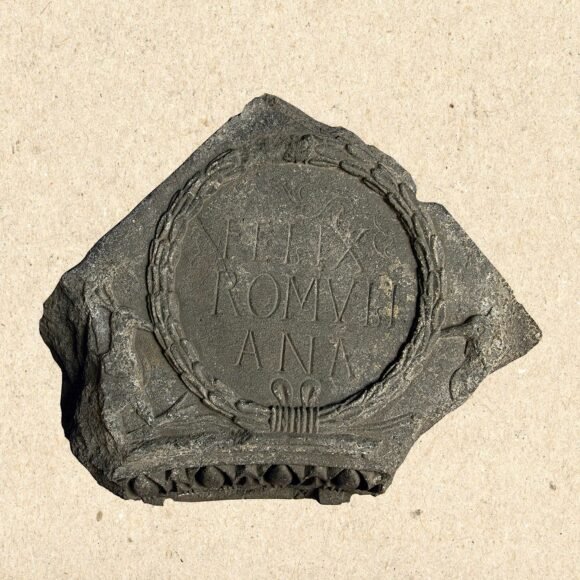
A breakthrough occurred in 1984 when Srejović’s team discovered an archivolt inscribed with “Felix Romuliana,” confirming the site’s identity from ancient texts by Aurelius Victor and Procopius.


Comments

2 responses to “Felix Romuliana”

  1. FireBerry Avatar
    FireBerry

    Oh, look at that, another “remarkable” Roman site that’s somehow managed to be more neglected than my cousin’s garden, yet still makes it onto UNESCO’s fancy list. 😏 Who knew being a herdsman could lead to such deluxe digs?

  2. Sleepwalker Avatar
    Sleepwalker

    Quite the hidden gem, isn’t it? I mean, who wouldn’t want to visit a “Happy Romuliana” instead of the more popular tourist traps? 😂 #LivingTheDream

  3. Disco Thunder Avatar
    Disco Thunder

    Oh, look at that—Felix Romuliana, the “Happy” little palace that even the Romans forgot! Must be nice to be UNESCO-approved while still playing second fiddle to Diocletian’s holiday home. 🙄🏰

Leave a Reply

Your email address will not be published. Required fields are marked *

Last News

Felix Romuliana

Felix Romuliana

The overlooked Roman city of Emperor Galerius, Felix Romuliana—now known as Gamzigrad—is one of the late Roman Empire’s most remarkable monuments. Though it often stands in the shadow of Diocletian’s Palace or Italy’s archaeological sites, it ranks among the best-preserved imperial complexes from the Tetrarchy period.
UNESCO’s 2007 inclusion of Felix Romuliana in the World

Read More

Sánchez-Meloni Clash Reinstates Borders, Causing Headaches for Tourists

Sánchez-Meloni Clash Reinstates Borders, Causing Headaches for Tourists

Madrid has firmly dismissed Italy’s claims, emphasizing that none of the migrants entering Ceuta could have gained legal status under existing criteria. Spanish representatives criticized Rome for suggesting poor management of the EU’s borders, highlighting data that Italy handles unauthorized migration less effectively.
“Italy has the highest number of irregular crossings in recent ye

Read More

Dictionary of the Bible

Dictionary of the Bible

Aaron was Moses’ elder brother and served as the high priest of Israel during the Exodus. Appointed by God to speak for Moses, Aaron became Moses’ spokesperson (Ex. 4:16) and prophet (7:1), often addressing Pharaoh and performing miracles at God’s behest. He was anointed as the first high priest, with his descendants inheriting the priesthood (Ex. 29:29). The name “Aaron”

Read More

Magyar’s Party Supports Former Supreme Court Head for Hungarian President

Magyar’s Party Supports Former Supreme Court Head for Hungarian President

He is “the strongest guarantee that the office of President of the Republic will regain its true dignity and its ability to unite the nation and serve as a counterbalance to the ruling majority,” the statement said.
Parliament is scheduled to vote on his candidacy next Tuesday. Tisza, which secured a general election win in the spring, holds a two-thirds majority in the chamber, making

Read More

Julian the Apostate: The Final Emperor of the Old Gods

Julian the Apostate: The Final Emperor of the Old Gods

In the 4th century, Roman emperors included Flavius Claudius Julianus, famously known as Julian the Apostate, a figure of great controversy and complexity. For Christians, he is the ruler who turned away from his upbringing’s faith and made a last significant effort to revive old pagan traditions. Others see him as a well-educated philosopher, a competent military strategist, and a humble e

Read More

Musk Advocates for Silencing French Greens’ Presidential Candidate

Musk Advocates for Silencing French Greens’ Presidential Candidate

“I’d rather be accused of defending democracy than of trying to buy it.”
Musk, a former adviser to U.S. President Donald Trump, frequently comments on European politics and supports far-right candidates and parties, including in France.
In July, Musk called far-right presidential candidate Marine Le Pen “France’s last hope,” but her National Rally party quickly downplayed his endorseme

Read More

China Plants 78 Billion Trees: A Warning of Danger

China Plants 78 Billion Trees: A Warning of Danger

China has executed one of the largest ecological projects ever, planting trees across an area equivalent to the size of Algeria, according to Wirtualna Polska.
Since the 1980s, an estimated 78 billion trees have been planted in China. However, an analysis by scientists from Tianjin, Utrecht, and China Agricultural University indicates that the “Great Green Wall” project has had signif

Read More

Germany’s gas gamble puts Europe’s winter at risk

Germany’s gas gamble puts Europe’s winter at risk

The low reserves have further increased pressure on gas prices connected to rising tensions around the Strait of Hormuz, with the European natural gas benchmark consistently higher now than during the first four months of the Iran conflict.
The European Commission, the EU’s executive body, stated there are no winter supply risks for the bloc. However, a report from energy analytics firm Rapi

Read More

The Ayoub Aïssiou Case: Caught Between Extradition and Allegations of Political Persecution

The Ayoub Aïssiou Case: Caught Between Extradition and Allegations of Political Persecution

PRESS RELEASE
Spain Will Not Sacrifice Its Dignity for a Few Barrels of Oil
Since July 25, 2026, Ayoub Aïssiou has been held in a detention center in Barcelona, awaiting extradition to Algeria. He has committed no crime; rather, he is a political target of the Algerian regime due to his media activism and support for the democratic opposition.
A Peaceful Dissident, Victim of a Political Vendetta

Read More

EU Expands Russia Sanctions List by Adding 5 Individuals Following Ukraine Attacks

EU Expands Russia Sanctions List by Adding 5 Individuals Following Ukraine Attacks

The European Union has expanded its Russia sanctions by including five more individuals. This action is in response to Moscow’s “intensified strikes deliberately targeting civilians and civilian infrastructure” in Ukraine, as mentioned in a press release.
Although the press release does not specify any particular attack, Russia launched one of its deadliest assaults on the Ukrainian capital earl

Read More