



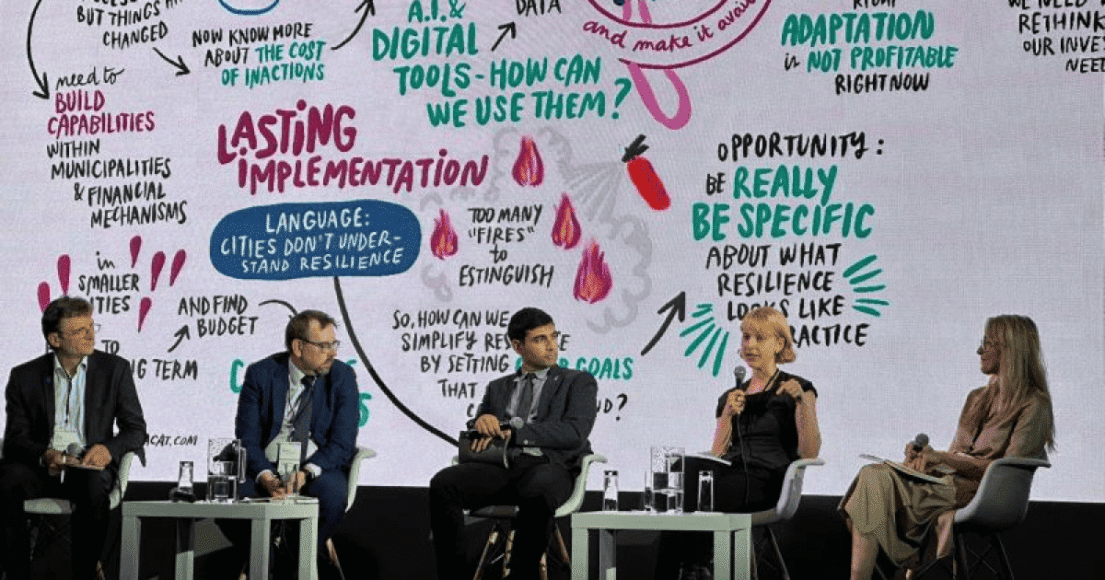
This summer’s unprecedented heatwaves in Europe have underscored the urgent need for cities to adapt to extreme weather caused by climate change. Seven LIFE projects presented their solutions at this year’s European Urban Resilience Forum to address high temperatures. The forum was held in Guimarães, Portugal, from June 17-19, coinciding with a severe heatwave hitting Western Europe, impacting 100 million people with temperatures of up to 41°C and resulting in at least 20,000 fatalities.
The intense heat emphasized the importance of city cooling measures discussed by the LIFE project COOLIFEALMADA team during the forum. They aim to lower the temperature in Almada’s city center in Portugal by up to 3°C through various interventions. These include creating microforests in a 0.5 km urban green corridor, planting vegetation, installing heat-reflective surfaces, and testing green roofs and facades to reduce building temperatures. They have also provided shade with netting and installed micro-sprinklers in public spaces.
Climate shelters were a key topic at the forum, attended by about 420 climate adaptation and resilience experts. COOLIFEALMADA is developing digital tools such as a mobile app to guide vulnerable populations to cool shelters during heatwaves, along with providing public health information and extreme weather warnings. Beyond digital solutions, COOLIFEALMADA focuses on nature-based solutions, green infrastructure, heat-reflective materials, shading systems, and climate shelters to reduce urban temperatures and enhance resilience in four intervention areas: COOL SOIL, COOL BUILDINGS, COOL SKY, and COOL LIVING.
Diana Henriques, project manager for COOLIFEALMADA at Almada Municipality, highlighted their comprehensive approach to tackling urban heat as an environmental, public health, urban planning, and social resilience challenge.
The LIFECOOLCITY project also participated, demonstrating its use of satellite data to inform the public and policymakers about nature-based solutions for heat reduction. This approach enables visibility of these measures’ positive effects on city temperatures.
The LIFE ASAP project showcased its efforts to engage citizens in improving urban climate resilience, using the Worldwide Fund for Nature’s One Planet City Challenge to motivate climate action. Alice Fonseca from WWF Portugal noted that LIFE ASAP benefits citizens, municipalities, and the environment by promoting ambitious climate action and giving local communities, particularly youth, a voice in shaping sustainable urban futures.
The LIFE LATESTadapt team discussed nature-based solutions to cooling cities and addressing other climate-related issues like flooding during another forum workshop. They have developed buffer ponds and improved riverbeds at demonstration sites in Estonia and Latvia to bolster urban resilience to extreme weather.
Additionally, the LIFE SeedNEB project has integrated nature-based solutions with New European Bauhaus sustainable urban design concepts in Lorquí, Spain; Potenza, Italy; and Dunaújváros, Hungary, aiming to protect against floods and heatwaves and create attractive natural spaces.
The use of the New European Bauhaus for urban resilience was highlighted by the LIFEBauhausingEurope project team, while the LIFE FLOPRES team shared details of an early warning system for flooding in cities in Slovakia and Poland, alongside employing nature-based solutions to mitigate flood risk.
The LIFE projects participating in the European Urban Resilience Forum contribute to the EU Adaptation Strategy, the Floods Directive, and the forthcoming Integrated Climate Resilience Framework.





Leave a Reply