


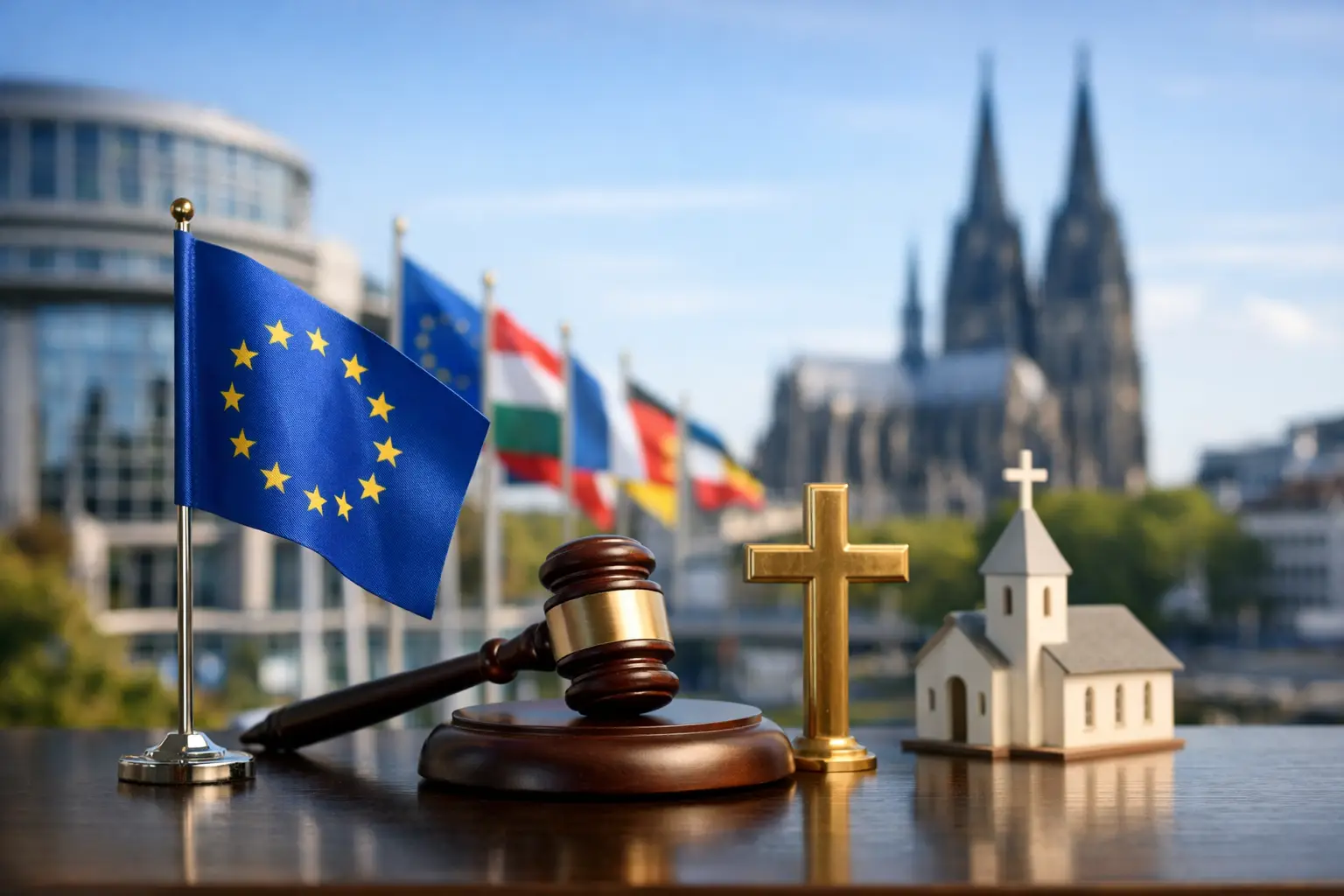
A synagogue requires police protection due to threats, a Christian convert seeking asylum faces skepticism from authorities, a Muslim woman confronts workplace discrimination, and a humanist group is left out of consultations with public authorities. These are not isolated incidents but part of the same policy question: what does freedom of religion or belief (FoRB) policy in Europe mean in practice, and who is responsible when such freedoms are weakened?
FoRB has long been regarded as a niche issue, often sidelined in foreign policy or rights reports. This is no longer viable. In Europe, questions about religion, belief, identity, security, and state neutrality are increasingly intersecting. The result is a policy area that is politically sensitive, legally complex, and increasingly significant.
FoRB policy in Europe encompasses more than protection for major faith communities or a limited right to worship privately. It includes freedom to have, change, express, or reject a religion or belief, covering public expression, conscientious objection, association, education, non-discrimination, and protection from coercion.
Importantly, FoRB also applies to non-believers. If a state protects religious institutions but overlooks discrimination against atheists, agnostics, or minority belief groups, it fails to provide a comprehensive FoRB framework. The right is universal or it isn’t meaningful.
This makes FoRB policy Europe more than an abstract term. It involves how European institutions, national governments, courts, schools, police, prisons, asylum authorities, and employers manage real conflicts. It also concerns whether these entities see FoRB as a living standard or just a symbolic principle.
Current pressures on FoRB policy Europe include polarization, where religion becomes entangled in cultural conflicts over migration, national identity, gender, education, and public order, treating minority communities as political proxies.
Selective concern is another issue. Some policymakers are vocal when Christians face attacks abroad but quieter about discrimination against Muslims or Jews domestically, or vice versa. A credible rights policy cannot rest on ideological preferences.
Institutional fragmentation also affects FoRB. In Europe, FoRB involves the Council of Europe, European Court of Human Rights, EU institutions, OSCE, national constitutions, and domestic systems. This multilayered structure offers safeguards but can also lead to inconsistencies. Rights recognized in Strasbourg may be poorly applied locally. An EU anti-discrimination agenda may not resolve national education disputes.
While the EU has a role, it lacks sweeping competence over religion. Core questions remain national, including church-state arrangements and education models. However, the EU influences non-discrimination, asylum procedures, hate-crime responses, digital governance, and rule-of-law discussions, partly shaping FoRB conditions indirectly, not through grand legislative design.
In education, questions about religious symbols, faith-based schools, curriculum exemptions, and parental rights often lead to litigation and public outrage. States have discretion, but the line between legitimate policy and interference is often case-specific.
Security frameworks are another sensitive area, especially when religious communities are targets of suspicion, raising rule-of-law concerns. Counter-extremism measures often blur into restrictions on lawful belief. The test should be conduct, evidence, and necessity.
FoRB also matters at Europe’s borders, impacting asylum claims based on religious persecution, apostasy, conversion, or blasphemy risk. Officials often demand evidence ill-suited to lived beliefs, risking severe consequences.
Smaller religious or belief groups face stigmatisation through anti-cult rhetoric, registration barriers, inspections, or adverse media narratives, exposing them to official prejudice. Governments have duties around fraud and child protection, but standards must be evidence-based and rights-compliant.
Consistency is crucial for a credible European FoRB policy, with rights protections applicable across communities, including those lacking political influence. Better institutional literacy is needed for officials who make decisions affecting liberty, safety, and equality.
Data collection is essential to identify patterns, but should not become a tool for profiling or administrative overreach. Civil society plays a central role, with faith communities, secular organizations, legal advocates, and rights monitors identifying pressure points early.
FoRB should be integrated into rule-of-law discussions, not treated as a narrow identity issue. Restrictions on religion or belief often relate to broader democratic challenges, such as weak judicial independence, politicized administration, shrinking civic space, and selective policing.
FoRB is a test for European democracies to defend pluralism without resorting to coercive secularism or majoritarian privilege. It challenges whether rights language binds institutions when claimants are unpopular and whether public authorities understand neutrality as equal treatment under law.
Europe requires officials willing to apply uniform standards to majorities, minorities, believers, dissenters, and non-believers. That’s where credibility starts, and where democratic resilience is either safeguarded or quietly lost.








Leave a Reply