The Importance of FoRB Policy in Europe Today

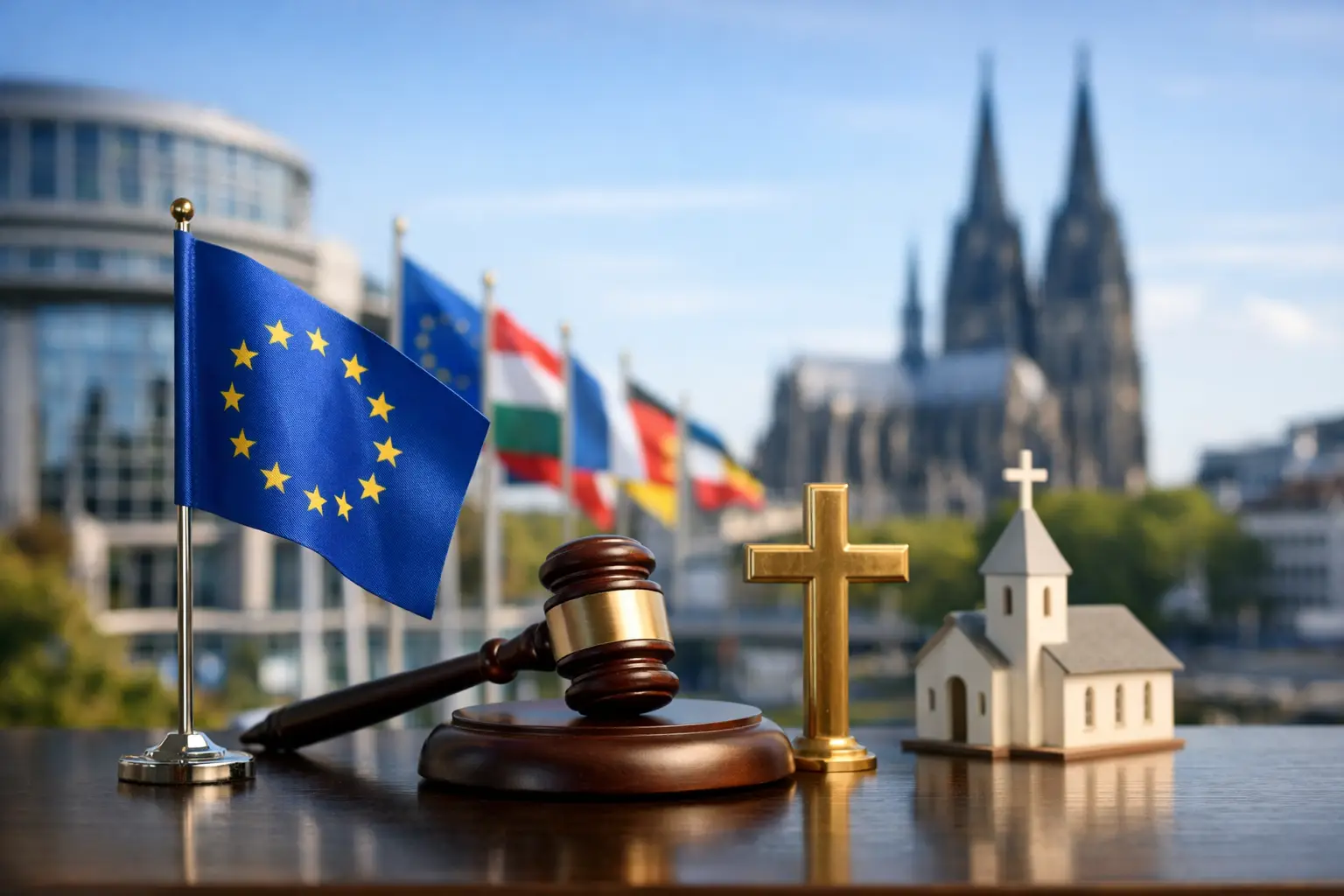
A synagogue requires police protection due to threats, a Christian convert seeking asylum faces skepticism from authorities, a Muslim woman confronts workplace discrimination, and a humanist group is left out of consultations with public authorities. These are not isolated incidents but part of the same policy question: what does freedom of religion or belief (FoRB) policy in Europe mean in practice, and who is responsible when such freedoms are weakened?

FoRB has long been regarded as a niche issue, often sidelined in foreign policy or rights reports. This is no longer viable. In Europe, questions about religion, belief, identity, security, and state neutrality are increasingly intersecting. The result is a policy area that is politically sensitive, legally complex, and increasingly significant.

FoRB policy in Europe encompasses more than protection for major faith communities or a limited right to worship privately. It includes freedom to have, change, express, or reject a religion or belief, covering public expression, conscientious objection, association, education, non-discrimination, and protection from coercion.

Importantly, FoRB also applies to non-believers. If a state protects religious institutions but overlooks discrimination against atheists, agnostics, or minority belief groups, it fails to provide a comprehensive FoRB framework. The right is universal or it isn’t meaningful.

This makes FoRB policy Europe more than an abstract term. It involves how European institutions, national governments, courts, schools, police, prisons, asylum authorities, and employers manage real conflicts. It also concerns whether these entities see FoRB as a living standard or just a symbolic principle.

Current pressures on FoRB policy Europe include polarization, where religion becomes entangled in cultural conflicts over migration, national identity, gender, education, and public order, treating minority communities as political proxies.

Selective concern is another issue. Some policymakers are vocal when Christians face attacks abroad but quieter about discrimination against Muslims or Jews domestically, or vice versa. A credible rights policy cannot rest on ideological preferences.

Institutional fragmentation also affects FoRB. In Europe, FoRB involves the Council of Europe, European Court of Human Rights, EU institutions, OSCE, national constitutions, and domestic systems. This multilayered structure offers safeguards but can also lead to inconsistencies. Rights recognized in Strasbourg may be poorly applied locally. An EU anti-discrimination agenda may not resolve national education disputes.

While the EU has a role, it lacks sweeping competence over religion. Core questions remain national, including church-state arrangements and education models. However, the EU influences non-discrimination, asylum procedures, hate-crime responses, digital governance, and rule-of-law discussions, partly shaping FoRB conditions indirectly, not through grand legislative design.

In education, questions about religious symbols, faith-based schools, curriculum exemptions, and parental rights often lead to litigation and public outrage. States have discretion, but the line between legitimate policy and interference is often case-specific.

Security frameworks are another sensitive area, especially when religious communities are targets of suspicion, raising rule-of-law concerns. Counter-extremism measures often blur into restrictions on lawful belief. The test should be conduct, evidence, and necessity.

FoRB also matters at Europe’s borders, impacting asylum claims based on religious persecution, apostasy, conversion, or blasphemy risk. Officials often demand evidence ill-suited to lived beliefs, risking severe consequences.

Smaller religious or belief groups face stigmatisation through anti-cult rhetoric, registration barriers, inspections, or adverse media narratives, exposing them to official prejudice. Governments have duties around fraud and child protection, but standards must be evidence-based and rights-compliant.

Consistency is crucial for a credible European FoRB policy, with rights protections applicable across communities, including those lacking political influence. Better institutional literacy is needed for officials who make decisions affecting liberty, safety, and equality.

Data collection is essential to identify patterns, but should not become a tool for profiling or administrative overreach. Civil society plays a central role, with faith communities, secular organizations, legal advocates, and rights monitors identifying pressure points early.

FoRB should be integrated into rule-of-law discussions, not treated as a narrow identity issue. Restrictions on religion or belief often relate to broader democratic challenges, such as weak judicial independence, politicized administration, shrinking civic space, and selective policing.

FoRB is a test for European democracies to defend pluralism without resorting to coercive secularism or majoritarian privilege. It challenges whether rights language binds institutions when claimants are unpopular and whether public authorities understand neutrality as equal treatment under law.

Europe requires officials willing to apply uniform standards to majorities, minorities, believers, dissenters, and non-believers. That’s where credibility starts, and where democratic resilience is either safeguarded or quietly lost.


Comments

9 responses to “The Importance of FoRB Policy in Europe Today”

  1. Tweety Bun Bun Avatar
    Tweety Bun Bun

    Interesting read, but who would’ve thought that a policy about freedom of religion in Europe would be so complicated? 😅 It’s like trying to order a decent cup of coffee in a pub—everyone has an opinion, but no one gets it right!

  2. Slinger Avatar

    Seems like FoRB is the new trendy topic in policy circles—next up, let’s discuss whether pineapple belongs on pizza. 🍕 Who knew human rights could be so complicated, eh?

  3. DanimalDaze Avatar
    DanimalDaze

    You’d think with all the fuss about FoRB, we’d have a clear guidebook by now, but it seems like Europe prefers its policies like its coffee—complicated and often a bit bitter. ☕️ Who knew protecting beliefs could be such a tangled mess?

  4. reno monarch Avatar
    reno monarch

    Looks like FoRB policy in Europe is the new hot topic—who knew freedom of religion could be so complicated? 😂 It’s almost like expecting a perfect soufflé from a chef who only knows how to microwave!

  5. jade fox Avatar
    jade fox

    Isn’t it just delightful how FoRB policy has turned into the latest European soap opera? 🎭 As if protecting beliefs was ever going to be as clear-cut as a pint in a pub! 🍺

  6. Freaky Ratbuster Avatar
    Freaky Ratbuster

    Isn’t it adorable how we pretend that policies like FoRB are more than just a polite way to ignore the messy realities of religious freedom? 🍷 In true European fashion, let’s raise a glass to the endless debates while the actual believers juggle their rights like a circus act! 🎪

  7. toy dogwatch Avatar
    toy dogwatch

    Oh, fantastic! Who knew that a policy about freedom of religion could turn into such a political circus? 🎪 Just what we needed, a bureaucratic puzzle where everyone’s rights are up for debate—bravo, Europe! 🙌

  8. cricket Avatar

    FoRB policy in Europe? Oh, just a delightful game of “who’s really in charge of everyone’s beliefs” while we sip our espressos and ignore actual issues. 🍵 Who knew freedom could be this complicated? 😏

  9. Texas Butterfly Avatar
    Texas Butterfly

    Freedom of religion in Europe? Oh sure, let’s just sprinkle some fairy dust and hope everyone gets along, right? I mean, who needs consistency when you’ve got a patchwork of policies that treat believers like chess pieces in a grand game of political charades? 🙄

  10. ZenaCake Avatar
    ZenaCake

    Quite the riveting read on FoRB—it’s not like we have other pressing issues, right? Who knew religious freedom could get caught in so much red tape? 🙄✌️

Leave a Reply

Your email address will not be published. Required fields are marked *

Last News

Credit Agricole Nears 30% Stake in Banco BPM Amid European Banking Regulations Focus

Credit Agricole Nears 30% Stake in Banco BPM Amid European Banking Regulations Focus

Sarhan Basem is Eurotoday’s Senior Correspondent to the European Parliament. With a Bachelor’s degree in English Literature, Sarhan brings a unique blend of linguistic finesse and analytical prowess to his reporting. Specializing in foreign affairs, human rights, civil liberties, and security issues, he delves deep into the intricacies of global politics to provide insightful comment

Read More

The Importance of FoRB Policy in Europe Today

The Importance of FoRB Policy in Europe Today

A synagogue requires police protection due to threats, a Christian convert seeking asylum faces skepticism from authorities, a Muslim woman confronts workplace discrimination, and a humanist group is left out of consultations with public authorities. These are not isolated incidents but part of the same policy question: what does freedom of religion or belief (FoRB) policy in Europe mean in pract

Read More

Can Europe Heal the Unseen Wounds of War?

Can Europe Heal the Unseen Wounds of War?

After four and a half years of conflict, Ukraine’s physical damage is starkly visible. However, the psychological harm from occupation, displacement, and loss is harder to assess yet equally critical to address.
David Miliband, president and CEO of the International Rescue Committee and former British foreign secretary, speaks with Sarah Wheaton after his trip to southern Ukraine. He emphasi

Read More

IMF Supports US GDP Growth as Fed Maintains Steady Interest Rates

IMF Supports US GDP Growth as Fed Maintains Steady Interest Rates

Sarhan Basem is Eurotoday’s Senior Correspondent to the European Parliament. With a Bachelor’s degree in English Literature, Sarhan brings a unique blend of linguistic finesse and analytical prowess to his reporting. Specializing in foreign affairs, human rights, civil liberties, and security issues, he delves deep into the intricacies of global politics to provide insightful comment

Read More

Significant Decrease in Average CO2 Emissions from New Cars and Vans in 2025 | Press Releases

Significant Decrease in Average CO2 Emissions from New Cars and Vans in 2025 | Press Releases

Press releasePublished 25 Jun 2026

ImageMichael Fousert on Unsplash

Average carbon dioxide (CO2) emissions from new passenger cars and light commercial vehicles or vans registered in Europe decreased significantly in 2025 compared to 2024, according to provisional data published today by the European Environment Agency (EEA).

The reductions in emissions from new cars and vans

Read More

Meloni Claims Rutte Misrepresented Italy’s Role in Iran Conflict

Meloni Claims Rutte Misrepresented Italy’s Role in Iran Conflict

Meloni responded on Thursday, clarifying that Rutte incorrectly suggested that flights from Italy were directly involved in attacks on Iran while trying to assure Washington of NATO’s significant involvement.
“In his — let’s call it enthusiastic — account, the secretary-general has muddled together things that are actually quite distinct, confusing the types of authorized flights

Read More

FCC Strengthens Security Regulations for US Telecommunications Infrastructure

FCC Strengthens Security Regulations for US Telecommunications Infrastructure

Washington, D.C., United States, June 25 – Eurotoday Newspaper — US communications infrastructure is set to receive stronger regulatory protection after the Federal Communications Commission (FCC) voted to tighten rules governing submarine communication cables that connect the United States to global internet networks. The updated requirements are designed to improve national security, increase

Read More

Brussels Aims at Cloud Gatekeepers

Brussels Aims at Cloud Gatekeepers

The Commission suggests AWS and Azure may be subject to Europe’s strictest digital market regulations as cloud infrastructure becomes vital for AI and businesses
The European Commission has moved to potentially classify Amazon Web Services and Microsoft Azure under the Digital Markets Act, suggesting these cloud platforms might act as gatekeepers in Europe’s digital economy, despite not meeting

Read More

EU Intensifies Anti-Migration Efforts in Somalia

EU Intensifies Anti-Migration Efforts in Somalia

The newly implemented restrictions indefinitely prohibit multiple-entry visas, reinstate visa fees for diplomats, and extend visa processing times to 45 days.
Initially suggested by Brunner, these sanctions are not the EU’s first effort to encourage countries to assist with migrant readmission. Ministers enacted similar measures against Gambia in 2021 and against Ethiopia in 2024. The Ethiop

Read More

From Dublin to Brussels: European Newsroom Engages with the Upcoming Irish EU Presidency

From Dublin to Brussels: European Newsroom Engages with the Upcoming Irish EU Presidency

On July 1, 2026, Ireland will assume the rotating Presidency of the Council of the European Union.
During a background briefing for the European Newsroom (enr) at Ireland’s Permanent Representation to the European Union in Brussels, journalists received an early overview of the presidency’s upcoming agenda.
Reporters from various European Newsroom member agencies discussed key issues w

Read More