Causes of Democratic Backsliding

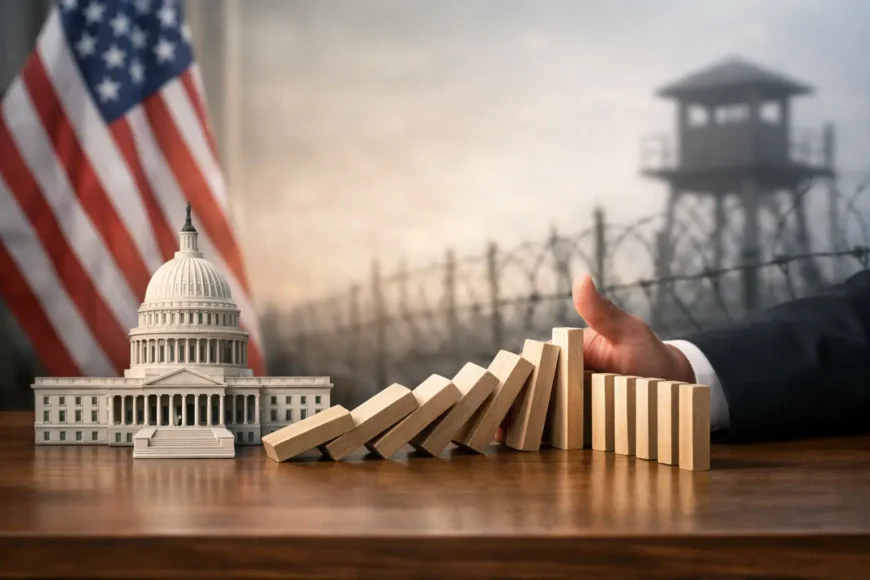
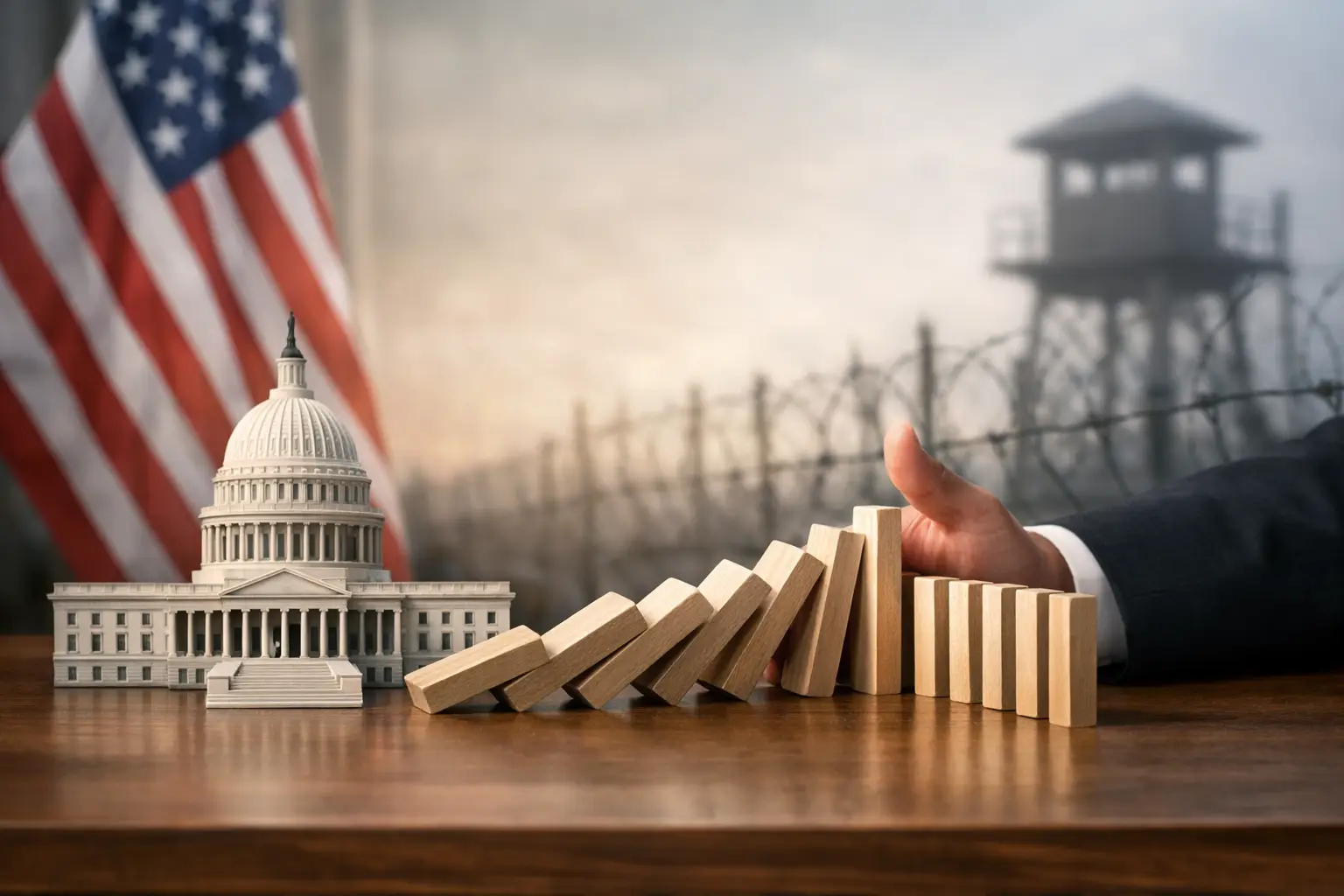
Democracy rarely collapses in a single dramatic moment; it is often hollowed out gradually, through steps like court-packing, hostile media laws, weakened watchdogs, a frightened opposition, and the public being told that rights are obstacles. This gradual weakening, known as democratic backsliding, affects Europe and other fragile democracies, as well as societies that believe elections alone suffice.

Democratic backsliding involves the weakening of institutions, norms, and rights essential for democratic governance. Elections might still occur, parliaments function, and constitutions stand, but their substance changes. Independent oversight is weakened, political competition grows unfair, minority protections erode, and executive power becomes harder to challenge.

What causes democratic backsliding in practice? It usually arises from political ambition, institutional weakness, and public acquiescence. Leaders often claim a democratic mandate to remove supposed obstacles—judges, journalists, civil servants, anti-corruption bodies, universities, faith communities, trade unions, civil-society groups—under the guise of efficiency, sovereignty, security, stability, anti-elitism, or national renewal.

Certain systems may carry deep frustrations long before backsliding becomes visible. If voters see institutions as distant, corrupt, or captured by insiders, they might tolerate measures that weaken checks and balances, with power concentration framed as correcting democracy.

Institutional weakness invites executive capture when institutions, such as courts, electoral bodies, and public broadcasters, are weak, underfunded, or politicized, enabling backsliding. Governments don’t need to abolish constitutions if they can appoint loyalists, rewrite procedures, intimidate regulators, or starve bodies of resources. This vulnerability is not limited to newer democracies, as older systems relying on unwritten norms might also suffer.

Polarisation, or severe political division, is a common driver, turning opponents into enemies and creating demand for hard measures. Supporters might tolerate institutional damage if it hurts the other side, and abuses may be excused if the alternative seems worse. Rights-based institutions may be seen as obstructive in a polarised climate.

Disinformation and media capture distort democratic choice. Without plural sources of information, citizens cannot hold power to account, making media capture central to backsliding cases. This may involve regulatory pressure, selective state advertising, ownership concentration, legal harassment, and smear campaigns against independent reporters. Disinformation further complicates democratic choice by eroding shared accountability.

Economically, while distress doesn’t automatically lead to democratic decline, it can create fertile ground for leaders promising centralized solutions and scapegoating minorities or independent institutions. Anti-system narratives gain traction where mainstream politics seems to fail, and economic grievances might make the public overlook institutional damage.

Corruption and impunity corrode public trust, making citizens receptive to leaders who claim ruthless methods can clean up politics. Paradoxically, such leaders may centralize power, worsening corruption, as distrust weakens democratic norms.

Identity politics and exclusion frequently accelerate backsliding when governments define belonging narrowly. Once some groups are seen as less legitimate, equal rights become easier to dilute. This affects minorities, migrants, dissenting religious communities, political critics, and the broader constitutional order. A state normalizing unequal treatment often uses exceptional methods elsewhere.

Security crises—wars, terrorist attacks, pandemics, emergencies—strain democracies. While governments need room to act, emergency powers can erode democracy if normalised. Without sunset clauses, independent review, and limits, exceptional power becomes routine.

The pace of backsliding quickens when opposition is fragmented, civil society intimidated, and international pressure weak. Leaders may borrow legal techniques, messaging strategies, and scrutiny-disabling methods while maintaining electoral legitimacy. External actors may slow this with sanctions or diplomatic pressure, but domestic support for change limits outside influence. Democratic resilience relies on internal coalitions—journalists, judges, officials, unions, faith leaders, academics, NGOs, voters—defending rules despite political inconvenience.

Democratic backsliding, though not inevitable or irreversible, is usually cumulative. Each compromised appointment, intimidated newsroom, selective prosecution, and rights attack shifts the boundary of acceptability. The danger lies not only in loud assaults on democracy but also in quiet adjustments to less of it. The key question is not merely about holding elections, but whether power can be checked, rights defended, and dissent expressed without fear. The weakening of these answers signals that backsliding has begun.


Comments

5 responses to “Causes of Democratic Backsliding”

  1. grinch cheese Avatar
    grinch cheese

    Oh, just what we needed—another in-depth analysis on how to gradually dismantle democracy while still pretending to hold elections. Truly, a masterclass in political sleight of hand! 🤔💼

  2. preach man Avatar
    preach man

    Oh, splendid! Who needs checks and balances when you can just have a cozy chat with your new best friend, the dictator? 😏 Just remember, democracy is like a fine wine—if you don’t keep it in check, it turns to vinegar before you know it! 🍷

  3. Swedish Twizz Avatar
    Swedish Twizz

    Oh, democratic backsliding? Just the political equivalent of a slow leak in your fancy European car—never quite enough to notice until you’re stranded in the middle of nowhere! 🚗💨 Who needs checks and balances when we can have a “more efficient” autocracy instead, right? 😂

  4. Duke Electro Avatar
    Duke Electro

    So, let me get this straight: we’re redefining democracy like it’s a dodgy pub menu? As long as we keep the elections and call it stability, who needs pesky things like checks and balances, right? 🍻😏

  5. Disco Thunder Avatar
    Disco Thunder

    Oh, brilliant! Just what we needed—another deep dive into how to slowly strangle democracy with a cashmere scarf while everyone’s busy scrolling through their phones. 🥴 Who knew backsliding was the trendy new way to govern?

  6. mad kid Avatar

    Incredible how the art of democracy has become a slow drip of despair—like watching a fine wine turn to vinegar while everyone toasts for more. 🍷🇪🇺 Just don’t forget to check your rights at the door, mate!

Leave a Reply

Your email address will not be published. Required fields are marked *

Last News

Pension Reform Supported by EU Ministers

Pension Reform Supported by EU Ministers

Council Approves Negotiations on Retirement Savings, Sustainable Funds, and Investor Protections
EU finance ministers have endorsed revisions to two significant financial frameworks, bringing Brussels closer to updating regulations on pan-European personal pensions and sustainability-focused investment products. The Council’s positions decided on Wednesday establish the member states’

Read More

What Does Burnham’s Appointment of Former Blair Minister Signify?

What Does Burnham’s Appointment of Former Blair Minister Signify?

Andy Burnham’s recent move to appoint James Purnell, a notable figure from the Tony Blair era, as his chief of staff represents a significant step towards enhancing his political power. This decision indicates Burnham’s strategic vision and sheds light on the broader implications for British politics.

Read More

European Union Leaders Pledge to Safeguard Artistic Freedom

European Union Leaders Pledge to Safeguard Artistic Freedom

 The Presidents of the European Parliament, Council and Commission have pledged to “protect, promote and support” culture in Europe.
On the sidelines of the European Council which ended on Friday in Brussels, they signed a joint declaration entitled “Europe for Culture, Culture for Europe”.
The declaration sets out their shared political commitment to protecting, promoting and supporting culture

Read More

Causes of Democratic Backsliding

Causes of Democratic Backsliding

Democracy rarely collapses in a single dramatic moment; it is often hollowed out gradually, through steps like court-packing, hostile media laws, weakened watchdogs, a frightened opposition, and the public being told that rights are obstacles. This gradual weakening, known as democratic backsliding, affects Europe and other fragile democracies, as well as societies that believe elections alone su

Read More

Jenrick: "Burnham is Keir Starmer in a dodgy polo shirt"

Jenrick: "Burnham is Keir Starmer in a dodgy polo shirt"

Jenrick described their relationship as “positive” and stated, “I respect him.” Regarding immigration, he mentioned they were “basically making the same point, which is that we’re going to abolish indefinite leave to remain.”
He continued: “If you don’t meet our economic tests, then you’re going to have to leave the country. And if you’re in social housing, it’s very, very likely that you won’t me

Read More

Brexit Has Impacted Britain, Making the UK More European Than Ever Before

Brexit Has Impacted Britain, Making the UK More European Than Ever Before

10 years ago Nigel Farage was in political heaven. Since entering the European Parliament in 1999 at the head of a small anti-European Party he had only one demand. That Britain organise a referendum on leaving the European Union. It was held on 23 June 2016.
His wish was granted by the coalition government headed by the Conservative Prime Minister, David Cameron and his deputy the Europhile lea

Read More

EU Strengthens Child Abuse Legislation

EU Strengthens Child Abuse Legislation

Provisional deal targets AI-generated abuse material, sextortion and delayed access to justice for survivors
The European Union has provisionally agreed to enhance criminal law against child sexual abuse and exploitation, addressing new digital threats and extending the timeframe for survivors to seek justice. This agreement, pending approval from the European Parliament and the Council, is a ke

Read More

Andy Burnham Appoints Former Blair Minister James Purnell as Chief of Staff

Andy Burnham Appoints Former Blair Minister James Purnell as Chief of Staff

Purnell served as Britain’s culture secretary under Tony Blair before Burnham, leaving parliament in 2010 after an unsuccessful attempt to unseat Blair’s successor, Gordon Brown, the previous year.
In 2013, he became the BBC’s director of strategy, later joining the lobbying firm Flint Global as chief executive in 2024. His financial interests in Flint may require assessment under conf

Read More

The Iran Deal Masks the Imminent Challenge for Global Shipping’s Dual-Level Resilience

The Iran Deal Masks the Imminent Challenge for Global Shipping’s Dual-Level Resilience

G7 leaders last week endorsed the US-Iran memorandum of understanding, praising the framework for reopening the Strait of Hormuz and easing energy market volatility. Crude futures have eased as initial tanker movements resume. Yet this surface calm masks a deeper structural shift: the agreement formalizes a two-tier maritime system where state-aligned energy flows receive preferential risk treat

Read More

Norway Advances to the Knockouts

Norway Advances to the Knockouts

Haaland’s brace propels Norway back into World Cup prominence
Norway advances to the World Cup round of 32 with a 3-2 victory over Senegal, marking a significant achievement beyond Erling Haaland’s scoring prowess. Absent from tournament knockouts since 1998, Monday’s win in New Jersey was a breakthrough, highlighting the expanded World Cup’s potential for lesser-known nations.
By Daniel Mercer,

Read More