


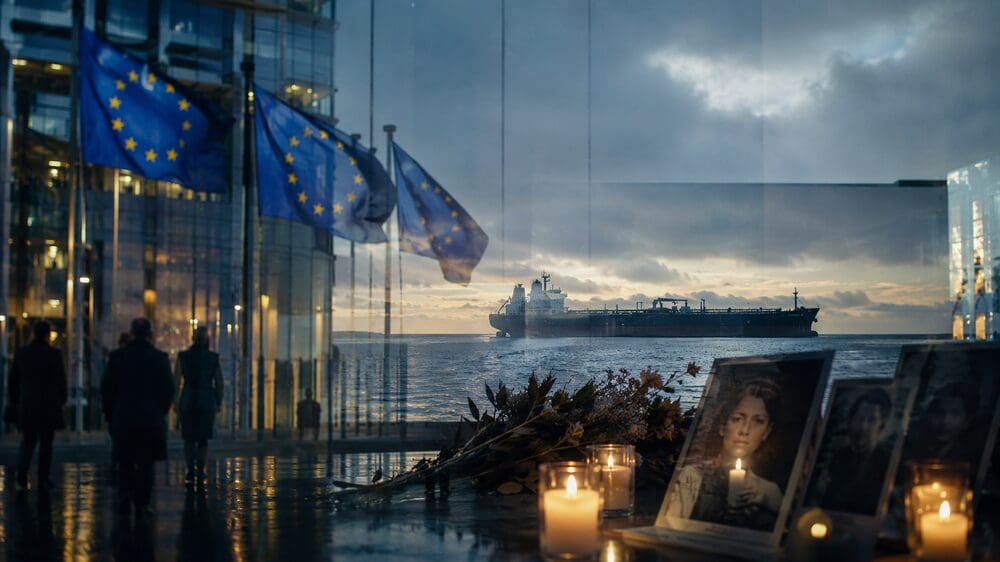
New listings target oil networks, propaganda actors, and officials linked to Alexei Navalny’s persecution
The European Union introduced new sanctions against Russia, adding 34 individuals and 47 entities to the lists, aiming to pressure Moscow’s war economy, oil trade, propaganda outlets, and human-rights violators.
This decision by the Council of the EU on June 15 coincided with the G7 summit in France, following a Russian attack on Ukraine that damaged the UNESCO-listed Kyiv-Pechersk Lavra. Though narrower than the broader sanctions package still under preparation, it captures Brussels’ multi-faceted approach: financial sanctions, informational warfare, shipping controls, accountability, and repression within Russia.
The Council of the EU stated these listings target Russia’s military base, energy revenues, hybrid operations, state propaganda, and consistent violations of international law, including human rights.
Shadow fleet pressure widens
A crucial component targets individuals and companies involved in transporting and exporting Russian oil, including the shadow fleet. These tanker networks challenge European sanctions enforcement by obscuring ownership, insurance, and trade links.
The EU listed two individuals and 24 entities involved in the oil trade, reflecting concerns over sanctions enforcement evolving from financial or customs issues to maritime safety and environmental risks for European waters.
The shadow fleet issue is politically sensitive, linking Ukraine policy with energy markets, port controls, insurance services, and member states’ actions when vessels traverse European routes. A previous European Times analysis highlighted the effectiveness of sanctions when enforcement, financial pressure, and diplomatic coordination align.
Propaganda and rights abuses included
The new listings also target individuals accused of disseminating disinformation to justify Russia’s war against Ukraine, naming propagandists and media-linked actors, as well as entities amplifying narratives dehumanizing Ukrainians or distorting historical facts.
In a distinct human-rights approach, the EU listed an entity and 15 individuals for alleged involvement in Alexei Navalny’s persecution, poisoning, and death. Those named include judges, prosecutors, law-enforcement officials, state security personnel, and medical staff. The Council also targeted a company accused of aiding in facial-recognition systems used against journalists, activists, and protesters.
This aspect of the package extends beyond wartime economic pressure, incorporating Russia’s domestic repression, surveillance practices, and treatment of political opposition into the EU’s sanctions response, linking aggression abroad with authoritarian control at home.
Kyiv attack sharpened the timing
The measures were approved on the day European leaders condemned Russian strikes on Ukraine, damaging Kyiv-Pechersk Lavra. Ukrainian officials reported civilian casualties, while UNESCO expressed concern for cultural heritage damage. As reported from Kyiv and European capitals, the attack heightened the G7 agenda focus on Ukraine and civilian protection.
EU foreign policy chief Kaja Kallas stated the latest measures aim to limit Russia’s maneuverability. “Every measure shrinks Russia’s room for manoeuvre,” she said in the Council statement.
The EU also extended sanctions related to Russia’s illegal annexation of Crimea and Sevastopol until June 23, 2027, reiterating non-recognition of Moscow’s territorial claims.
The latest package likely won’t be the last. Efforts continue on a broader sanctions package, and member states face the challenge of enforcing existing measures. Monday’s decision underscores the EU’s intent for sanctions to serve as both an economic tool and a public record of responsibility for civilian attacks, dissent repression, and accountability evasion via global networks.





Leave a Reply