


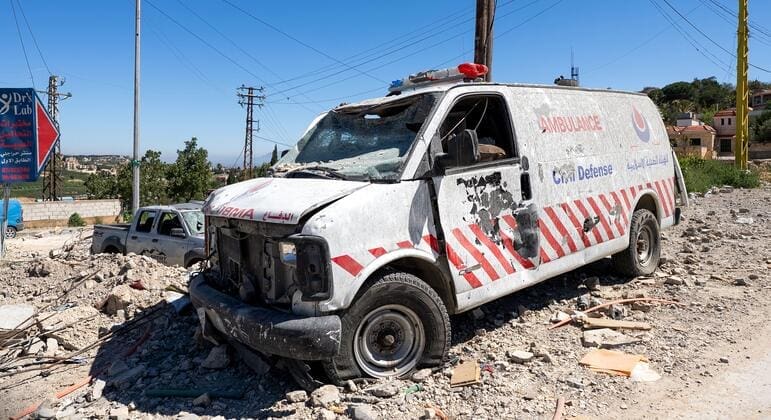
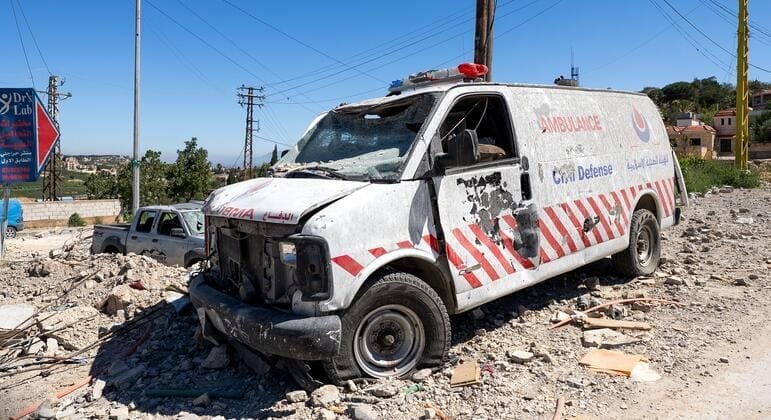
Two Lebanese Red Cross volunteers, Youssef Assaf and Hassan Badawi, were killed in recent attacks, with Assaf dying during a rescue on 9 March and Badawi in a drone strike on 12 April. According to the WHO, 169 confirmed attacks on healthcare workers and facilities in Lebanon have led to 116 deaths. Lebanese authorities reported over 3,000 fatalities since hostilities escalated in March, despite a ceasefire. Hezbollah shelling of Israeli communities followed the Israeli-US bombing of Iran, resulting in ongoing exchanges and 21 Israeli soldier deaths since 2 March.
UN News spoke with Thameen Al-Kheetan of OHCHR, Tommaso Della Longa of IFRC, and Ali Saad from the Lebanese Red Cross, who stressed that first responders should not be targets.
Targeting medical personnel is a war crime, and the international community needs to protect healthcare workers in conflicts, said Mr. Al-Kheetan, who cited previous similar attacks in Gaza and worldwide. Mr. Della Longa, after visiting Lebanon, noted Red Cross volunteers wearing protective gear before missions and highlighted the loss of humanitarian workers like Assaf and Badawi, whose mission details were shared with all parties. Both were in clearly marked ambulances when killed.
Mr. Della Longa emphasized that every fallen paramedic has a family, and attacks on humanitarian workers weaken communities, calling for international respect for civilians and aid workers. The Lebanese Red Cross coordinates with UNIFIL for deconfliction, but rescuers remain targets, as evidenced by the deaths of Assaf, Badawi, and journalist Amal Khalil. Mr. Saad described Badawi’s death during a mission, directly targeted by a drone.
The potential UNIFIL withdrawal next year concerns Mr. Saad, as they witness the conflict. Meanwhile, the 5,000 Red Cross volunteers operate in dangerous areas but cannot enter battlefield zones. Their mission is solely humanitarian, and they deserve protection, insists Mr. Saad.






Leave a Reply