


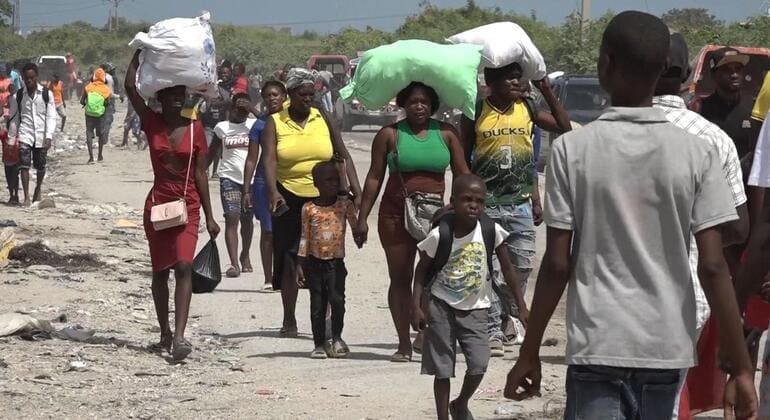
The violence is heavily concentrated in Cité Soleil, a poor area in the capital, where humanitarian efforts are underway to offer critical assistance.
Haiti continues to struggle with insecurity, poverty, and a declining economy amidst political chaos following a presidential assassination.
Testimonies from women who escaped the violence were shared with the UN World Food Programme (WFP).
Anidette Saint Fleur, Cité Soleil Resident
“There was shooting everywhere. Nearby fires forced us to escape with our family.
We haven’t returned home since gangs control the area. We left only with our ID documents. My rent was just paid when we fled. Now we have nothing — no money or shelter. We don’t know when we can return. We need help.
The toughest part is having no shelter or food for the children.”
Dorlean Boudin, Resident Near Cité Soleil
“Armed men set houses on fire with people inside, looting, and killing. I had minimal money and didn’t buy food to save for emergencies. We skipped meals to save for escape transport.
I need to restart a business to support the children. Assistance with food and water is crucial.”
WFP has aided 8,500 displaced people from Cité Soleil with emergency food, and nine schools serving about 12,000 students have paused meal distributions due to the crisis.
WFP’s Janvier Muhima noted that food supplies, including rice, pulses, oil, and fortified flour, are provided to help displaced families.
Nationwide, over 1.4 million people, over 12% of the population, have been displaced, mainly due to criminal violence.
Port-au-Prince is the violence epicenter, with gangs controlling up to 90% of the city.
The recruitment of children in gangs has surged, with estimates suggesting children make up 30–50% of some gangs.









Leave a Reply