


Across Europe, governments and EU institutions are expanding taxes and regulations aimed at shaping personal behaviour. Excise policy has quietly become one of the most active fronts in Europe’s broader debate about public health, state intervention and fiscal pressures.
Many of our life choices harm both ourselves and those around us. The role of the state should primarily be to minimise the latter, in line with the principle that one person’s freedom ends where another’s begins. “That the only purpose for which power can be rightfully exercised over any member of a civilized community, against his will, is to prevent harm to others,” wrote John Stuart Mill.
Far more controversial, however, is the state’s attempt to prevent people from harming themselves. Governments often justify such intervention by arguing that unhealthy behaviour generates costs for others as well – for example through publicly funded healthcare systems. This is where taxes on products such as alcohol, tobacco or sugary drinks enter the picture. But that raises a fundamental question: how should such taxes actually be designed?
In a recent article for the IMF’s Finance & Development magazine, Christoph B. Rosenberg and Marius van Oordt offer a clear answer – taxation should be linked to harm. The idea sounds straightforward, yet European tax policy often follows politics and fiscal pressures more closely than evidence.
The IMF authors argue that sin taxes should reflect relative risk: more harmful products should face higher taxation, while lower-risk alternatives should be treated more favourably. This approach is broadly consistent with the idea of “libertarian paternalism” associated with Nobel Prize-winning economist Richard H. Thaler – shaping incentives and nudging behaviour without outright prohibition.
Yet this logic is still largely missing from the tax policies of many European governments and EU institutions. In my native Poland, debates around excise duties are driven less by evidence than by fiscal needs and public-health rhetoric, often with little regard for data, economic consequences or individual freedom.
During a recent roundtable on alcohol policy in Poland, participants discussed data showing that alcohol consumption and the number of accidents involving drunk drivers have both been declining. The question was raised whether further restrictions were really necessary. One member of parliament responded that she was simply not interested in percentages or data. It was a striking moment. Public policy in democratic societies should be grounded in evidence, particularly when it concerns taxation and restrictions on individual behaviour.
Too often, current policy is deeply inconsistent. Poland introduced a sugar tax on sweetened beverages while maintaining a reduced VAT rate on sugar itself. The result is an incoherent system that penalises one form of consumption while favouring another.
Rosenberg and van Oordt’s argument, however, deserves to be applied more broadly – including to regulation itself.
Comments
10 responses to “Europe’s Sin Tax Debate Needs More Evidence”
-
Seems like the EU is on a mission to turn us all into model citizens—next stop, mandatory broccoli consumption! 🍻💸
-
It’s fantastic to see Europe’s brightest minds at work, tackling the pressing issue of taxation on sugary drinks while ignoring the ever-growing sugar mountains in their own VAT policies. 🍩💸 Must be nice to have your cake and eat it too, eh?
-
Isn’t it charming how we keep taxing our way to better health? Next, maybe we can tax happiness too—should be a real winner in the EU! 😂💸
-
Isn’t it adorable how our governments think they can tax our bad habits away? 🍷💸 Next, they’ll be charging us for breathing too much fresh air. Cheers to that! 😏
-
So, let me get this straight: we’re taxing our way to health while ignoring the obvious? Brilliant strategy, lads! 🍻💸
-
Isn’t it charming how our esteemed lawmakers prioritize our health by taxing the things we enjoy? 🍻 Can’t wait for the next tax on laughter; that’ll really help our wellbeing! 😂
-
Isn’t it quaint how our policymakers think they can tax away our bad decisions while ignoring the fact that half of Europe runs on coffee and cigarettes? ☕🚬 Maybe they should just hand out pamphlets on moderation instead of slapping a price tag on everything! 😂
-
Isn’t it charming how we can tax our way to better behavior while ignoring the actual evidence? Makes you wonder if anyone in charge even knows what “data” means, or if they just enjoy playing Monopoly with our lives. 😂
-
Isn’t it charming how our beloved bureaucrats think they can tax our vices away while ignoring the actual evidence? 🍷💸 I suppose next they’ll be taxing our joy, just for good measure!
-
Isn’t it charming how our esteemed leaders prefer to tax our vices rather than tackling the actual issues? Who needs evidence when you can just slap a tax on a pint and call it a day? 🍻💸
-
Taxing our pleasures while keeping the VAT on sugar? Classic! It’s like putting a parking ticket on a car without wheels—absolute genius! 🍭💸

Last News
Europe’s Sin Tax Debate Needs More Evidence
Across Europe, governments and EU institutions are expanding taxes and regulations aimed at shaping personal behaviour. Excise policy has quietly become one of the most active fronts in Europe’s broader debate about public health, state intervention and fiscal pressures.
Many of our life choices harm both ourselves and those around us. The role of the state should primarily be to minimise the la
French authorities probe Israeli firm’s alleged interference in local elections
These allegations arise after Slovenian law enforcement earlier this year accused an Israeli private intelligence firm of aiding in leaking recordings intended to sway the Slovenian elec
Pope Leo XIV Establishes AI Working Group and Drafts First Encyclical on Artificial Intelligence
The Encyclical: A Symbolic Date
The Pope chose to sign his encyclical on the 135th
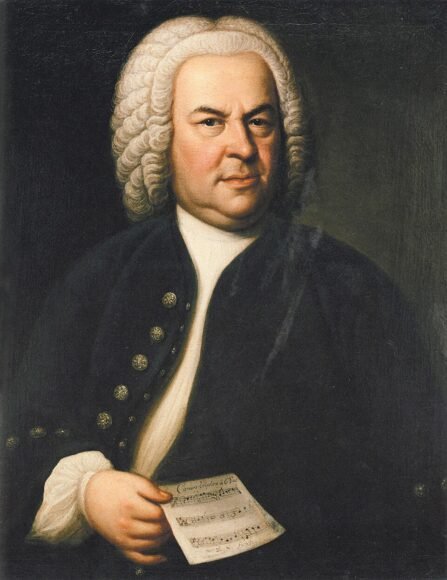
Are You a Bach Enthusiast?
If the answer is “yes,” try not to miss a series of four “Bach ad Meridiem” concerts on Saturdays, June 13, 20, 27, and July 4, at the Cathedral of St. Michael and St. Gudula in Brussels city centre.
For the third consecutive year, the Ars in Cathedrali association presents this series of organ concerts dedicated exclusively to Johann Sebastian Bach.
From noon to 12.45pm, the German composer wil
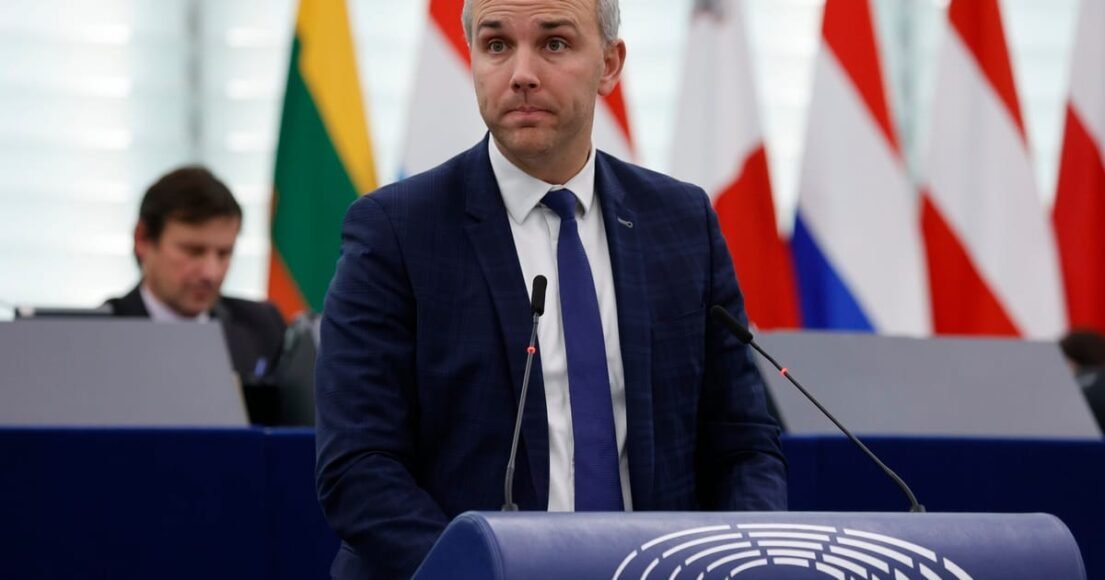
Manfred Weber’s Inner Circle Diminishes as Chief of Staff Resigns
Vandenkendelaere will depart from EPP headquarters by the end of May, leaving the chief of staff position unfilled for now. This role, crucial for managing the party’s daily functio

May 2026 Update on Temple Square Renovation
The visitors’ center’s opening is a key milestone in Temple Square’s reopening, leading up to the Salt Lake Temple Celebration from April 5, 2027, through October 1, 202
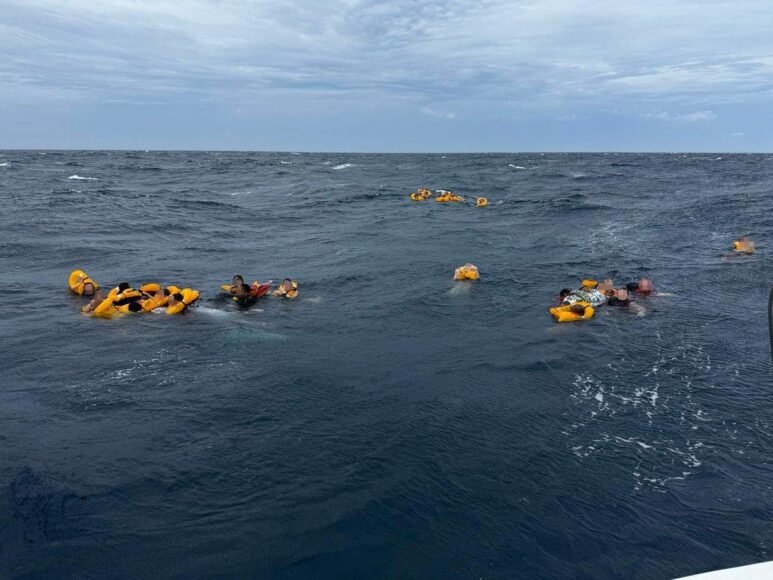
Italian Divers Found in Maldives, Underwater Recovery Mission Concludes

NATO’s Baltic Flank Shaken by Surge in Drone Incidents
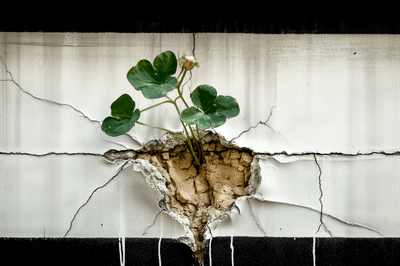
EEA Launches 2026 Photo Competition — Resilient by Nature
The central theme of the European Environment Agency (EEA) 2026 photo competition ‘Resilient by Nature’, launched today, is the relationship between nature and society. It invites Europeans to portray how nature sustains life, reacts to challenges, and recovers in a transforming world.
Open for submissions from 18 May to 10 August 2026, the contest urges photography enthusiasts to delve into our
Belgium’s Türkiye Outreach Signals a Wiser European Realism
It took place on 10-14 May in İstanbul and Ankara.
At a time when global politics is increasingly shaped by distrust and strategic fragm
Leave a Reply