


Centrist German politicians have accused the AfD of leveraging its increasing influence to act as a proxy for Putin within Germany — a charge that AfD leaders vigorously reject. Last November, several AfD members traveled to Sochi, Russia, to participate in a summit focused on cooperation between Europe and the BRICS, which includes Russia alongside Brazil, India, China, and South Africa.
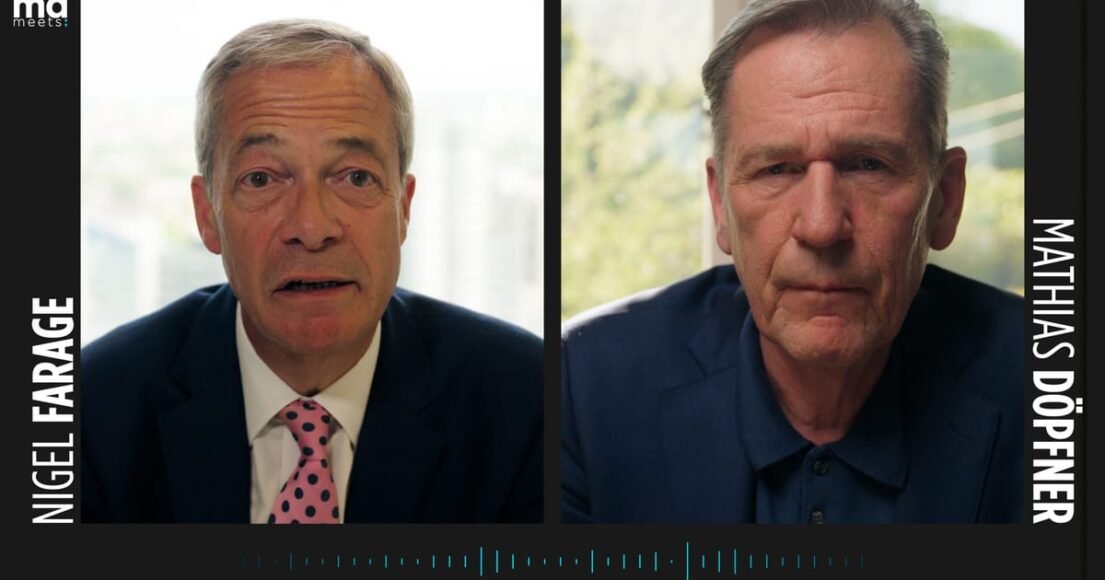
“I find the pro-Putin stance baffling,” Farage, a pivotal figure in Brexit, remarked. “This connection with some dictators is something I find very challenging,” he said, when questioned about the AfD’s positions on China, Russia, and Iran.
The Reform UK leader also expressed being “a bit perplexed” by the AfD’s economic policies. “Are they in favor of remaining in the euro? Do they wish to revert to the Deutschmark? I find it somewhat unclear,” he stated.
Farage, who led the Europe of Freedom and Democracy Group in the EU before Brexit in 2020, maintains that the party is “quite diverse.”
“AfD members have served under my leadership in the European Parliament; some were agreeable to collaborate with, and some remain friends,” he noted.
“They embody a cultural stance that asserts: ‘We’re German. We take pride in our identity. We do not wish our culture to be significantly altered by newcomers imposing theirs,’” Farage said.
“This is the emotional aspect that I completely comprehend, even though it has been vilified in Germany, as it is here, but in reality, it is a completely respectable and decent viewpoint,” the Reform UK leader concluded.






Leave a Reply