


Preparing children for school can be stressful, especially in Finnish Lapland, where winters are long, and students often travel by bus. In Lapland, a new school transport app, developed through the EU-funded AURORAL initiative, is easing this process. The app streamlines school bus pick-ups, reducing stress for parents and assisting bus drivers.
The app is part of a digital backbone created by AURORAL, allowing various rural services such as school buses and local energy schemes to share data securely and collaborate efficiently. In Kemi and Tornio, the Koulukyyti app lets parents quickly check if their children have reached school safely. Bus drivers receive instant alerts if a child is absent or needs a pick-up from a different address, eliminating unnecessary trips.
“For parents, there’s an added sense of safety. For the transport operator, they know exactly when their responsibility starts and ends,” said Seppo Ahola, project manager of the Lapland pilot.
Safer school runs in Lapland
About 90 children in Kemi and 120 in Tornio use the app, and Ahola hopes more areas will adopt it. Besides convenience and safety, the system also benefits the environment by cutting energy use and emissions through reduced trips. “We estimate annual savings of around 25%,” Ahola mentioned, noting that peace of mind for everyone is the biggest benefit.
Encouraging smart communities, which use digital tools to enhance various services, is one way the EU aims to improve rural life and support goals like the European Green Deal.
Building smart communities on shared tech
The COVID-19 pandemic and a shift towards remote working highlighted the need for better rural connectivity. The AURORAL team provided a technological solution to bridge the digital gap between rural and urban areas by creating smart communities.
The team developed middleware to link systems to user applications and worked with communities on business plans and funding. “If you create smart communities with collaboration in mind, everyone can build on their strengths,” said Christoph Hrdinka, AURORAL coordinator.
Dairy cows and wine for energy
The initiative, involving 25 organizations from 10 countries, demonstrated that one shared digital infrastructure could support diverse local needs across seven rural regions in Europe, from healthcare to energy.
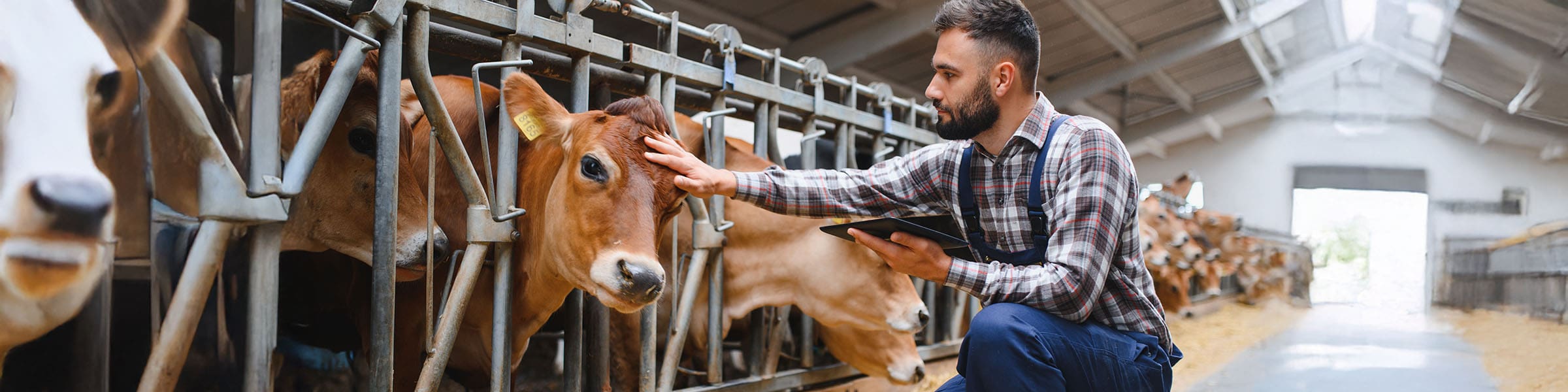
In northern Italy, the system helps dairy farmers monitor cows’ health and milk production, improving herd management. In Catalonia’s Penedès region, winery waste is transformed into biomass for renewable energy, thanks to the digital platform connecting winegrowers with the bioenergy sector.
“During the COVID-19 pandemic, we saw how digitalisation could help businesses adapt to new consumer habits and navigate growing administrative and regulatory requirements,” said Conrad Pagà Bordes from the Catalonia Bioenergy Cluster.
Keeping the platform alive and growing
The four-year AURORAL project concluded in March 2025, but its work continues through the SmarTomorrow platform, where participants can share knowledge, maintain services, and discuss new ideas.
“It’s important to have a digitalisation strategy that also favours smart rural environments and communities and can boost them in the future,” Pagà Bordes said.
AURORAL shows how a digital backbone can empower rural communities, offering tools for their growth. The hope is that more areas will adopt and adapt this technology for their needs.
Research in this article was funded by the EU’s Horizon Programme. The views of the interviewees don’t necessarily reflect those of the European Commission. If you liked this article, please consider sharing it on social media.
Source link






Leave a Reply