


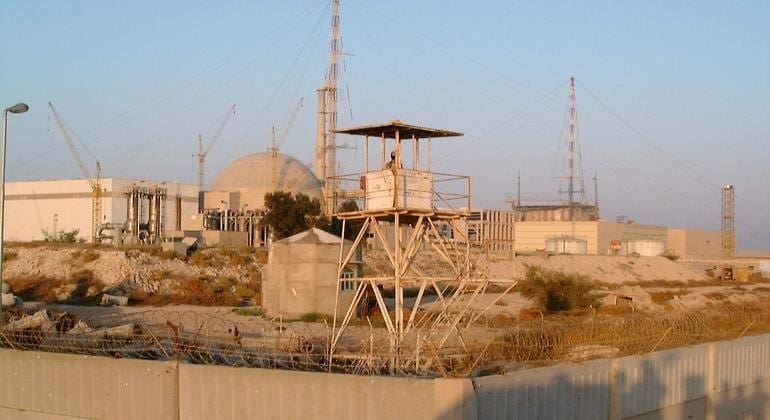
UN human rights office spokesperson Ravina Shamdasani highlighted the devastating impact of a strike on Saturday that reportedly resulted in the death and injury of many girls at a primary school in Minab, southern Iran.
“Children, little girls…at the beginning of the school day being killed in this manner, backpacks with bloodstains on them – this is absolutely horrific,” she stated. “These images truly depict the destruction, despair, senselessness, and cruelty of this conflict.”
Ms. Shamdasani noted that UN rights chief Volker Türk was “deeply shocked” by the effects on civilians and infrastructure, urging a “prompt, impartial and thorough investigation” into the Minab attack.
“The responsibility lies with the forces that executed the attack to investigate. We urge them to publicize the findings and ensure accountability and justice for the victims,” she emphasized.
She also mentioned that any attacks targeting civilians or civilian objects, or indiscriminate attacks, are “serious violations of international humanitarian law and may constitute war crimes.”
Tehran blackout
The OHCHR spokesperson expressed concern for Iranians’ welfare “considering the Government’s history of widespread lethal force against dissent and new threats against any expression of dissent.”
She urged authorities to protect fundamental freedoms and criticized the limited access to essential information due to a nationwide internet shutdown.
Since hostilities began with Israeli and US attacks on Iran, Tehran responded with counterattacks against Israel and US allies in the region. Ms. Shamdasani highlighted that the conflict has affected 12 other countries, damaging homes, businesses, airports, and energy infrastructure.
Lebanese uprooted
In Lebanon, where Hezbollah entered the conflict, causing Israeli strikes, “significant displacement has been reported across southern Lebanon, Bekaa, and southern Beirut suburbs”, said UNHCR spokesperson Babar Baloch.
Israel issued evacuation warnings to residents of over 53 Lebanese villages and conducted intense airstrikes across Lebanon.
As of Monday, “conservative estimates suggest nearly 30,000 people were registered at collective shelters,” Mr. Baloch said. “Many more spent nights in cars or were stuck in traffic leaving the south to reach Beirut.”
According to Tuesday reports, Israeli troops entered southern Lebanon following Hezbollah attacks.
The UNHCR spokesperson noted that many affected countries “already host millions of refugees and internally displaced people.”
Further violence risks overwhelming host communities, he warned.
Supply chain fears
Severe disruptions to goods transportation due to expanding hostilities are affecting humanitarian supply routes.
Speaking from Cairo, Samer Abdel Jaber, Regional Director for the Middle East and North Africa at the UN World Food Programme (WFP), emphasized disruption in the Strait of Hormuz and the Red Sea, complicating maritime routes, causing delays, and increasing costs.
“With contested seas and closing airspace, we’re adapting by using supplier networks in countries like Türkiye, Egypt, Jordan, and Pakistan for overland corridors,” he said.
Egypt’s ports and the Suez Canal remain operational, supporting operations in Gaza and Sudan.
He noted Israel’s border closure with Gaza, but “good news” of Kerem Shalom crossing reopening on Tuesday.
“This is timely as we need to deliver aid quickly,” Mr. Jaber said. “We have wheat flour for 10 days and food parcels for two and a half weeks… We must ensure a continuous and scalable flow of food into Gaza,” he concluded.
Source link




Leave a Reply