


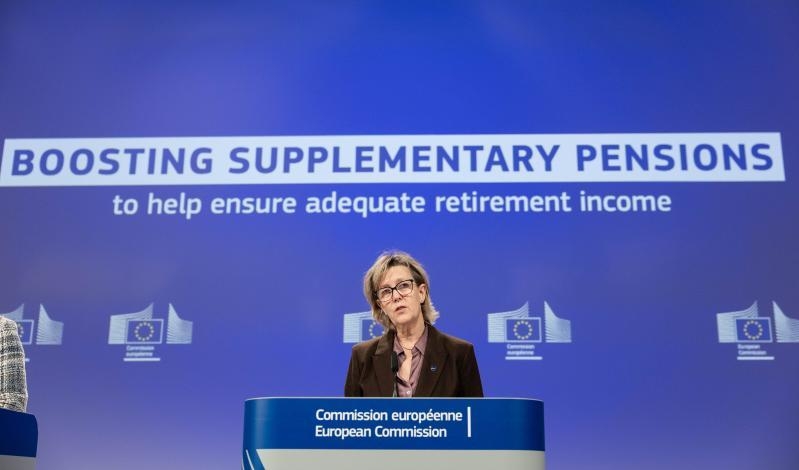
Maria Luís Albuquerque, the Commissioner for Financial Services and the Capital Markets Union, emphasized the significance of tax benefits in encouraging citizens and businesses to engage with pension funds that supplement the public system.
“The behavior of individuals and companies is heavily influenced by the incentives provided, and tax incentives are both efficient and effective,” Albuquerque shared with reporters during the Insurance and Pension Funds Supervisory Authority (ASF) conference held in Lisbon today.
She pointed out that while tax policies fall under each nation’s sovereignty, the European Commission advocates for tax incentives to promote long-term investments, particularly in private pension funds that enhance public pension systems.
In her role overseeing Financial Services and Capital Markets Union, Albuquerque (a former Finance Minister in the PSD/CDS-PP government under Passos Coelho) has argued that European citizens should increase investments in long-term savings products, which offer higher returns despite being riskier.
During her address at the ASF conference, she reiterated that “long-term savings have long been plagued by an excessive fear of risk,” and investing in supplemental retirement systems is a “central issue of citizenship, well-being, and shared prosperity,” as public systems “will struggle to ensure adequate income levels for everyone in retirement.”
She stressed that to boost investment in these products, market reforms need to make them more appealing.
Among the challenges, she cited the “excessive fragmentation” of the complementary pension market, as well as the “unnecessary complexity and lack of product comparability.”
Enhancing complementary pension systems would also bolster the European economy, as it can provide stable and predictable capital for essential strategic projects, including energy and digital transitions, defense and security improvements, transportation infrastructure, and social services like hospitals, schools, and affordable housing.
Pension funds invest in financial assets (such as stocks and bonds) to generate returns, meaning that increased investment leads to more capital flowing into markets, which the European Commission believes would benefit the overall European economy.
Regarding occupational pension funds, Albuquerque noted that many of these plans “remain too small and fragmented,” and the European Commission plans to review them to promote economies of scale, reduce costs, and enhance investment capacity.
When questioned about the risks associated with Brussels advocating for the channeling of Europeans’ savings into capital markets—heightening exposure to losses during crises—Albuquerque clarified that “no one is suggesting withdrawing all funds from deposits” to invest in higher-risk options, advising against putting all resources into one type of investment, as historical trends show that long-term investments typically yield greater returns.
She also mentioned that there should be no minimum investment thresholds for complementary pension products to allow even those with lower incomes to save consistently.
After her meeting with Labour Minister Maria do Rosário Palma Ramalho, Albuquerque declined to share details about their discussion, noting that it is common to hold meetings with member state governments.











Leave a Reply